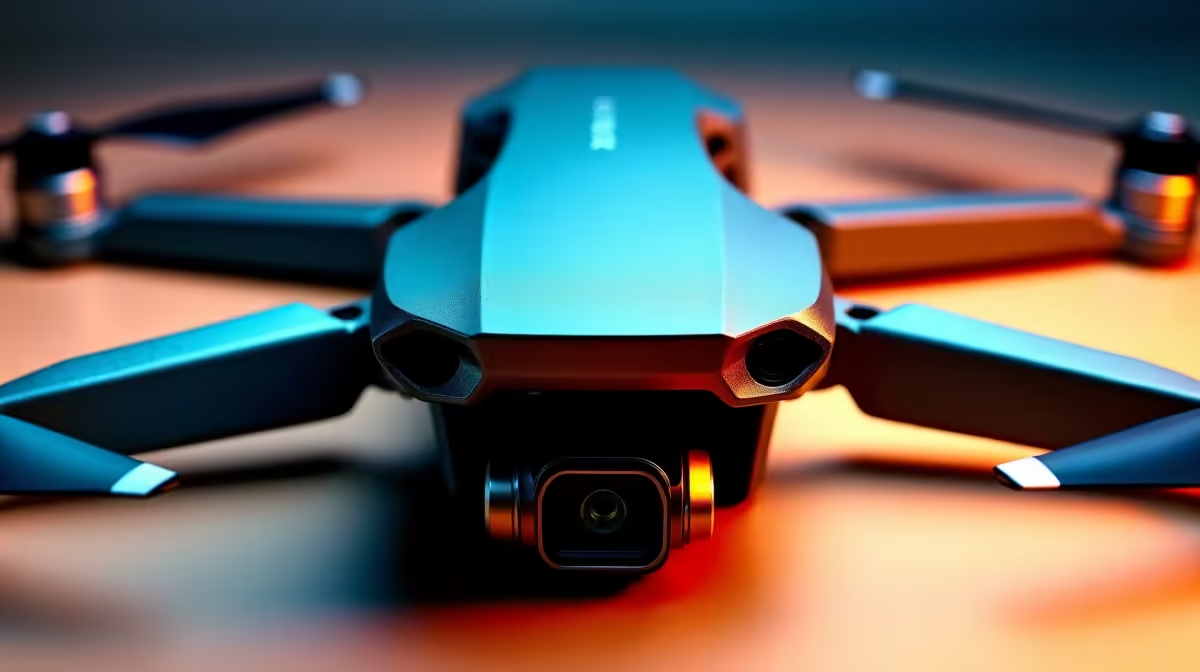
Two of the most popular sub-1kg camera drones come down to one decision that matters more than camera specs: what happens when the drone meets an obstacle it did not expect. DJI versus Autel, specifically the DJI Air 3S against the Autel EVO Lite+, is really a story about how each one keeps itself out of trouble in the air.
Quick Answer
The DJI Air 3S uses omnidirectional APAS obstacle sensing to detect and fly around hazards in every direction, while the Autel EVO Lite+ covers only front, rear, and bottom and tends to stop at an obstacle rather than reroute around it. For safety margin, the Air 3S has the clear edge; the EVO Lite+ counters with its own imaging strengths.
The Core Safety Gap
This is the difference that separates the two. The DJI Air 3S carries sensors that look in all directions, and its APAS system can actively plan a path around a tree, a wire, or a wall rather than simply halting. For a newer pilot, that ability to reroute is the single biggest reduction in crash risk you can have.
The Autel EVO Lite+ senses front, rear, and downward, but not the sides or, in the same fashion, above. When it meets an obstacle in a covered direction, its instinct is to stop and hold rather than navigate around it. That is still useful, but it puts more responsibility on the pilot to spot side hazards and steer clear manually.
Why direction of sensing matters in the real world
Most tricky flying happens sideways: orbiting a subject, tracking along a tree line, or threading between structures. A drone that only watches front and back is blind exactly when a side sensor would save it. The Air 3S advantage shows up most in precisely these everyday shots.
If you are weighing where a drone fits among your other connected gear, browse the smart home and appliances range at Evetech to see how these devices slot into a wider tech setup.
Camera And Sensor: Where Autel Pushes Back
The EVO Lite+ is not outclassed everywhere. Its larger camera sensor is its headline strength, giving it real capability in low light and a pleasing image straight out of the drone. For a creator who flies mostly at dawn, dusk, or in tricky lighting, that sensor advantage is genuine and worth weighing against the safety gap.
The Air 3S answers with a dual-camera setup, pairing a main lens with a longer focal length for framing flexibility without flying closer. So the camera question is less "which is better" and more "which framing and lighting strengths suit your shots."
Image quality is a trade, not a knockout
Neither drone embarrasses the other on image. The EVO Lite+ leans on sensor size and low light; the Air 3S leans on dual focal lengths and its sensing safety net. Your subject and your typical flying conditions decide which set of strengths is more valuable to you.
Flight, Transmission, And Handling
Beyond cameras and sensors, the daily flying experience matters. DJI's transmission and app ecosystem is mature and widely used, which tends to mean steady video feeds at distance and a polished flying experience. Autel competes hard on flight feel and has its own loyal following, particularly among pilots who prefer its approach and want an alternative to the dominant brand.
Both are realistic choices for South African hobbyists and content creators who want serious capability without a bulky cinema rig. Remember that drone use in South Africa is regulated, so understand the local rules for where and how you may fly before you take either one out. For spare propellers, cases, and the small extras that keep a drone flying, the accessories best sellers at Evetech make it easy to stock up on the consumables both drones go through.
Battery life and flight time
Neither drone is short on endurance, and both deliver flight times comfortably suited to real shoots rather than a couple of nervous minutes. In practice the difference here is small enough that it rarely decides the purchase. What matters more is buying spare batteries either way, because a single pack disappears fast once you are framing shots, repositioning, and waiting for the light. Plan your budget around at least one spare battery from the start, regardless of which drone you choose.
Ecosystem and software polish
There is also the less glamorous question of software maturity. DJI's app, firmware updates, and editing tools are heavily used and well documented, which means fewer surprises and an easier learning curve for a first-time pilot. Autel's ecosystem is capable and improving, and its appeal partly lies in offering a credible alternative for pilots who would rather not be locked into the dominant platform. If you value a frictionless out-of-the-box experience, the more mature ecosystem counts in DJI's favour; if you value supporting competition and are comfortable with a slightly less polished app, Autel rewards that choice.
Which One Should You Buy
Choose the DJI Air 3S if safety margin is your priority, especially as a newer pilot or someone flying complex shots near obstacles. Omnidirectional sensing that reroutes rather than stops is worth a lot when you are concentrating on the shot rather than the surroundings.
Choose the Autel EVO Lite+ if its larger sensor and low-light strength matter most to your work, you are a confident pilot comfortable managing side hazards yourself, and you value backing a strong alternative to the market leader. Both are capable drones; the right pick depends on whether you weight the safety system or the camera sensor more heavily.
Frequently Asked Questions
Does the DJI Air 3S have all-round obstacle avoidance?
Yes. The Air 3S uses omnidirectional APAS sensing, detecting hazards in every direction and actively flying around them rather than just stopping. This is its main advantage over the Autel EVO Lite+, which covers fewer directions.
What obstacle sensing does the Autel EVO Lite+ have?
The EVO Lite+ senses front, rear, and downward. It does not have the same all-round coverage as the Air 3S, and it tends to halt at an obstacle in an uncovered direction rather than rerouting around it, putting more onus on the pilot.
Which drone has the better camera?
It depends on conditions. The EVO Lite+ has a larger sensor that helps in low light, while the Air 3S offers a dual-camera setup with two focal lengths for framing flexibility. Neither clearly wins; your typical lighting and shots decide.
Are these drones suitable for beginners?
Both are accessible, but the Air 3S is the gentler choice for newer pilots because its all-round sensing reduces crash risk. The EVO Lite+ rewards a confident pilot who is comfortable watching for side hazards themselves.
Do I need to follow drone rules in South Africa?
Yes. Drone flying in South Africa is regulated, with rules on where, how high, and how close to people and property you may fly. Understand the current local regulations before flying either drone, regardless of which you choose.