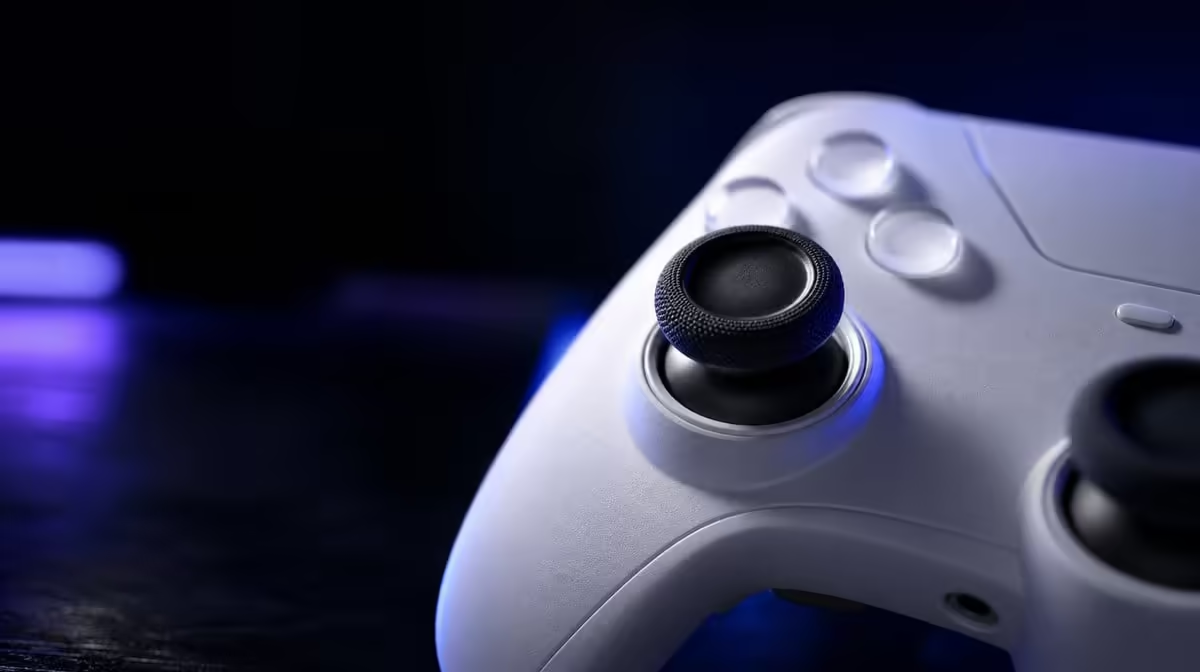
Stick drift is a symptom, not a single guaranteed failure mode. TMR sticks address controller drift by reading position magnetically instead of relying on the resistive sensing contact used by traditional potentiometers, reducing one important wear path.
Quick Answer
For R1,499, the GameSir G7 Pro equips each thumb with a Mag-Res TMR module. Its magnetic measurement avoids conventional resistive contact, but calibration, moving parts and physical damage still matter, so drift can never be ruled out.
🧲 Separate sensing from the whole mechanism
A thumbstick must translate physical movement into a position the game can read. Traditional potentiometer designs commonly use resistive contact as part of that measurement. Wear or contamination in that path can contribute to unintended input around centre.
TMR sensing reads magnetic changes instead. Removing the conventional resistive contact from the position measurement addresses that source of wear. This is why drift resistance is a sound benefit and "drift-proof" is too absolute.
The stick still includes mechanical pieces. The cap, shaft, spring and surrounding structure experience movement, while drops or debris can create other problems. Software calibration and dead-zone settings can also influence what a player observes.
Do not use sensor type to invent stick tension, height or shape. TMR describes the sensing principle, not every part of physical feel. Handle the G7 Pro and evaluate return to centre, range and fine movement separately.
Evetech's gaming controller range can be compared with this distinction between sensor design and complete stick feel.
🎯 Build a repeatable centre test
Use a game or input view that shows small movement clearly. Place the controller on a stable surface, release the sticks and observe the neutral position before touching calibration or dead zones.
Move each thumbstick slowly to the cardinal directions, trace the outer circle and release it from several angles. Look for consistent return rather than trying to prove perfection from one flick. Repeat after an ordinary play session.
If unintended movement appears, reconnect the controller and check the current game settings. Calibrate through the appropriate method before increasing dead zones enough to hide the behaviour. A large software mask can remove fine control along with the symptom.
Save the initial centre and circle results as a simple baseline. Record the platform, connection, game sensitivity and dead-zone value. A later test is meaningful only when those conditions are known; otherwise a software change can look like a new hardware fault.
Warm-up can matter to observation. Perform the test before play and again after a normal session, using the same release points. Do not force the stick against its boundary or create an artificial stress routine that bears little resemblance to ordinary use.
Compare both sticks. A camera-control problem and a movement problem may appear differently in a game, so label which axis and stick produced the result. This record helps distinguish a repeatable input issue from game-specific aim behaviour.
For supporting setup items, browse Evetech's gaming accessories category without assuming an accessory can repair a sensing fault.
🕹️ Judge precision in an actual game
Pick a scene that needs both small corrections and full-range movement. An aiming range, vehicle steering test or menu cursor can expose different parts of the stick response. Keep sensitivity and dead-zone settings unchanged during the comparison.
Start with slow input near centre. Ask whether the game responds predictably to a deliberate nudge and settles when the stick is released. Then test larger arcs and quick direction changes.
The G7 Pro also includes Hall Effect triggers with micro switch stops, four macro buttons and 1000Hz PC polling. Those features can affect the complete control experience, but they should not be credited as evidence that the TMR sensor itself prevents drift.
Try three aiming tasks: hold a crosshair on a fixed point, track a slow target and make a larger turn that must settle accurately. The first observes centre stability, the second explores fine movement, and the third tests return after a wider input. Note the symptom instead of labelling the whole stick good or bad.
For movement, walk a character slowly in each direction where the game allows it. Look for an unintended creep after release and repeat with the other stick if the title permits reassignment. A game with a built-in dead zone can hide small signals, so keep that context in the note.
Connection mode matters to a fair test. Xbox takes the cable, PC offers cable plus 2.4GHz, and Bluetooth belongs to Android. Compare stick behaviour on one stable platform before deciding whether a difference follows the sensor, game, connection or settings.
Use the included dock as a regular storage point where it suits the wireless routine. A consistent place can reduce accidental knocks, although it does not change the magnetic sensing principle.
🧰 Describe the benefit without overpromising
"Drift-resistant" explains that the design avoids one wear mechanism associated with potentiometers. "Never drifts" ignores calibration, mechanics, damage and other possible causes of unintended input.
At R1,499, the G7 Pro should be assessed as a complete controller. The Mag-Res TMR sticks make a strong case for a buyer concerned about contact wear, while platform compatibility, trigger behaviour, macros and physical comfort still deserve their own checks.
Keep a baseline result from the first week. If later behaviour changes, repeat the same centre, circle and game test before altering many settings. Consistent evidence makes troubleshooting faster.
Maintenance language should remain careful. Keeping the controller stored on the dock and avoiding impacts are sensible habits, but they cannot turn any mechanism into a lifetime guarantee. Likewise, recalibration can correct some centre or range issues without repairing physical damage.
Compare the TMR priority with platform use. A drift-conscious Xbox player must accept the wired console path, while a PC player can choose cable or 2.4GHz and still value the same stick modules. Android Bluetooth adds another supported environment, but the games must also accept controller input.
At the end of the review, give sensing, feel, platform fit and price separate scores. A strong magnetic design can lead the list through the properties it actually changes.
Keep the language attached to evidence: the design reduces reliance on resistive contact, the baseline shows present behaviour, and future condition remains unknown. That combination gives a buyer a useful reason to prefer TMR without turning risk reduction into certainty.
Use Evetech's popular gaming accessories page to review current choices after deciding how much weight drift resistance carries.
Frequently Asked Questions
How do TMR sticks differ from traditional potentiometers?
TMR modules sense magnetic changes rather than using the conventional resistive contact path for position.
Which stick technology is fitted to the G7 Pro?
It uses GameSir Mag-Res TMR thumbsticks.
Can TMR sticks guarantee that drift never occurs?
No. They address one sensor wear source, while calibration, mechanics and damage remain relevant.
Why is reduced internal contact relevant to drift?
It removes conventional resistive sensing contact that can wear and contribute to incorrect position reports.
Do TMR sticks change the physical stick feel automatically?
Not necessarily. The sensing method does not by itself state tension, cap shape or every mechanical characteristic.
Should users still calibrate a magnetic-stick controller?
Yes. Calibration remains a sensible troubleshooting and setup step when centre or range appears incorrect.
What wording best describes the benefit?
Drift-resistant is accurate because it recognises the improved sensing path without claiming immunity from every failure.
Want magnetic sensing without the mythology?
Explore Evetech's controller range and compare centre return, fine movement and platform fit before choosing the G7 Pro at R1,499.