


PCIe 5.0 vs PCIe 4.0 for Video editing in 4k in SA
PCIe 5.0 vs PCIe 4.0 for video editing in 4k is mainly about fit, features, compatibility, cost, and upgrade path, not one automatic winner. SA buyers should match the choice to the setup.
Read morePropeller guards protect spinning props and nearby people when flying in tight indoor spaces, but they add weight and aerodynamic drag that reduces flight time and may push some sub-250g drones over the regulatory weight limit.
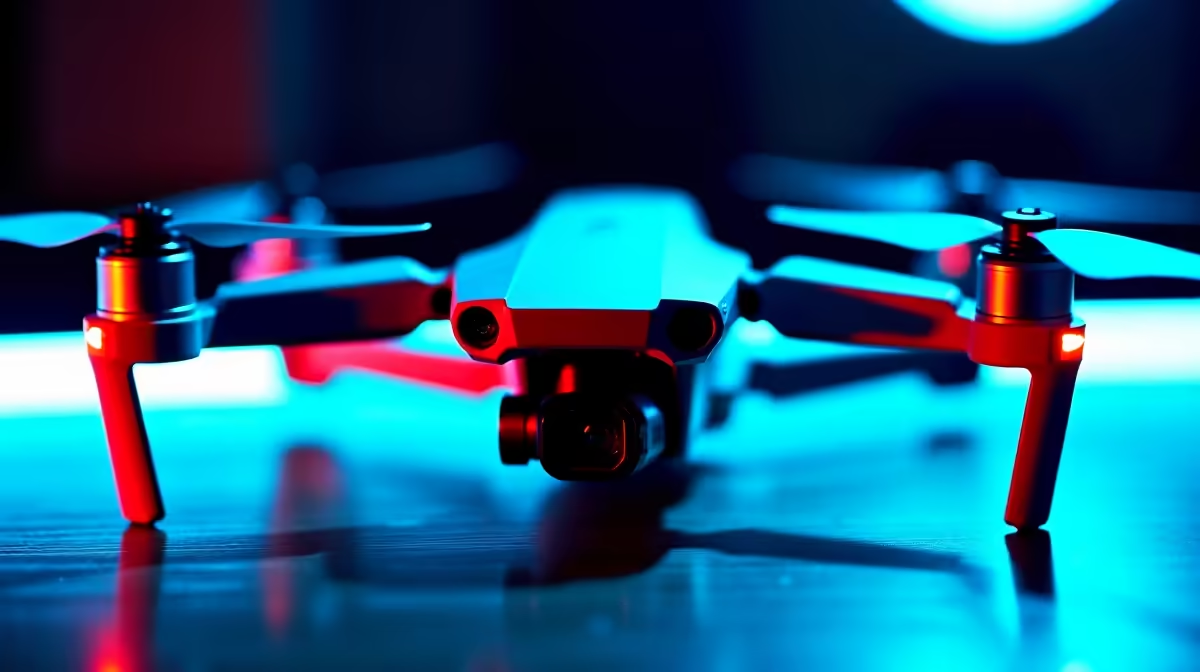
Every new drone pilot faces the prop guard question early, usually after the first close call with a doorframe or a curious friend's fingers. Propeller guards are genuinely useful in the right setting and a quiet liability in the wrong one. They shield spinning props and the people near them, but they add weight and drag that cuts your flight time and, on the smallest drones, can tip you over a regulatory line that matters in South Africa. Knowing when each trade-off applies is the whole game.
Use propeller guards when flying indoors, in tight spaces, or near people, where the protection clearly outweighs the cost. Skip them for open outdoor flying, where they only add weight and drag that shortens flight time. On sub-250g drones, fit guards with care: the extra grams can push the aircraft over the 250g threshold and change the rules that apply to it.
Two things. First, the people and pets around you, because a spinning propeller can cut skin, and a guard puts a physical barrier between the blade and a stray hand. Second, the drone itself, since clipping a wall or a chair leg without guards usually snaps a prop or worse, while a guarded drone often just bounces off and carries on.
That makes them most valuable in exactly the situations where collisions are likely: flying indoors, threading through doorways, navigating a cluttered room, or operating anywhere close to a crowd. For a beginner still building muscle memory on the sticks, guards turn a costly mistake into a harmless bump, which is reason enough to fit them while you learn.
Nothing is free in flight. Prop guards add mass and they disrupt the clean airflow around the propellers, and both of those work against you.
A heavier drone has to work harder to stay airborne, which drains the battery faster. The added aerodynamic drag compounds it. The practical result is noticeably shorter flight time per charge, sometimes enough to be annoying if you are trying to get real footage or cover distance. For outdoor flying in open space, where collisions are unlikely, you are paying that battery penalty for protection you do not need.
Guards also give the wind more surface to push against. On a breezy Cape Town afternoon, a guarded lightweight drone can feel twitchier and harder to hold steady than the same drone flying bare. For smooth outdoor footage, fewer obstructions to the airflow usually means calmer, more predictable handling.
This is where guards stop being a comfort question and become a compliance one. Many popular lightweight drones are deliberately designed to come in just under 250g, because that weight class is treated more leniently by aviation regulators, including in South Africa under the local civil aviation framework. Cross 250g and a stricter set of requirements can apply to your aircraft.
Prop guards add weight. On a drone that sits at, say, 249g out of the box, a set of guards can push it over 250g and quietly move it into the heavier regulatory category. So before you fit guards to a sub-250g drone, weigh the aircraft with the guards on. If protecting the props means crossing the threshold, you have a real decision to make rather than a casual accessory choice. Always confirm the current rules with the relevant South African aviation authority, since regulations change and the responsibility sits with the pilot.
If you are flying indoors with guards on, a few adjustments make the sessions safer and more productive. Keep the return-to-home altitude set conservatively, or disable RTH for indoor use since GPS can behave erratically inside a building. Fly in manual or positioning mode rather than GPS-assisted mode if the signal is weak indoors, as a drone trying to lock onto a shaky GPS signal will drift unpredictably. Reduce the maximum speed in the settings so that if it does clip a wall or a ceiling, the impact is minor. A guarded drone in a small room is manageable at low speed; the same drone on aggressive settings is not. Keeping the ceiling height in mind and practising hover stability at head height before attempting any movement also reduces the risk of a spin into an obstacle.
For beginners doing indoor practice runs, guards plus a reduced speed profile turns the learning environment into a genuinely low-stakes space, which is exactly what you want in the early flights.
If you are a beginner, fly indoors, or operate near people, yes, fit them and accept the shorter flight time as cheap insurance. If you fly outdoors in open space, are confident on the controls, and care about flight time and steady footage, leave them off. And if your drone is in the sub-250g class, let the scale make the final call before you bolt anything on. Drones and the broader smart-tech range sit within the smart home and connected devices range at Evetech, and the spare props, guards and batteries people buy alongside them tend to show up among the most-popular accessories.
Use them indoors, in tight or cluttered spaces, and near people or pets, where collisions and contact are likely. In those settings the protection for both the drone and the people around it clearly outweighs the added weight.
Yes. They add weight and aerodynamic drag, so the drone works harder and the battery drains faster, giving you noticeably shorter flight time per charge. That is why they are not worth it for open outdoor flying.
They can. Adding guards to a drone designed to sit just under 250g may push it over the threshold and move it into a stricter regulatory category. Always weigh the aircraft with guards fitted and check the current rules.
For most beginners, yes. While you are still learning the controls, guards turn a crash that would snap a prop into a harmless bump, which protects both your drone and anyone nearby as your skills develop.
They can. Guards add surface area for the wind to push against, so a guarded lightweight drone may feel twitchier outdoors. For steady outdoor footage, flying without guards in open space usually handles better.
Kitting out a new drone the smart way? Browse current drones and the spare props, guards and batteries that go with them at https://www.evetech.co.za/PC-Components/smart-home-appliances-344
Use them indoors, in tight or cluttered spaces, and near people or pets, where collisions and contact are likely. In those settings the protection for both the drone and the people around it clearly outweighs the added weight.
Yes. They add weight and aerodynamic drag, so the drone works harder and the battery drains faster, giving you noticeably shorter flight time per charge. That is why they are not worth it for open outdoor flying.
They can. Adding guards to a drone designed to sit just under 250g may push it over the threshold and move it into a stricter regulatory category. Always weigh the aircraft with guards fitted and check the current rules.
For most beginners, yes. While you are still learning the controls, guards turn a crash that would snap a prop into a harmless bump, which protects both your drone and anyone nearby as your skills develop.
They can. Guards add surface area for the wind to push against, so a guarded lightweight drone may feel twitchier outdoors. For steady outdoor footage, flying without guards in open space usually handles better.
PCIe 5.0 vs PCIe 4.0 for video editing in 4k is mainly about fit, features, compatibility, cost, and upgrade path, not one automatic winner. SA buyers should match the choice to the setup.
Read more
Wi-Fi 7 vs Wi-Fi 6e for competitive esports comes down to router support, latency goals, device compatibility, and coverage. SA buyers should match the choice to the real network setup.
Read more
ATX 3.1 vs ATX 3.0 for mMO and live-service games buyers - what changes is mostly about compatibility, budget, upgrade path, and setup fit. SA buyers should check device support and real needs before expecting a clear win from either option.
Read more
LGA 1851 vs LGA 1700 can affect Twitch and YouTube streaming when gaming and encoding share CPU resources. For SA creators, the real-world difference depends on encoder choice, memory support, motherboard cost, thermals, and upgrade plans.
Read more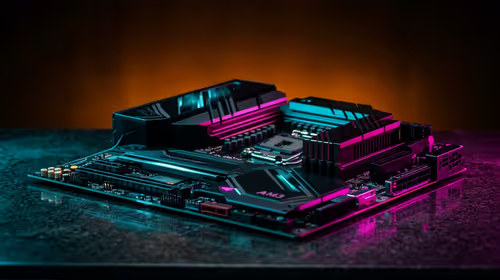
X870E vs X670E for aaa single-player gaming is mainly about fit, features, compatibility, cost, and upgrade path, not one automatic winner. SA buyers should match the choice to the setup.
Read more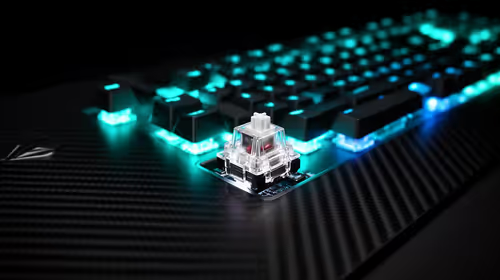
Hall Effect switches vs Mechanical switches for mMO and live-service games is mostly about compatibility, budget, upgrade path, and setup fit. SA buyers should check device support and real needs before expecting a clear win from either option.
Read more
A fake 113GB GTA VI ISO reportedly used empty padding around a small malware payload. SA gamers should delete unofficial builds, keep Windows security active and wait for official channels.

Wi-Fi 6E vs Wi-Fi 6 matters for 4K video editing when files move across a network. The real-world difference between Wi-Fi 6E and Wi-Fi 6 for video editing in 4K depends on NAS access, cloud uploads, router range, and SA creator workflows.

The difference between PCIe 5.0 and PCIe 4.0 for SA gamers is mostly bandwidth headroom. Compare GPU slot needs, NVMe speed, motherboard support, and upgrade timing before paying extra for a newer platform.

Gaming PC stuck pixel checks in South Africa should confirm the monitor fault first. Use colour tests, screenshot comparison, cable swaps, display menu checks, and clear photos before deciding on support.

Shokz OpenFit Air 2 earbuds weigh 7.2g each and use a redesigned dual-driver open-ear layout. SA buyers should choose them for comfort and awareness, not maximum isolation.

AMD's current driver now lists a Radeon RX 9050 4GB, while product coverage details a narrowed memory system. SA buyers should weigh the low VRAM ceiling against current local Radeon options.

Samsung Display has demonstrated a 16-inch 2.5K OLED laptop panel running at 300Hz. SA buyers should wait for a named notebook, full panel specifications and a local price before planning an upgrade.

Microsoft says some Windows 11 game crashes after recent updates are linked to RGB-related drivers. Affected SA gamers should confirm the update and driver before using the published registry workaround.
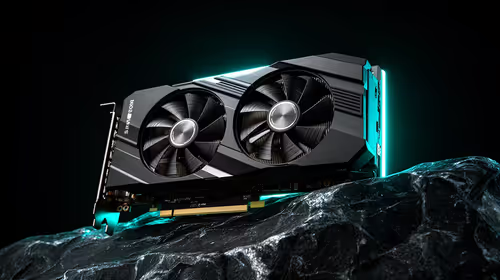
RTX 5090 on a 650W PSU is a tight pairing with very limited headroom. For SA gaming PCs, focus on total system draw, PSU quality, connector support, CPU choice, and avoid OC plans unless the full build is carefully power-limited.
PCIe 5.0 vs PCIe 4.0 for video editing in 4k is mainly about fit, features, compatibility, cost, and upgrade path, not one automatic winner. SA buyers should match the choice to the setup.
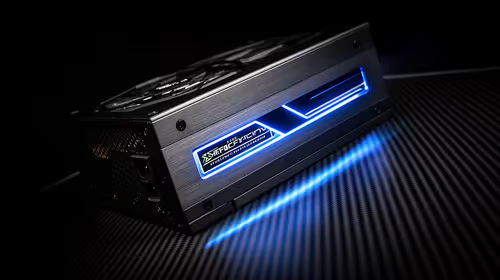
850W PSU safety for RTX 5090 is plausible with a quality unit and balanced parts. In SA, confirm connector support, CPU power draw, case airflow, PSU age, and spare capacity before building around 850W.
Wi-Fi 7 vs Wi-Fi 6e for competitive esports comes down to router support, latency goals, device compatibility, and coverage. SA buyers should match the choice to the real network setup.