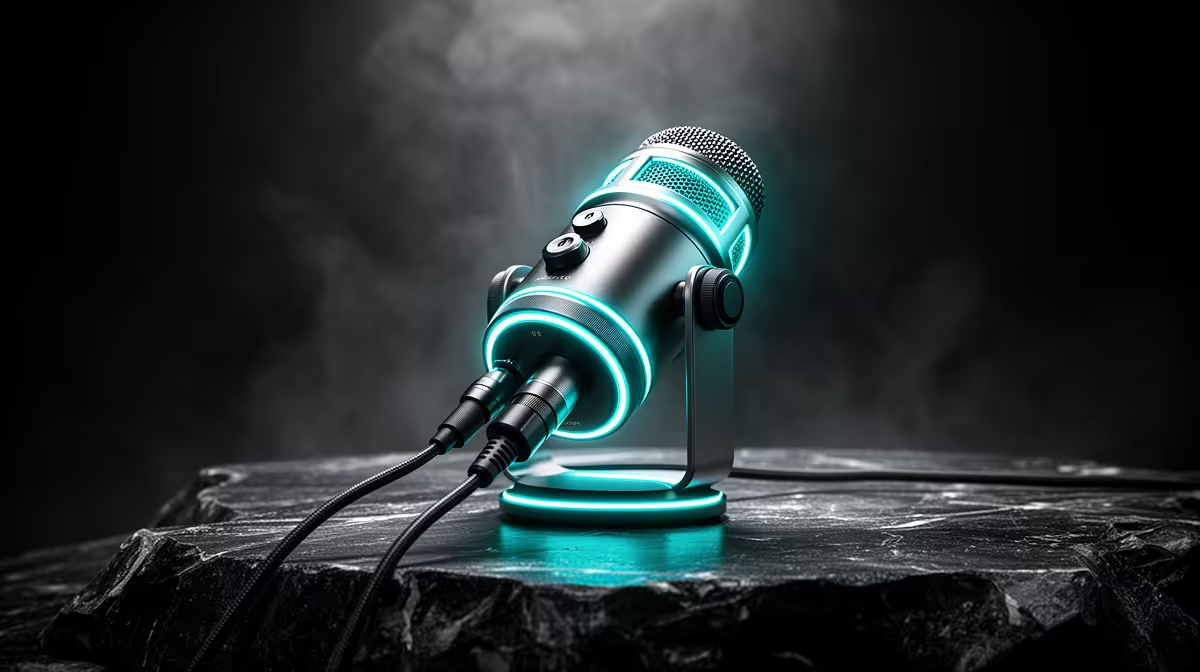
A microphone that only does USB is a microphone with an expiry date. The moment you decide to add an audio interface, phantom power, or a second host to your setup, you are shopping for a replacement. A dual-connection USB and XLR gaming microphone removes that ceiling. You plug it in over USB today, and when your studio grows, you simply switch cables rather than devices. In South Africa, that future-proofing typically costs between R1,800 and R4,500 depending on capsule grade and what the box includes.
Quick Answer
A solid dual-connection mic in South Africa costs roughly R1,800 to R4,500. The R3,000 midpoint gives you 24-bit audio, onboard monitoring, and XLR readiness for an interface later. Below R1,800 the capsule quality and build usually suffer. Above R4,500 you are buying studio-grade refinements most streamers will not notice.
💰 What the Price Bands Actually Buy You
At the entry end, around R1,800 to R2,200, you get a working cardioid capsule, a USB-C port, an XLR socket, and basic gain control. The capsule resolves speech clearly and handles game commentary well. The main limitation is noise floor: onboard electronics are competent but not exceptional, and quiet passages in a very silent room will show a faint background hiss under close listening. For streamers recording in moderately noisy home offices, this is invisible.
The R2,500 to R3,500 band is where most South African creators land and stay. At this price you get a 24-bit analogue-to-digital converter rather than a 16-bit one, which lowers the noise floor measurably. The shock mount quality improves, onboard headphone monitoring arrives with zero-latency hardware routing, and a mic in this band can produce podcast-quality audio through both USB and XLR paths without an external interface.
Above R3,500 to R4,500 the gains narrow for streaming and gaming content. You are paying for tighter capsule tolerance, a heavier metal body, and in many cases a reputation premium. A streamer whose audience watches at 1080p60 will not perceive a difference between a R3,000 and R4,000 dual-connection mic in a treated room. The upgrade makes more sense for commercial voice-over work or a podcast competing on audio quality directly.
🎮 Why Dual Connection Matters for Long-Term Rand Value
A USB-only mic locks you into the onboard digital-to-analogue converter permanently. When your signal chain evolves, the mic becomes the weak link and you replace it. A hybrid mic uses the same capsule whether you are running USB to a laptop or XLR into a Focusrite Scarlett or similar interface. The capsule investment is preserved; only the electronics in the signal path change.
In Rand terms, that saved replacement is typically R2,000 to R3,500: the cost of a standalone XLR mic at equivalent capsule quality. A R3,000 dual-connection body versus a R2,000 USB-only body plus a future R2,500 XLR replacement puts the hybrid ahead by a meaningful margin over two to three years.
The XLR path also unlocks 48-volt phantom power from an interface, which some hybrid mics accept to improve the preamplifier stage. Not all do, so confirm this in the specification sheet if you plan to run the XLR path through a phantom-powered interface.
When USB Is Enough
USB mode is not a compromise for most applications. A quality dual-connection mic in USB mode delivers clean 24-bit audio, hardware-monitored headphone output, and zero driver installation on Windows or macOS. For a solo streamer, a podcaster recording their own track, or a remote worker on video calls, USB mode is all that is needed.
The XLR path earns its keep when you add a second presenter and need two mics into a mixer, when you want to process the signal through hardware compression before it hits your software, or when you record to a standalone recorder rather than a PC.
🔧 What Bundled Accessories Add to the Price
Many dual-connection mics are sold in bundles that include a boom arm, shock mount, and pop filter. These bundles inflate the listed price by R600 to R1,200 on average, and whether that represents value depends on what you already own.
A bundled boom arm is worth taking seriously. Generic arms at entry price points are usually plastic but do the job for mics under 400 grams. If your mic body is heavier or you have a deep desk, budget separately for a steel arm and price the mic body on its own.
A bundled shock mount made specifically for the mic body it ships with is generally better value than an aftermarket universal mount. The fit is exact and the elastic tension is rated for the weight it carries. Universal shock mounts sometimes grip too loosely on narrower bodies and can let the mic tilt.
Pop filters vary widely. A thin nylon mesh bundled with a sub-R2,000 mic will do the basic job of diffusing plosives, but a metal mesh pop filter with an adjustable gooseneck is worth the modest additional cost if the bundle does not include one.
Pro Tip ⚡
Search for the mic body listed separately without the bundle, then compare the bundle price against sourcing the arm and mount individually. Bundles bundled with plastic arms and basic stands are often priced as if they include quality hardware. Pricing components separately frequently shows the bundle adds R200 to R400 of real value, not R1,000.
⚡ The Build Quality Signals Worth Checking
At this price range, a few physical indicators reliably predict longevity. An all-metal body with no flex at the mic stand thread is a good sign. A USB-C port rather than Micro-USB suggests the manufacturer expects the cable to be plugged and unplugged regularly. A headphone jack that clicks into place rather than sitting loosely in a plastic housing will outlast a loose one by years.
Check the XLR socket too. A recessed socket protected by the mic body frame resists accidental knocks that can loosen a surface-mount socket. A wobbly XLR connector mid-session causes intermittent signal loss that is extremely difficult to diagnose quickly.
The warranty terms are a real differentiator in South Africa, where repairs on imported electronics can be slow. A 2-year local warranty through an authorised distributor is substantially more useful than a 3-year warranty processed through international channels.
Frequently Asked Questions
What is a fair entry price for a dual-connection mic?
Around R1,800 to R2,200 covers a genuine USB and XLR hybrid with a cardioid capsule, basic gain control, and a usable shock mount thread. The capsule resolves speech clearly and the build is adequate for regular streaming. The noise floor is slightly higher than the midrange tier but not audible in typical streaming environments with moderate background sound.
Does spending over R4,500 give real gains?
Above R4,500 improvements shift toward tighter capsule tolerances, heavier bodies, and lower noise floors measurable in a quiet room but rarely audible in stream content. Most South African streamers see diminishing returns past R3,500. That money is better spent on acoustic treatment, a quality boom arm, or upgraded headphones.
Why pick dual connection over USB only?
USB gets you recording immediately with no additional hardware. The XLR port future-proofs the body for when you add an audio interface, when a second presenter joins and needs a mixer, or when you want hardware signal processing. The dual-connection body preserves your capsule investment across both stages of that evolution.
Is a R3,000 mic enough for serious streaming?
Yes, comfortably. At roughly R3,000 you get 24-bit audio conversion, onboard zero-latency monitoring, a low noise floor suitable for podcast-quality recordings, and an XLR path that scales with an interface later. The output is indistinguishable from considerably more expensive microphones in typical streaming and gaming environments.
Which extras inflate the price most?
Bundled boom arms, shock mounts, and pop filters typically add R600 to R1,200 to the sticker price. A bundled boom arm is worth taking only if it is steel-framed; plastic arms on entry-tier packages add limited long-term value. Price the mic body alone and compare against sourcing arms and mounts separately before committing to a bundle.
Ready to invest in a microphone that grows with your setup?
Browse the dual-connection USB and XLR gaming microphone range at Evetech and find the model that fits your budget today and your studio ambitions tomorrow.