Quick Answer
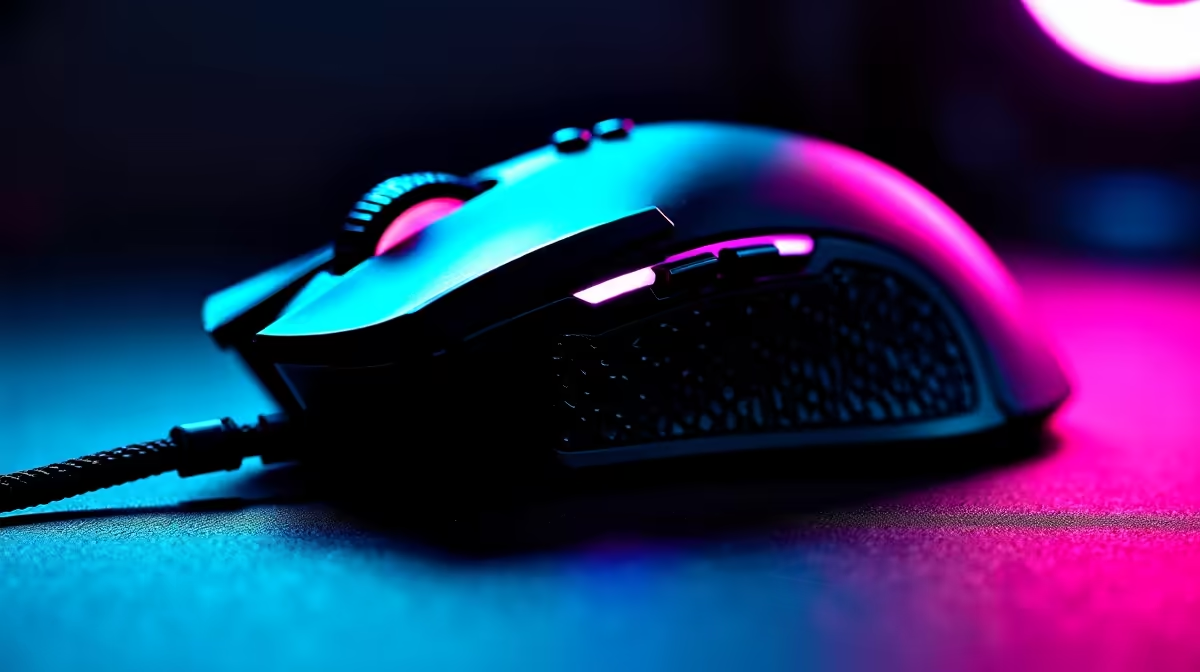
A solid esports mouse for competitive play starts at around R450–R650 for wired optical models with 1,000 Hz polling. For wireless, budget R1,600–R2,500 for genuinely low-latency 2.4 GHz options. Weight under 80g and a native optical sensor are the two non-negotiables — everything else is secondary.
Why Weight Matters for Competitive Play
Shaving grams from a mouse noticeably reduces hand fatigue during 3–4 hour ranked sessions. Most esports-focused mice released in the last two years target 55–75g. Honeycomb-shell designs achieve this through cutouts, while solid-shell ultralight mice use thinner plastics and minimal hardware. Both approaches are valid — pick honeycomb for max weight reduction, solid shell if you want a smoother surface feel.
For Roodepoort buyers, Evetech ships across Gauteng and standard courier delivery typically takes 2–3 business days from dispatch. Orders over R500 have no minimum shipping threshold across most of the Evetech catalogue.
Sensor Tiers: What the Numbers Mean
DPI (dots per inch) is a marketing number — higher is not better. Competitive players use 400–800 DPI almost universally. What actually matters is sensor accuracy: zero hardware acceleration, zero smoothing, 1:1 tracking at high speeds. Sensors like the Pixart PMW3395 meet all three. Lift-off distance should be adjustable or fixed low (under 2 mm) to prevent accidental movement when lifting the mouse.
Tracking speed (measured in IPS — inches per second) indicates how fast you can move the mouse before the sensor loses accuracy. A rating above 300 IPS covers even the most aggressive flick shots.
Mid-Range vs. Top-Tier: Is the Jump Worth It?
At R600–R900 wired, you get a solid optical sensor, 1,000 Hz polling, and a shape that suits most hand sizes. Moving to R1,500–R2,500 buys you optical switches (faster actuation, no double-click wear), lighter weight, and often a premium cable or wireless module. For casual to semi-competitive play the R600–R900 tier is excellent value. For serious ranked or LAN play, the R1,500+ tier earns its price over two or three years of daily use.
FAQ
What is the best grip style for an esports mouse?
Claw grip is most common in FPS esports — it positions fingers in a curved stance that enables fast flicks with the wrist. Palm grip offers more stability for tracking-heavy games. There is no universally best style; the right one depends on hand size and playstyle. Measure your hand (tip of middle finger to heel) and compare against manufacturer sizing guides.
Should I buy a wired or wireless esports mouse for Roodepoort use?
For home setups where you control the environment, wireless at the R1,600+ tier is fully competitive — 2.4 GHz latency from top brands is under 1 ms. Wired is simpler, cheaper, and never needs charging. For LAN events, most serious players still prefer wired to avoid wireless interference from dozens of nearby devices.
How long do esports mouse switches last?
Quality optical switches are rated for 100 million clicks and do not degrade over time. Mechanical switches (Omron Gold) are rated at 50–70 million clicks and may develop a slightly softer feel after heavy use. For daily competitive play, both switch types will outlast the rest of the mouse's useful life in most cases.
down a short-list, check the sensor model in the spec sheet — "gaming optical sensor" without a named chip is a red flag. Named sensors like PMW3395 or Hero 25K come with published accuracy data you can verify.