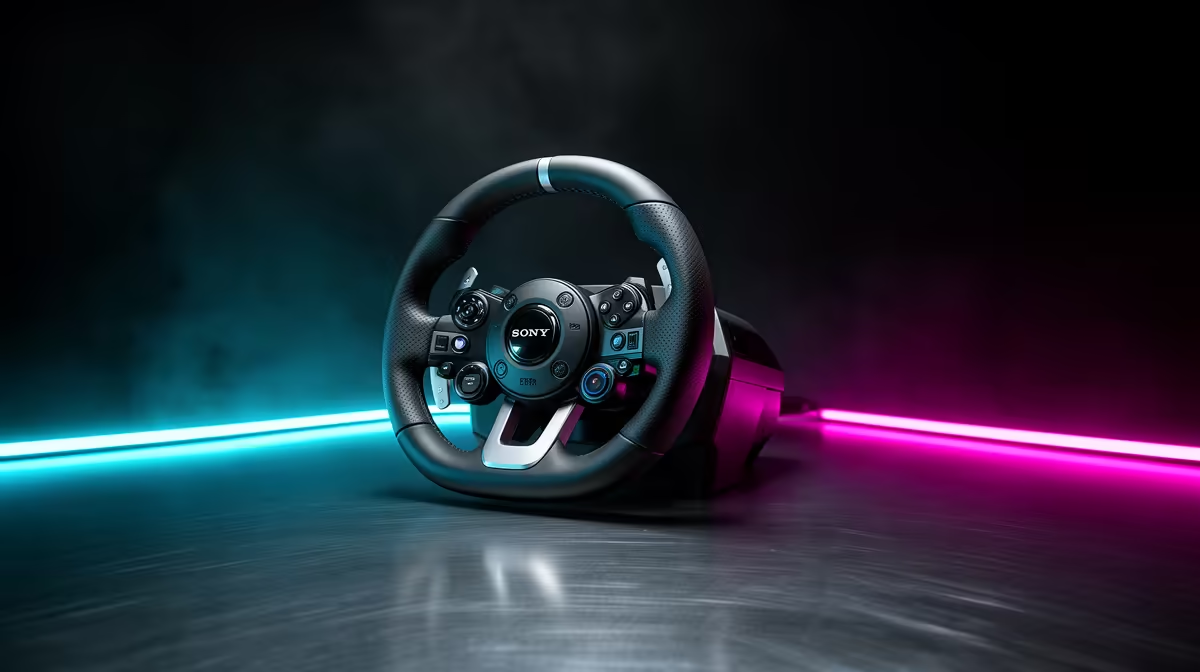
An esports player should choose a racing wheel for the exact simulator, competitive class and platform they intend to enter. High price and strong force feedback do not help when game support, clamp fit or pedal stability is wrong.
Recreate a timed competitive stint
List supported titles, platform, event rules and control requirements. Measure the desk or cockpit, then try a borrowed wheel through a full practice stint if possible. Check steering consistency, dead zones, brake control, heat, fatigue and how quickly settings can be restored.
No racing wheel with confirmed pricing appears in the product facts. The ViewSonic VX2779A 240Hz monitor at R2,350 and Palit RTX 5060 8GB graphics card at R4,800 are separate gaming references, not proof of simulator compatibility. For a wheel, verify current platforms, game list, force-feedback system, clamp dimensions, pedal set, driver support, spare parts and warranty.
Secure the mount, prevent pedals sliding and keep cables clear of feet. Install drivers from trusted channels and export profiles where supported. Back up simulator mappings and practise a safe fallback for equipment failure during an event.
Buy after repeatable lap data proves the control suits the player. Seat position, pedal mounting and deliberate practice can matter more than moving to a costlier wheel base.
Include pedal spacing in the body-fit trial.
Preparing for simulator competition? > Compare Evetech gaming hardware while validating racing controls separately.