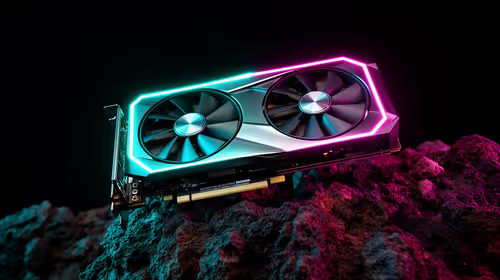
A fresh GPU generation rewrites the value chart, so comparing the whole RX 9000 line at once is the fastest way to find your slot.
Quick Answer
Across the RX 9000 range, the mid tier is the standout for SA gamers chasing 1440p at 144fps, with 16GB of VRAM and prices expected from about R10,000. The flagship targets 4K, while the entry card suits high-refresh 1080p.
What Changed This Generation
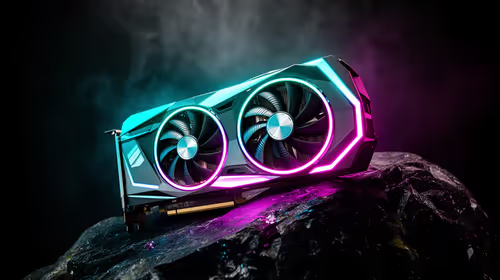
RX 9000 cards lean on improved ray tracing and a more efficient architecture, so a mid-tier card now does work that took a flagship last generation. VRAM allocations are generous, with 16GB common at the mid tier, which keeps 1440p and even light 4K free of texture spillover.
Choosing Within The Range
Pin your resolution and refresh first. For 1440p 144Hz, the mid tier clears it with headroom; for 4K 60-plus, step to the flagship. Check the new power connector and your PSU wattage, since the top cards can pull over 300W under load.
Value Check Before You Buy
Set a realistic budget band first and shortlist within it, then weigh warranty length and after-sale support, since those decide how the purchase ages. A part that is a little dearer but better backed often costs less across its life than a cheap one you replace early. It also helps to note your most-played titles, since the part that matters for one game may be irrelevant for another.
FAQ
Which RX 9000 card suits 1440p 144Hz?
The mid tier with 16GB of VRAM clears 144fps at 1440p in most titles, making it the value choice for a high-refresh 1440p setup.
Is the flagship worth it for 1440p?
Only if you also want 4K headroom. At pure 1440p the mid tier already saturates a 144Hz panel, so the flagship is future-proofing.
How much power does an RX 9000 flagship need?
Expect over 300W under load, so size your PSU accordingly and confirm it has the required power connector.
-- Decide your refresh target before the tier; a 144Hz 1440p panel is satisfied by the mid card, saving you the flagship premium.