



Marvel Rivals launch in South Africa
Marvel Rivals launch needs a balanced parts plan, not a random basket. Map the CPU, GPU, RAM, SSD, cooling, and monitor target to the budget so SA builders know where to spend first.
Read moreEvery ATX 3.1 PSU in SA should be shortlisted around the job it must do. South African buyers should compare wattage, efficiency, protection, and connector support, warranty path, and upgrade room before treating any pick as best.
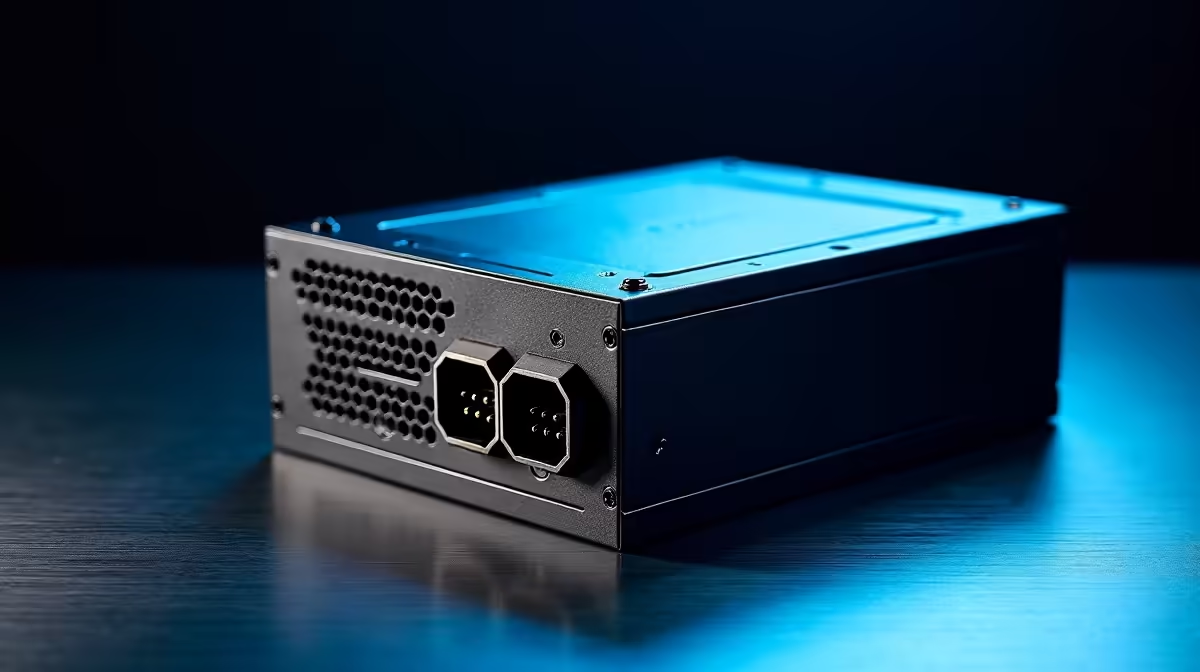
An ATX 3.1 PSU brief should focus on what the new standard actually changes: tighter transient handling and a native 16-pin connector built for current high-power GPUs.
For an ATX 3.1 PSU, the buyer signals that matter are a native 12V-2x6 connector, 80 Plus Gold or higher efficiency, and proper transient-spike handling. SA pricing spans roughly R1,800 for entry 650W Gold units to R5,500 for high-watt Platinum models with long warranties.
The headline is robust handling of GPU power transients, the brief spikes modern cards produce that can trip older supplies. ATX 3.1 also standardises the 12V-2x6 connector, the safer revision of the 16-pin cable, reducing the connector-heat concerns that affected early adapters.
When comparing units, confirm the native cable, the efficiency tier, and the warranty length. These three signals separate a well-built ATX 3.1 unit from a budget rebadge wearing the same label.
Match wattage to your GPU tier with headroom: 650W to 750W suits mid-range cards, 850W covers most high-end single-GPU rigs, and 1000W gives room for the heaviest cards or a future upgrade. Running a unit near 60 to 70 percent load keeps it efficient and quiet.
Stronger handling of GPU power transients and a standardised, safer 12V-2x6 connector, which together make it the sound choice for a modern high-power GPU.
Yes, for a current high-end GPU a native 12V-2x6 cable avoids adapters and reduces connector-heat risk compared with daisy-chained alternatives.
Size it to your GPU with headroom: 650 to 750W for mid-range, 850W for high-end single-GPU builds, and 1000W for the heaviest cards.
native 12V-2x6 cable and at least 80 Plus Gold; those two signals matter more than chasing the highest wattage you will never use.
Marvel Rivals launch needs a balanced parts plan, not a random basket. Map the CPU, GPU, RAM, SSD, cooling, and monitor target to the budget so SA builders know where to spend first.
Read more
Path of Exile 2 launch needs a balanced parts plan, not a random basket. Map the CPU, GPU, RAM, SSD, cooling, and monitor target to the budget so SA builders know where to spend first.
Read more
Black Myth Wukong launch needs a balanced parts plan, not a random basket. Map the CPU, GPU, RAM, SSD, cooling, and monitor target to the budget so SA builders know where to spend first.
Read more
Hollow Knight PC requirements should be mapped to resolution, settings and upgrade budget before choosing a tier. Verify current requirements, then balance GPU, CPU, RAM and SSD around SA pricing.
Read more
Hollow Knight build planning should focus on the target resolution, settings and total system balance. Treat launch wording as time-sensitive, then verify requirements before choosing SA PC parts.
Read more
Fallout 4 PC requirements should be mapped to resolution, settings and upgrade budget before choosing a tier. Verify current requirements, then balance GPU, CPU, RAM and SSD around SA pricing.
Read more
Best Value Laptops South Africa 2026 — Find top picks, local prices and buy tips to maximise performance per rand. Compare deals for students, creators and gamers. 🔎💸
Struggling with a weak Desktop PC Wi-Fi signal? 📶 Discover expert tips on positioning your tower and external antennas to eliminate lag and maximize your internet speeds for gaming and streaming. 🚀
Tired of loadshedding router restarts killing your Wi-Fi? ⚡ Discover why power cuts disrupt your connection and learn expert tips to get back online faster after the lights return. 🌐
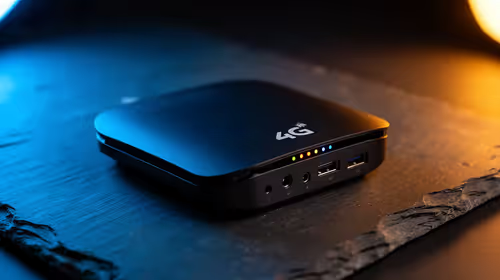
Master using a Nano SIM 4G router as your primary internet solution. Get stable speeds and seamless connectivity for gaming and streaming at home! 🌐🚀
Gauteng r30 000 needs practical checks before you choose. Compare fit, workload, support, setup needs, timing, and delivery expectations without relying on live availability or fixed 2026 claims.

Gauteng r40 000 needs practical checks before you choose. Compare fit, workload, support, setup needs, timing, and delivery expectations without relying on live availability or fixed 2026 claims.

Gauteng r50 000 needs practical checks before you choose. Compare fit, workload, support, setup needs, timing, and delivery expectations without relying on live availability or fixed 2026 claims.
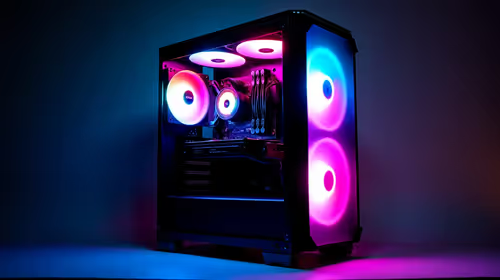
Gauteng r60 000 needs practical checks before you choose. Compare fit, workload, support, setup needs, timing, and delivery expectations without relying on live availability or fixed 2026 claims.
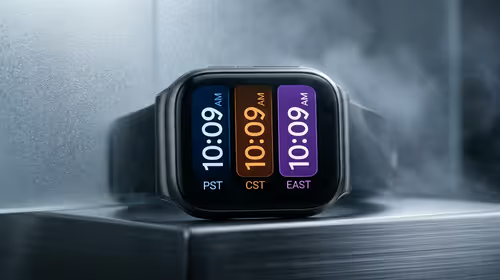
Three-tier smart watch plan for commuting should be shortlisted around the job it must do. South African buyers should compare fit, performance, compatibility, and upgrade room, warranty path, and upgrade room before treating any pick as best.

AR Glasses buying order for commuting students should be shortlisted around the job it must do. South African buyers should compare fit, performance, compatibility, and upgrade room, warranty path, and upgrade room before treating any pick as best.

Smart Watch buying order for commuting should be shortlisted around the job it must do. South African buyers should compare fit, performance, compatibility, and upgrade room, warranty path, and upgrade room before treating any pick as best.
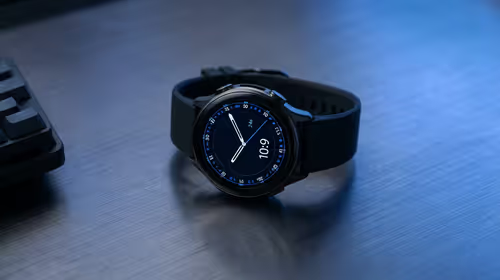
Smart Watch buying order for quiet PC builds needs a balanced parts plan, not a random basket. Map the CPU, GPU, RAM, SSD, cooling, and monitor target to the budget so SA builders know where to spend first.