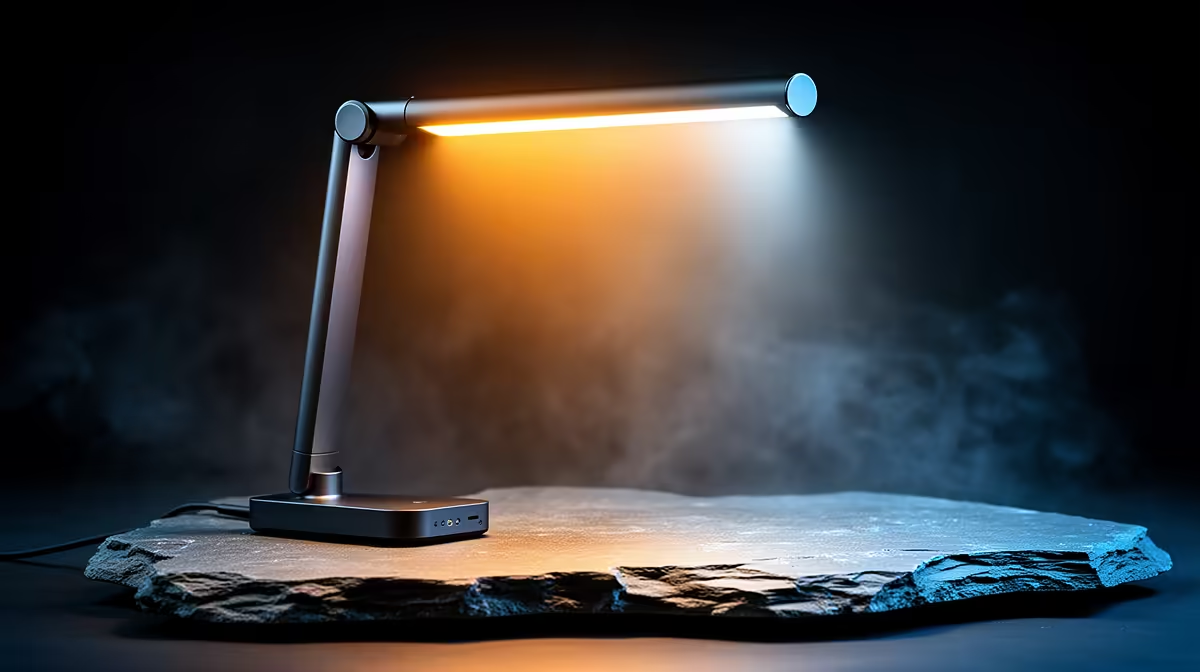
Kelvin numbers on a lighting dial mean nothing to most people until they see the actual difference on camera between one end of the scale and the other. A tunable led streaming light turns that abstract number into a practical choice, and understanding what each segment of the range actually looks like removes the guesswork entirely. Priced at R629, the NearStream SL10B spans the entire 700K to 6500K scale, giving creators every stop from deep amber to bright daylight in a single fixture.
Quick Answer
Lower numbers on the Kelvin scale, closer to 700K, produce deep amber and orange tones, while higher numbers near 6500K produce bright, bluish daylight-style light. At R629, the NearStream SL10B covers this entire span, so understanding a few key stops along the way, rather than memorising the whole scale, is enough to pick the right setting for any type of footage.
🔥 The Warm End of the Scale
The lowest part of the range produces deep amber and orange tones closer to candlelight or firelight than anything resembling daylight, while the band just above it starts resembling household lamps and cosy indoor lighting.
700K to 2000K: Accent and Mood Tones
This segment is rarely used as a primary light source for video, working better as an accent or background mood tone. Ambient background lighting or creative colour effects behind a streamer's setup are the main uses here, adding warmth without lighting a face directly. Pointing the fixture at a wall or backdrop rather than a subject is the usual way this range gets used, since directly lighting a face with such a deep amber tone would look unnatural rather than stylised.
2000K to 3000K: Soft Warm Fill
This band starts resembling household lamps, still warm but bright enough to serve as usable fill or key light. Most home bulbs sit somewhere in this range, which is why matching a light to this band often blends seamlessly with existing room lighting for evening vlogging or casual talking-head content. Creators recording after dark, when a room's own lamps are already doing the work, often find this segment blends in rather than fighting the ambient tone already present.
⚖️ The Neutral Middle of the Scale
Between the warm and cool extremes sits the range most talking-head creators and video callers actually default to, since it avoids looking either overly orange or clinically blue.
3000K to 4000K: Flattering Skin Tones
This is often the sweet spot for skin on camera, warm enough to avoid looking clinical but bright enough to serve as a genuine key light. Skin tones generally photograph better under slightly warm light than under cool, bluish light, which tends to exaggerate blemishes and flatten complexion. Many creators land here by trial rather than by targeting the number directly, nudging the dial warm until a face looks natural rather than pale or washed out.
4000K to 5000K: A Practical Compromise
This range starts feeling closer to daylight without the full crispness of the top end, suiting video calls and general-purpose lighting where neither a strongly warm nor strongly cool look is the goal. If a single setting has to serve multiple purposes across the day, this band is often the most versatile choice, since it reads as neutral enough for a work call in the morning and a stream later that evening without needing to be readjusted each time.
❄️ The Cool End of the Scale
At the top of the NearStream SL10B's range, light reads as bright, crisp and closer to midday daylight or cool white office lighting.
5000K to 6500K: Crisp and Energetic
This tone suits gaming streams and high-energy content where a sharper, more alert look matches the pace of the footage. Gaming setups often already feature cooler-toned RGB peripherals and monitor lighting, so a light tuned toward this end blends with the existing aesthetic rather than clashing with a warmer tone. The very top of the range, close to 6500K, is the closest this fixture gets to bright midday sun, and it works best when a subject's skin tone can handle a cooler cast without looking pale.
🎚️ Finding Your Setting Without Guesswork
Rather than memorising exact numbers, watch a live camera preview while adjusting the dial and stop once the footage looks natural rather than orange or blue. Testing against your room's existing light source, whether household bulbs or a window, is more reliable than targeting a specific Kelvin figure blind. Pairing the light with other gaming accessories that share similar tone considerations, like monitor lighting, helps the whole setup look coherent rather than mismatched.
Frequently Asked Questions
What does a low Kelvin number like 700K look like on camera?
It produces a deep amber or orange tone, closer to firelight than daylight, usually used as an accent rather than a main light source.
What Kelvin range is best for skin tones?
Around 3000K to 4000K tends to flatter skin tones best, warm enough to look natural without appearing overly orange.
Why does gaming content often use cooler settings?
Cooler tones near 6000K to 6500K read as sharper and more energetic, matching the pace of gaming footage and cooler-toned RGB peripherals.
Is there one setting that works for everything?
A middle setting around 4000K to 5000K is the most versatile compromise if you need one tone to suit multiple purposes.
Do I need to know exact Kelvin numbers to use a bi-colour light well?
No, testing against a live camera preview and adjusting until footage looks natural is more reliable than targeting a specific figure.
How wide is the NearStream SL10B's adjustable range?
It spans the full 700K to 6500K range at R629, covering deep amber tones through to bright, cool daylight in one fixture.
What else should I check when setting up alongside this light?
Consider your existing gaming accessories and a cable management solution so the whole desk setup, not just the lighting, looks tidy on camera.
Can the same light suit a warm evening stream and a bright daytime one?
Yes, since the full 700K to 6500K range means one fixture can be nudged warmer or cooler as the time of day and the room's ambient light shifts.
Is it worth adjusting colour temperature slightly for each recording session?
Small adjustments session to session are common, since changing weather, curtains or time of day all shift the room's ambient tone the light needs to match.
Ready to make sense of those Kelvin numbers on the box?
The NearStream SL10B moves through the entire 700K to 6500K spectrum on one panel, turning warm and cool into a single dial. Evetech has it listed at R629 under streaming lights.