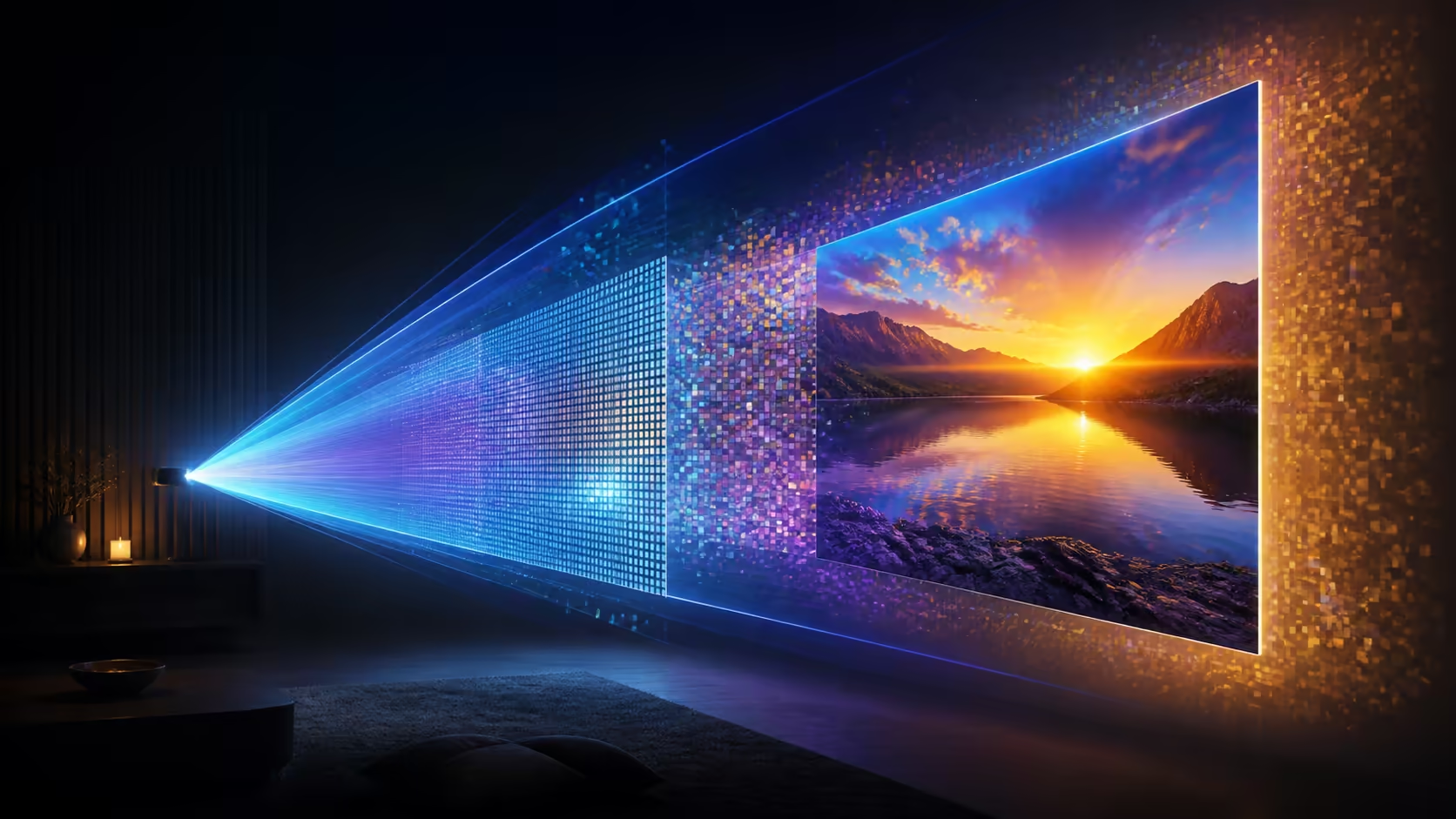
Projector performance begins with two different image questions: how much light the device produces and how much detail its display grid can form. 500 ANSI lumens and native 1080p describe those foundations, but the room, source and picture size decide what viewers perceive. The WANBO Cube 2 Pro combines both at R3,999, creating a useful case study for a disciplined home test.
Quick Answer
The Cube 2 Pro balances 500 ANSI lumens with true native 1080p and triple-coated glass optics, favouring sharp home viewing where ambient light is controlled.
Five hundred ANSI lumens measures the Cube 2 Pro's light output, while native 1080p identifies its Full HD display resolution. At R3,999, the projector can create pictures from 40 to 130 inches. Neither figure guarantees performance across every size or light level, so evaluate them together using the planned room and content.
🧭 Read brightness as an output, not a room verdict
ANSI lumens give buyers a standardised light-output unit. The number does not include the effect of wall colour, surface texture, ambient light or image area. Two households using the same projector can reach different conclusions because the reflected picture is part of the viewing environment.
Prepare a three-scene brightness sequence. Use a dark film interior to expose lost shadow separation, a bright outdoor scene to show highlight visibility and a programme with small text. Run it at the most demanding normal time of day, using only the light-control steps the household will repeat.
Change one environmental variable at a time
Close one curtain, switch off one lamp or move the image away from a strongly lit wall, then replay the same scene. This reveals which room change produces the largest improvement. A useful result does not require assuming that 500 ANSI lumens is universally bright or dim.
The Evetech projector range becomes relevant after the room's minimum visibility condition has been defined.
🧭 Interpret native 1080p through source quality
Native resolution refers to the physical output grid. A clean 1080p source can map naturally to the Cube 2 Pro's Full HD display, but streaming compression, low-resolution files and source scaling can remove detail before the image reaches the projector.
Use a paused frame with subtitles, hair, fabric and diagonal edges. Compare it with a sharp interface element. If the menu looks crisp while video remains soft, inspect the stream or connected source before refocusing the projector.
Focus itself is automated through a ToF process that also handles keystone in 0.1 seconds. Place the lens as squarely as possible, let the system finish, then inspect the centre and four corners. A textured or bowed surface can make one region look weak even when the source and resolution are sound.
Separate 4K wording from Full HD output
A higher-resolution source, accepted input or upscaling claim is not the same as native 4K projection. The Cube 2 Pro outputs native 1080p. Anyone needing 4K processing must check the exact candidate for that capability instead of inferring it.
🧭 Use picture size to connect light and detail
The Cube 2 Pro covers a 40-130 inch projection range. Growing the diagonal spreads its light over a larger area and makes source flaws, focus variation and wall texture easier to see. Seating distance may counter some visible detail differences, but it cannot restore contrast lost to ambient light.
Create a size ladder with several marked diagonals. Hold the source, image settings and curtains fixed. At each step, score dark-scene visibility, fine detail, subtitle comfort and the amount of eye movement needed from the nearest seat.
Required throw distance must be confirmed independently. A range endpoint does not state where the projector should sit, and a planned diagonal is useless if the room cannot place the lens safely.
🧭 Add smart features, sound and sources last
Image performance does not decide content access. Android TV 11 provides the built-in smart route, while HDMI and USB add physical connections. Check current apps and play the normal source through the complete chain. A service issue should not be mistaken for a resolution issue.
The speaker is rated at 8W and projector operation at 28dB. Test both from the planned seats during quiet dialogue. Volume, room reflections and viewer distance affect what those numbers mean in practice.
Gaming needs another layer. Native 1080p defines the output resolution but does not measure input delay. Attach the real source, play a well-known timing sequence and keep picture settings steady. The gaming-accessory section at Evetech can support compatible controls and source equipment after that path is clear.
The final decision should record the successful size, lighting state, source and seat. That context turns 500 ANSI lumens and native 1080p into a usable result rather than isolated marketing values.
Build a performance matrix from repeatable tests
Use rows for dark film, bright programme, small text and fast motion. Create columns for the household's chosen diagonals and meaningful light states. Score visibility and detail separately on a simple pass-or-fail basis. Do not combine them into one vague picture-quality number: a frame can retain detail but lose separation, or remain bright while source compression removes texture.
Repeat the matrix with the normal streaming route after establishing a clean reference source. When only the stream fails, investigate delivery and output settings. When every source fails at the same large diagonal, image area or room light deserves attention. Keep focus and geometry stable throughout so the matrix does not compare different alignments.
Test whether a specification changes the decision
Hide the candidate names and show another viewer the same scenes at the successful size. Ask which differences affect comprehension or comfort. Then reveal native resolution, ANSI output and price. This order reduces the tendency to see an expected improvement because a number looked larger.
Use the result to refine mandatory conditions. A future shortlist can reuse the matrix even when prices or models change, preserving the room evidence instead of copying an old recommendation. Revisit the test after changing the wall, curtains or seats so an environmental shift does not masquerade as a new display result.
Brightness determines how strongly the image survives room light and enlargement; physical resolution determines the pixel detail available once that image is visible. The 230-degree stand and automatic calibration help place the picture on a more suitable surface, while the 28dB cooling system keeps quiet scenes cleaner acoustically. None of those features changes the need to manage daylight around a 500-lumen home setup.
Assess both brightness and fine detail from the same normal seat.
Frequently Asked Questions
Are ANSI lumens and resolution directly related?
No. ANSI lumens concern light output, while resolution concerns the picture's pixel grid. Both influence viewing, but neither determines the other.
Why can 1080p video still look soft?
Compression, incorrect source scaling, focus, wall texture or viewing distance can reduce perceived detail even on a native-1080p display.
Does a larger picture need more light?
The same projector output is spread across more area as the image grows. Test several sizes because perceived brightness can decline with expansion.
Can 500 ANSI lumens be judged from a showroom-style menu?
No. Use real bright and dark scenes under the home's normal light. Menus rarely expose the shadow and subtitle conditions that matter during viewing.
Does the 130-inch range point promise sharp Full HD quality?
It confirms a supported size, not a measured outcome. Source, alignment, surface, ambient light and seating determine whether that diagonal succeeds.
Ready to turn brightness and resolution into a room-specific result?
Compare Evetech projectors after testing fixed scenes across several diagonals and recording the light-control steps your household will repeat.