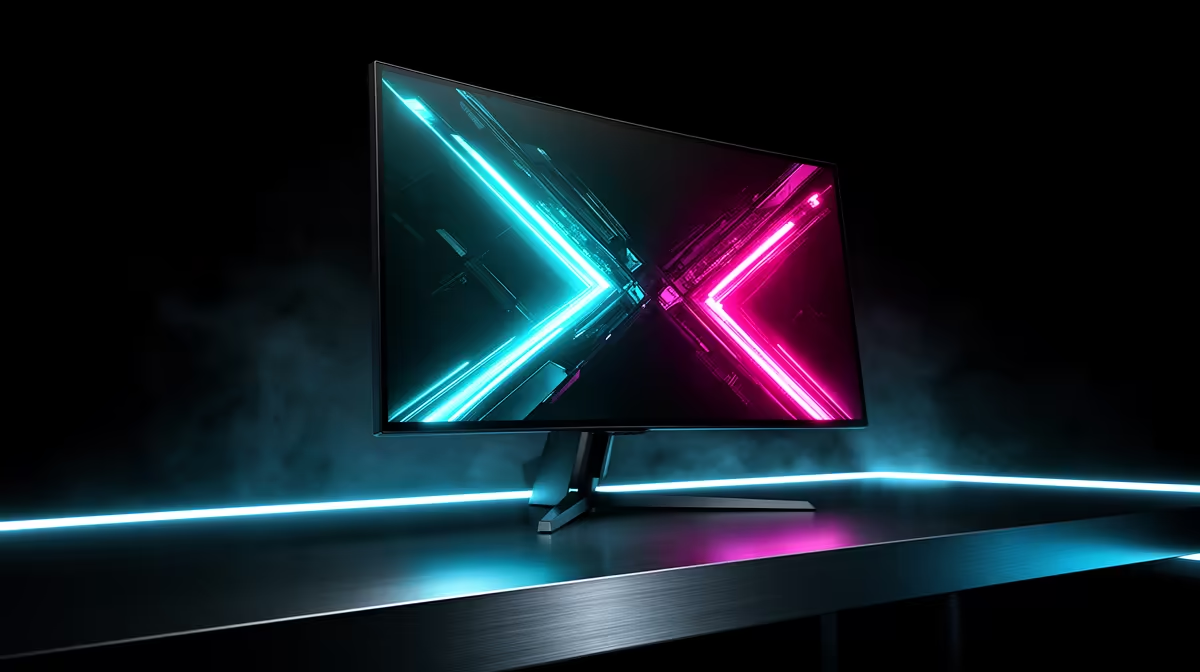
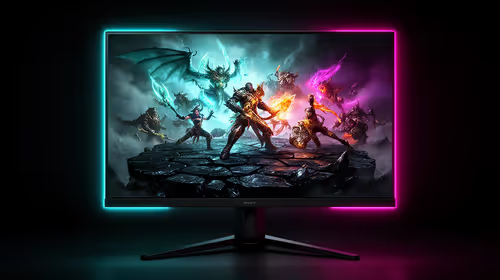
Your RTX 5060 laptop may spend all week on its built-in display, then land on a desk for a weekend game. The external monitor should make that change feel worthwhile without turning every new release into a settings rescue. For this GPU tier, a 1440p monitor for an RTX 5060 laptop at 165Hz is the comfortable starting point. Higher refresh becomes useful when the game library can feed it.
Quick Answer
Look for a 27-inch 1440p monitor with 165Hz to 180Hz refresh, Adaptive-Sync and clean response across its VRR range. A 240Hz model suits esports; 4K suits work and lighter play with DLSS doing more in demanding games. Palit's desktop RTX 5060 Infinity 2 OC 8GB was R6,999 in Evetech's July 2026 price pack. That dated desktop price is a market anchor rather than a claim about your laptop's performance or cost.
🖥️ Give the laptop a sharper main screen
The move from a 15-inch or 16-inch laptop panel to 27-inch QHD changes more than game detail. Windows gets room for two practical panes, text remains crisp at a normal viewing distance and the laptop can sit off to one side as a second display.
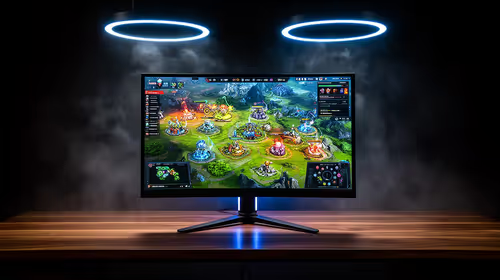
At 1440p, the RTX 5060 laptop GPU has a sensible path through current games. Start with High settings, measure a busy scene and use DLSS Quality where it improves the lows without softening the image from your chair. Heavy ray tracing may still need restraint.
Compare native resolution and refresh options in Evetech's monitor range. Filter by the screen you intend to use every day, then check whether the stand and ports fit the laptop layout.
🎛️ Treat laptop power as part of the monitor match
The same GPU name can sit in laptops with different cooling and power limits. Performance also changes between a silent profile and the plugged-in gaming mode. A monitor recommendation that ignores the chassis is incomplete.
Benchmark with the charger connected and the laptop on the profile you can tolerate for a full session. Listen to the fans. If maximum mode adds a handful of frames while making the desk unpleasant, use the sustainable result to choose refresh rate.
✨ Let DLSS open headroom, then inspect the picture
DLSS upscaling can make 1440p easier to render while the monitor stays at its native resolution. Begin with Quality mode and look at fine geometry, foliage and text in motion. Move lower only when the frame-time gain is worth the image change.
On supported games, newer frame-generation options can fill more of a high-refresh panel. Base FPS still controls much of the response you feel. A 240Hz screen bought solely around a generated counter may disappoint in competitive play, where real frames and low latency matter most.
🔌 Check which port reaches the RTX GPU
USB-C DisplayPort can be an excellent route to a high-refresh monitor, but USB-C is only the connector shape. Confirm that the exact laptop supports DisplayPort Alt Mode and the required bandwidth. HDMI is equally valid when the laptop and display expose the mode you need.
Some machines wire one output directly to the NVIDIA GPU and another through integrated graphics. That can affect VRR, latency and available modes. The manual or control panel should show the path. After connecting, open Windows Advanced display and select the native resolution plus maximum intended refresh.
🔄 Tune VRR around real laptop frame rates
Enable Adaptive-Sync on the display and the compatible setting in the NVIDIA control panel. Run from a light indoor scene into the busiest part of a level. The monitor should keep motion composed as frame rate moves through its operating range.
Do not judge the setup from a static 165fps cap alone. One-percent lows reveal whether the laptop keeps delivery even when heat builds. If performance falls after twenty minutes, lift the rear of the chassis, clear the vents and retest before blaming the screen.
🎯 Decide whether 240Hz belongs on this desk
Valorant, Rocket League and similarly light games can justify a faster panel when the processor also holds high frame rates. Run the match at 1440p first. If lows stay comfortably above 165fps, the extra ceiling has a job.
For a mixed library, panel quality often matters more. A responsive 165Hz display with good contrast and a useful stand can improve every session, including games that sit around 90fps. The monitor stays useful after a later laptop upgrade.
🌑 Price OLED around how you use the machine
OLED response and black levels can make an external screen feel like a dramatic upgrade from a typical laptop panel. It also costs more and deserves sensible static-image care. A desk used for long work sessions with fixed app chrome may still be happier on IPS.
Check Evetech's monitor best-sellers for the panel types currently available, and use the RTX 5060 category as a separate view of the wider GPU tier. Desktop cards and laptop GPUs with the same family name are not interchangeable performance figures.
Frequently Asked Questions
Is 1440p still the right call for an RTX 5060 laptop?
Yes. It balances desktop sharpness with a manageable game load, especially when DLSS is available for demanding titles.
Can an RTX 5060 laptop drive a 4K external monitor?
It can drive a 4K desktop and play lighter games. New heavy titles will often need upscaling and reduced effects.
What connection type works best with an RTX 5060 laptop?
Use the HDMI or USB-C DisplayPort output that exposes the monitor's full mode and, ideally, connects directly to the NVIDIA GPU.
Does the RTX 5060 laptop support DLSS for monitor gaming?
Yes, in supported games. Test image quality and base response at the monitor's native resolution.
Should I prioritise Hz or resolution with an RTX 5060 laptop?
Choose 1440p first for mixed use, then buy the refresh rate your measured game performance can use.
How does the RTX 5060 compare to the 4060 for monitor pairing?
The newer tier brings newer rendering features, but laptop power and cooling differences can outweigh a simple name comparison. Test the exact model.
Is OLED worth it for an RTX 5060 laptop setup?
It can be if contrast and response are central to your games. IPS remains easier to justify for long mixed work sessions and a tighter budget.
Giving the RTX 5060 laptop a screen that can stay through the next upgrade?
Compare 27-inch 1440p 165Hz monitors at Evetech, then verify the laptop's display path before settling on the cable and VRR setup.