You’re deep into a ranked match, the final circle is closing, and then… black screen. Your PC is still humming, but the game is gone. Nothing is more frustrating for a South African gamer than a graphics card crashing at the worst possible moment. Whether you're Team Green or Team Red, random freezes, stutters, and crashes can ruin any session.
But don't despair! This guide will walk you through the most common fixes for NVIDIA and AMD GPU issues. 🔧
First Steps When Your Graphics Card is Crashing
Before diving into complex solutions, let's cover the basics. These three steps solve the vast majority of GPU crash issues and are the best place to start your troubleshooting journey.
Start with the Drivers: The Usual Suspect
Outdated, corrupt, or buggy drivers are the number one cause of a graphics card crashing. Both NVIDIA and AMD release frequent updates that optimise performance and squash bugs for new games.
- NVIDIA users: Head to the GeForce Experience app or their official website.
- AMD users: Use the AMD Software: Adrenalin Edition app or visit their support page.
Always choose the "Clean Installation" option if available. This removes old profiles and settings that might be causing conflicts. If problems persist after a standard update, a more thorough approach is needed.
Pro Tip: Use DDU for a Truly Clean Slate ⚡
For stubborn driver issues causing your GPU to crash, use Display Driver Uninstaller (DDU). This free utility completely wipes every trace of old NVIDIA, AMD, and Intel graphics drivers from your system in Safe Mode. It prevents conflicts that a standard uninstall might miss, giving you the perfect foundation for a fresh driver installation.
Check for Overheating 🌡️
Your graphics card has a built-in safety feature: if it gets too hot, it will slow down (throttle) or shut down completely to prevent damage. This can feel just like a random crash.
Download a free tool like MSI Afterburner or HWMonitor to check your GPU temperatures while gaming. Anything consistently above 85°C under load is a red flag.
Common causes of overheating include:
- Dust clogging the fans and heatsink.
- Poor airflow inside your PC case.
- Dried-out thermal paste on the GPU chip.
A simple clean-out with a can of compressed air can make a world of difference.
Is Your Power Supply (PSU) Up to the Task?
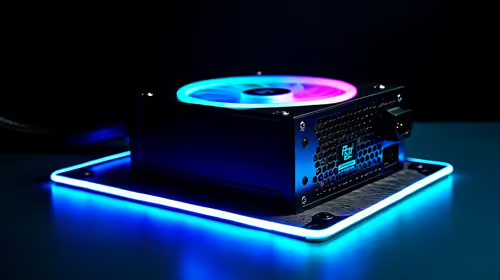
A weak or faulty Power Supply Unit can cause your graphics card to crash, especially under heavy load. When your GPU needs a sudden burst of power during an intense in-game moment, an inadequate PSU might fail to deliver, causing a system reboot or a driver crash. Ensure your PSU has enough wattage for your entire system, with a little headroom to spare.
Advanced Fixes for Specific NVIDIA and AMD Issues
If the basics didn't solve your GPU crashing problem, it's time to dig a little deeper. Software settings and underlying hardware stability can often be the culprits.
For those running Team Green, tweaking settings in the NVIDIA Control Panel can often solve instability. If your card has seen better days, exploring the performance of modern NVIDIA GeForce graphics cards can highlight what a massive difference an upgrade makes.
Likewise, Team Red users should dive into the AMD Software: Adrenalin Edition, which offers powerful tuning and stability options. Constant crashes on an older model might mean it's time to check out the latest generation of AMD Radeon graphics cards, known for their excellent performance per Rand. Underclocking your GPU's memory or core clock by a small margin (50-100MHz) can also be a quick fix for an unstable factory overclock.
When Troubleshooting Fails: Is It Time for an Upgrade?
You've done it all: clean driver installs, temperature checks, and software tweaks... but your graphics card is still crashing. Sometimes, the hardware itself is simply failing. Components degrade over time, and persistent crashes that can't be fixed with software are a classic sign of a dying GPU.
Instead of sinking more hours into a failing component, consider it an opportunity. Upgrading not only fixes the crashing but unlocks new levels of performance, letting you enjoy higher frame rates and better visuals. You can often find some fantastic graphics card deals right here in South Africa that will get you back in the game, stronger than ever. ✨
Ready for a Rock-Solid Gaming Experience?
Fixing a crashing graphics card can be a pain, but the solution is often within reach. If you've decided it's time for an upgrade to guarantee stability and performance, we've got your back. Explore our complete range of Graphics Cards and find the perfect GPU to power your victories.