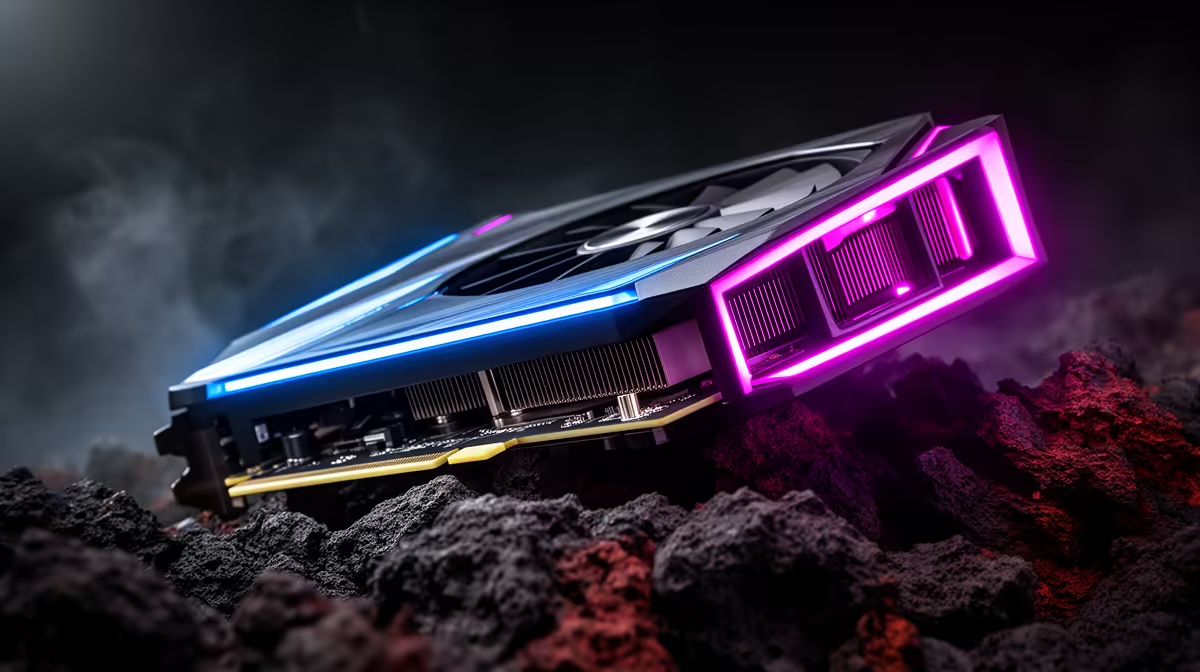
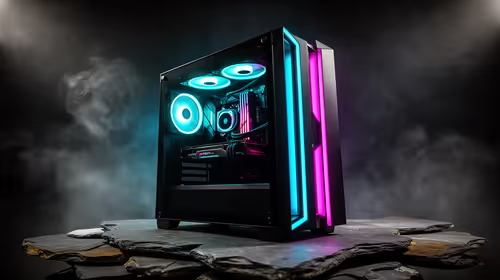
The quickest path past FPS drops on a RTX 5090 build is to pin down which subsystem is actually overloaded.
Quick Answer
Fixing FPS drops on a RTX 5090 build comes down to matching the display target to real performance and removing background contention. An RTX 5090 flagship card pushes past R65,000, so a top build can reach R110,000. Confirm with a measured before-and-after, not a feeling.
Confirm Memory And Storage Health
Make sure 32 GB VRAM is enabled correctly and that the boot drive has free space and healthy speeds. Misconfigured memory profiles and a near-full drive both surface as FPS drops under load. An RTX 5090 flagship card pushes past R65,000, so a top build can reach R110,000. A quick check here often explains stutters that look like a GPU problem on the RTX 5090 build.
Check Display Mode And Frame Targets
Confirm the panel is running its rated refresh, that resolution matches your intended target, and that any frame cap is deliberate. Verify VRR is on, choose fullscreen or borderless on purpose, and make sure the RTX 5090 build is not silently falling back to a lower mode. With 4K 144 fps sorted at the source, FPS drops often eases before you touch anything else.
Fix the cause, then shop smart.
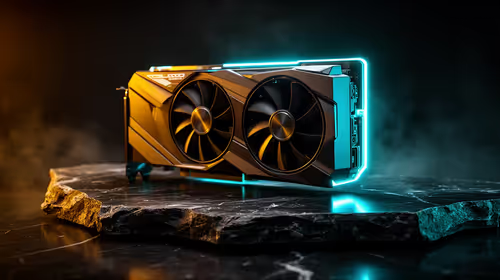
When your before-and-after numbers point to a clear limit on your RTX 5090 build, the right Evetech graphics card pick becomes obvious.
Watch Thermals And Power Behaviour
Log temperatures during your scene and confirm the system is on a high-performance power profile, not a battery-saver or eco mode. Heat throttling and conservative power limits make frame rate sag on an otherwise healthy RTX 5090 build. Targeting 575 W board power as a reference keeps your expectations grounded while you tune airflow and limits.
FAQ
How do I measure frame rate reliably on a RTX 5090 build?
Use an on-screen overlay and the same in-game scene each test. Capture a 60-second run, note the average and the lows, then compare after every change. Consistent scenes make small differences visible.
How much should I budget to properly address this on a RTX 5090 build?
Often nothing, since most fixes are configuration changes. An RTX 5090 flagship card pushes past R65,000, so a top build can reach R110,000. If a measured bottleneck remains after tuning, spend on the single part your data points to rather than a full rebuild.
Is FPS drops on a RTX 5090 build a hardware fault or a settings problem?
Most of the time it is settings, drivers, or background load rather than a broken part. Run one repeatable scene, change a single variable, and watch frame rate. Only consider a replacement once a clean configuration still shows the issue.
Test Smart
a short log: setting changed, before value, after value. A 30-second repeatable run is worth more than testing three different games.