


PCIe 5.0 vs PCIe 4.0 for Video editing in 4k in SA
PCIe 5.0 vs PCIe 4.0 for video editing in 4k is mainly about fit, features, compatibility, cost, and upgrade path, not one automatic winner. SA buyers should match the choice to the setup.
Read moreThe Motu M2 delivers up to 60 dB of preamp gain with approximately 115 dB of dynamic range and round-trip latency near 2.5 ms, while the Focusrite Scarlett Solo provides up to 56 dB of gain with Air mode, award-winning preamp voicing and a stronger bundled software.
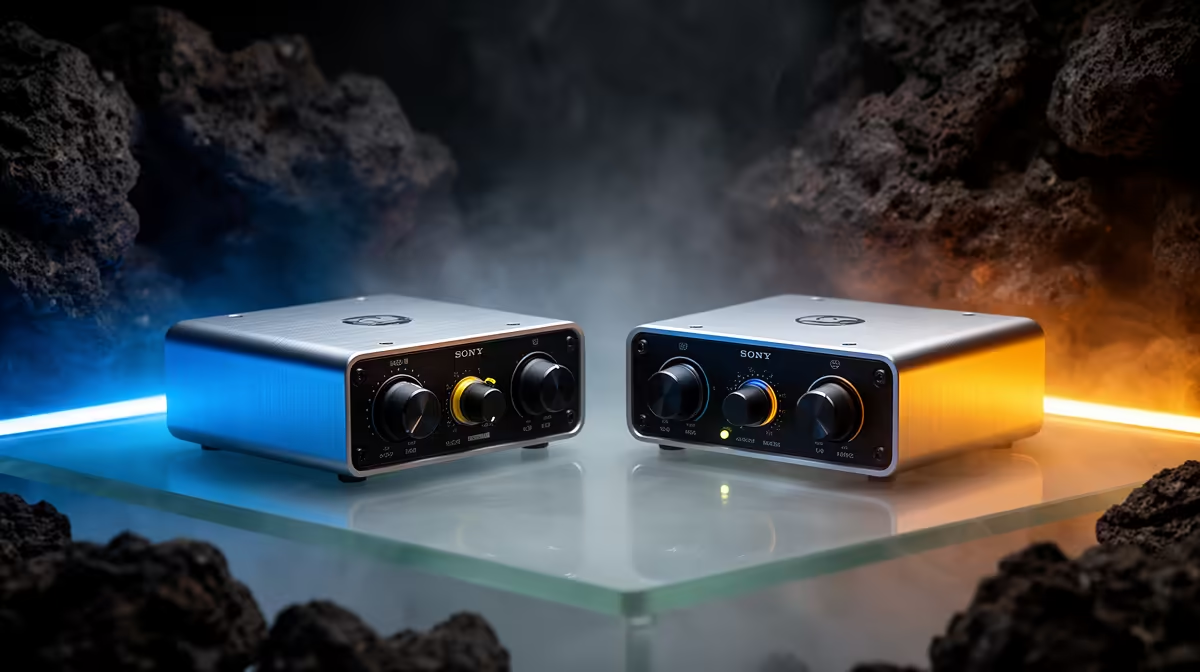
Two interfaces dominate the under-R5,000-ish home studio bracket, and they pull in different directions. The Focusrite Scarlett versus Motu M2 decision is really a choice between Focusrite's voiced, character-rich preamps with bundled software, and Motu's clinically clean conversion with class-leading latency and a front LCD. Both record vocals, guitars and podcasts well. The right pick depends on whether you value tone and a software head start, or raw measurement and monitoring.
The Motu M2 wins on the numbers: around 60dB of gain, roughly 120dB of input dynamic range, near 2.5ms round-trip latency and a useful metering screen. The Focusrite Scarlett Solo wins on voicing and value extras: up to 56dB of gain, the Air mode that adds high-end sparkle, and a stronger bundled software pack. Choose Motu for cleanliness, Scarlett for character and the included tools.
On paper the Motu M2 leads where it counts for tracking. It offers up to 60dB of preamp gain, handy for quieter dynamic microphones, and around 120dB of dynamic range on its inputs with even higher figures on the outputs. Its conversion uses an ESS Sabre DAC, and Motu interfaces are known for the lowest round-trip latency in this class, near 2.5ms, which matters when you monitor through software effects.
The Scarlett Solo answers with up to 56dB of gain and Focusrite's long-standing preamp voicing, plus the Air mode that lifts the high end for vocals and acoustic guitars. The gain difference is small in practice for most condenser microphones, but if you run a low-output dynamic mic, the Motu's extra headroom is genuinely useful.
This is the heart of the choice. The Motu M2 aims for transparency. What goes in is what you hear back, with no flavour added, which producers who want an accurate starting point prefer. The Scarlett's preamps are slightly more forgiving and, with Air engaged, add a pleasant brightness that flatters voices and acoustic instruments straight out of the box.
Neither is wrong. If you mix carefully and want a neutral capture, the Motu is the cleaner canvas. If you want recordings that sound finished sooner with less plugin work, the Scarlett's voicing does some of that for you. Whichever you pick, the quality of your monitoring matters just as much, so it is worth pairing either with a decent set of studio headphones from Evetech so you actually hear what you captured.
The Motu M2 includes a full-colour LCD on the front showing live input and output levels. That visual metering is genuinely helpful for setting gain quickly and catching clipping at a glance, and it is the M2's standout convenience feature in this bracket.
The Scarlett counters with gain halos that glow green to red as you approach clipping, simpler but effective, and with a software bundle that historically carries more value: a digital audio workstation, plugins and instruments to get a beginner producing on day one. For someone starting with nothing, that bundle can be worth as much as a spec advantage.
Pick the Motu M2 if you record with software monitoring, run a quieter dynamic microphone, or simply want the most accurate, lowest-latency capture and a metering screen you will check constantly. Pick the Scarlett Solo if you want a flattering vocal sound out of the box, value the bundled software, and a single mic plus single instrument input covers your needs.
The Motu M2's higher dynamic range, measured at around 120dB versus the Scarlett Solo's roughly 111dB, translates to a quieter noise floor and more headroom between silence and clipping. For most recordings this gap is not audible on its own, but it matters at the extremes: very quiet recordings where preamp hiss threatens the floor, and loud performances where a few extra dB of headroom prevents an unexpected clip. In a home studio context where acoustic treatment is modest and recording levels are rarely extreme, both figures are more than adequate. The Motu's advantage shows up most clearly when recording whispered voice or very gentle acoustic instruments where every decibel of noise floor counts.
Both units include a headphone output on the front panel for direct monitoring, but their output stages differ in character. The Motu M2 is measured to have a notably stronger headphone amplifier than the Scarlett Solo, with cleaner performance at high impedances. If you monitor on 250-ohm studio headphones, the M2 drives them more convincingly. The Scarlett Solo's headphone output handles most common monitoring headphones well, but it shows its limits earlier on very demanding cans. For the majority of home studio setups on 32 to 80 ohm closed-back monitoring headphones, neither limitation is likely to be noticed.
Whichever interface you choose, the rest of the chain decides the result more than the last decibel of dynamic range. A condenser microphone, a stand or boom arm, an XLR cable and closed-back headphones turn either box into a working studio. If you are still building out the desk, the headset best sellers at Evetech cover monitoring options across budgets, and many double for both tracking and everyday calls.
For raw measurements, yes: more gain, higher dynamic range and lower latency. But "better" depends on your goal. The Scarlett's voiced preamps and bundled software can make it the more practical first interface for a beginner.
Its 56dB suits most condensers and many dynamic mics. With a particularly low-output dynamic microphone you may want the Motu M2's 60dB, or a small inline gain booster, to keep the noise floor low.
Air mode is a switch that adds high-frequency brightness modelled on Focusrite's classic console preamps. It lends vocals and acoustic guitars extra sparkle without reaching for an equaliser.
Low latency means you hear yourself back almost instantly while recording through software effects. The Motu M2's near 2.5ms round trip avoids the off-putting delay that makes performing in time difficult.
Both handle a single host comfortably, and the M2's two combo inputs allow a guest. The M2's metering screen helps balance two voices quickly, while the Scarlett's bundle helps a first-time podcaster get recording immediately.
Building a home studio? Compare monitoring headphones and recording gear in the headphone and headsets range at Evetech, then pair the interface that fits your sound with the right cans.
For raw measurements, yes: more gain, higher dynamic range and lower latency. But "better" depends on your goal. The Scarlett's voiced preamps and bundled software can make it the more practical first interface for a beginner.
Its 56dB suits most condensers and many dynamic mics. With a particularly low-output dynamic microphone you may want the Motu M2's 60dB, or a small inline gain booster, to keep the noise floor low.
Air mode is a switch that adds high-frequency brightness modelled on Focusrite's classic console preamps. It lends vocals and acoustic guitars extra sparkle without reaching for an equaliser.
Low latency means you hear yourself back almost instantly while recording through software effects. The Motu M2's near 2.5ms round trip avoids the off-putting delay that makes performing in time difficult.
Both handle a single host comfortably, and the M2's two combo inputs allow a guest. The M2's metering screen helps balance two voices quickly, while the Scarlett's bundle helps a first-time podcaster get recording immediately.
PCIe 5.0 vs PCIe 4.0 for video editing in 4k is mainly about fit, features, compatibility, cost, and upgrade path, not one automatic winner. SA buyers should match the choice to the setup.
Read more
Wi-Fi 7 vs Wi-Fi 6e for competitive esports comes down to router support, latency goals, device compatibility, and coverage. SA buyers should match the choice to the real network setup.
Read more
ATX 3.1 vs ATX 3.0 for mMO and live-service games buyers - what changes is mostly about compatibility, budget, upgrade path, and setup fit. SA buyers should check device support and real needs before expecting a clear win from either option.
Read more
LGA 1851 vs LGA 1700 can affect Twitch and YouTube streaming when gaming and encoding share CPU resources. For SA creators, the real-world difference depends on encoder choice, memory support, motherboard cost, thermals, and upgrade plans.
Read more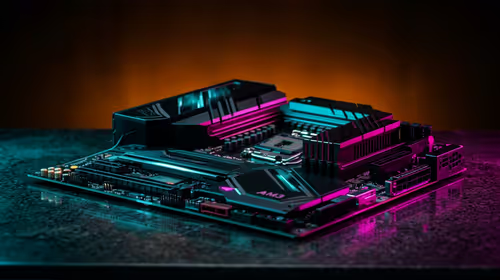
X870E vs X670E for aaa single-player gaming is mainly about fit, features, compatibility, cost, and upgrade path, not one automatic winner. SA buyers should match the choice to the setup.
Read more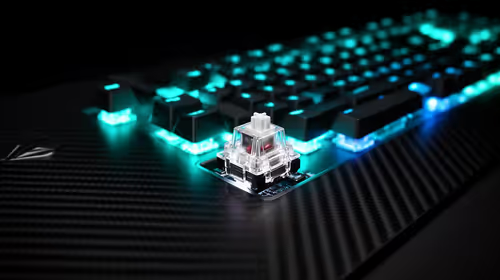
Hall Effect switches vs Mechanical switches for mMO and live-service games is mostly about compatibility, budget, upgrade path, and setup fit. SA buyers should check device support and real needs before expecting a clear win from either option.
Read more
A fake 113GB GTA VI ISO reportedly used empty padding around a small malware payload. SA gamers should delete unofficial builds, keep Windows security active and wait for official channels.
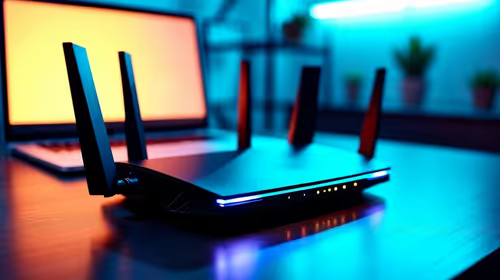
Wi-Fi 6E vs Wi-Fi 6 matters for 4K video editing when files move across a network. The real-world difference between Wi-Fi 6E and Wi-Fi 6 for video editing in 4K depends on NAS access, cloud uploads, router range, and SA creator workflows.

The difference between PCIe 5.0 and PCIe 4.0 for SA gamers is mostly bandwidth headroom. Compare GPU slot needs, NVMe speed, motherboard support, and upgrade timing before paying extra for a newer platform.
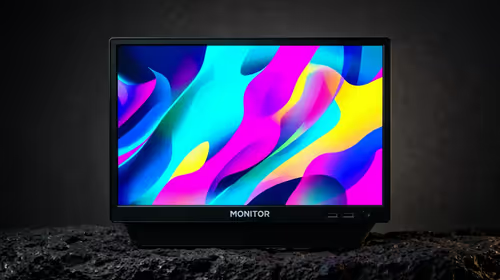
Gaming PC stuck pixel checks in South Africa should confirm the monitor fault first. Use colour tests, screenshot comparison, cable swaps, display menu checks, and clear photos before deciding on support.

Shokz OpenFit Air 2 earbuds weigh 7.2g each and use a redesigned dual-driver open-ear layout. SA buyers should choose them for comfort and awareness, not maximum isolation.

AMD's current driver now lists a Radeon RX 9050 4GB, while product coverage details a narrowed memory system. SA buyers should weigh the low VRAM ceiling against current local Radeon options.

Samsung Display has demonstrated a 16-inch 2.5K OLED laptop panel running at 300Hz. SA buyers should wait for a named notebook, full panel specifications and a local price before planning an upgrade.

Microsoft says some Windows 11 game crashes after recent updates are linked to RGB-related drivers. Affected SA gamers should confirm the update and driver before using the published registry workaround.
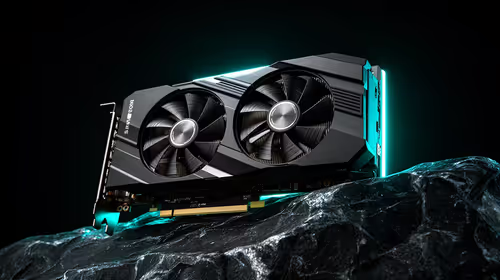
RTX 5090 on a 650W PSU is a tight pairing with very limited headroom. For SA gaming PCs, focus on total system draw, PSU quality, connector support, CPU choice, and avoid OC plans unless the full build is carefully power-limited.
PCIe 5.0 vs PCIe 4.0 for video editing in 4k is mainly about fit, features, compatibility, cost, and upgrade path, not one automatic winner. SA buyers should match the choice to the setup.
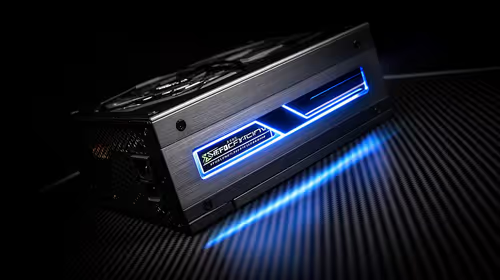
850W PSU safety for RTX 5090 is plausible with a quality unit and balanced parts. In SA, confirm connector support, CPU power draw, case airflow, PSU age, and spare capacity before building around 850W.
Wi-Fi 7 vs Wi-Fi 6e for competitive esports comes down to router support, latency goals, device compatibility, and coverage. SA buyers should match the choice to the real network setup.