

RTX 4060 Ti Throttling Under Load: SA Temperature Guide
RTX 4060 Ti Throttling Under Load: Temperature. Everything you need to know with SA pricing, step-by-step instructions & expert recommendations.
Read moreFreeSync vs G-Sync: which variable refresh rate tech wins for SA gamers? 🤔 We break down the costs, performance, and compatibility to help you eliminate screen tearing and stutter for the smoothest gameplay. Find your perfect gaming monitor today! 🖥️
Stuttering visuals ruining your perfect headshot in Warzone? That jarring screen tear in the middle of a raid? You're not alone. The culprit is often your graphics card and monitor speaking different languages, causing a visual mess. This is where the big debate begins for South African gamers: FreeSync vs G-Sync. It’s the key to unlocking buttery-smooth gameplay, but choosing the right one can feel complex. Let's settle the score. 🚀
Before diving into the FreeSync vs G-Sync showdown, let's quickly cover the basics. Adaptive Sync technology lets your monitor change its refresh rate on the fly to match the frames-per-second (FPS) your graphics card is producing.
Think of it like this: without it, your monitor might refresh while your GPU is still drawing the next frame, causing a "tear" across the screen. With it, they work in perfect harmony. The result? No more tearing, less stutter, and noticeably smoother motion. It’s a non-negotiable feature for any serious gamer today.
AMD's FreeSync is an open-standard technology, which is its biggest advantage. Because manufacturers don't have to pay licensing fees or use specific hardware, you'll find FreeSync on a massive range of PC monitors at very competitive prices in ZAR.
For many South African gamers, the value proposition of FreeSync is hard to ignore, especially when browsing for the best PC monitor deals.
NVIDIA's G-Sync takes a more hands-on approach. For a monitor to be "G-Sync" or "G-Sync Ultimate" certified, it must contain a proprietary NVIDIA hardware module and pass over 300 stringent quality tests. This guarantees a premium, consistent experience.
NVIDIA also offers a "G-Sync Compatible" tier, which are essentially FreeSync monitors that have been tested and verified by NVIDIA to offer a good baseline G-Sync experience.
The biggest factor in the FreeSync vs G-Sync debate is your graphics card. If you have an AMD Radeon GPU, you'll be looking for a FreeSync monitor. If you have an NVIDIA GeForce GPU, you'll primarily look for a G-Sync or G-Sync Compatible monitor. While modern NVIDIA cards can run on some FreeSync displays, a certified G-Sync experience is often smoother.
So, which technology is best for gamers in South Africa? The answer depends entirely on your build and budget.
If you’re building a budget-to-mid-range PC, an AMD GPU paired with a FreeSync Premium monitor offers incredible performance for your Rand. The sheer variety means you can find a perfect fit, whether you're after immersive curved monitors for single-player epics or a high-refresh-rate panel for competitive shooters.
If you're investing in a high-end NVIDIA RTX card and want a zero-compromise, plug-and-play experience, a true G-Sync monitor is worth the extra cost. The peace of mind and guaranteed performance are what you're paying for. This tech even extends to niche products like high-end portable monitors for the ultimate LAN party setup.
Ultimately, the G-Sync vs FreeSync battle isn't about one winner. It’s about creating a balanced system. Your choice is dictated by your graphics card and your budget. Both technologies brilliantly solve the problem of screen tearing and deliver a far superior gaming experience.
Start by looking at your GPU, then set a budget, and explore the monitors that fit. Don't forget that using the right DisplayPort cable and other quality monitor accessories is crucial to get the best results. ✨
Ready to Find Your Perfect Match? The FreeSync vs G-Sync debate is all about what's right for your rig. The perfect, tear-free gaming experience is waiting. Explore all our gaming monitors and find the perfect screen to conquer your world.
G-Sync typically offers a more consistent, premium experience due to stricter hardware certification, while FreeSync provides more flexibility and affordability. The 'better' choice depends on your GPU and budget.
Yes! Most modern NVIDIA GPUs are 'G-Sync Compatible,' meaning they can enable variable refresh rate on many FreeSync monitors. Always check NVIDIA's official list for certified displays for the best experience.
The main benefit of variable refresh rate is eliminating ugly screen tearing and stutter. It syncs your monitor's refresh rate to your GPU's frame rate, resulting in noticeably smoother and more immersive gameplay.
While not strictly required, VRR like G-Sync or FreeSync is highly recommended. It prevents visual artifacts when your frame rate fluctuates below your monitor's maximum rate, keeping the action smooth.
Yes, for most gamers. FreeSync Premium guarantees a refresh rate of at least 120Hz at 1080p and includes Low Framerate Compensation (LFC), which significantly improves smoothness when your FPS drops.
True G-Sync monitors have a dedicated NVIDIA hardware module inside for premium performance. G-Sync Compatible monitors are FreeSync displays that NVIDIA has tested and certified to provide a good base VRR experience.
RTX 4060 Ti Throttling Under Load: Temperature. Everything you need to know with SA pricing, step-by-step instructions & expert recommendations.
Read more
Apex Legends Max Settings on RTX 4080. Tested & verified settings for best FPS and visual quality on SA hardware budgets.
Read more
GPU Buying Guide. Everything you need to know with SA pricing, step-by-step instructions & expert recommendations.
Read more
GPU Terms Guide. Everything you need to know with SA pricing, step-by-step instructions & expert recommendations.
Read more
AMD Adrenalin Download & Setup Guide: GPU. Clear setup instructions with SA-specific considerations, troubleshooting tips & recommended components.
Read more
Back-to-School GPU Buying Guide. Everything you need to know with SA pricing, step-by-step instructions & expert recommendations.
Read more
Snapdragon X2 NPU Explained: How 80 TOPS Changes. Plain-English explanation of what it means, why it matters & how it affects your buying decisions in SA.
HBM? High Bandwidth Memory Used in GPUs and AI. Plain-English explanation of what it means, why it matters & how it affects your buying decisions in SA.
How much should you spend on sim racing accessories in South Africa for a realistic setup? We break down budgets by quality tiers, so you buy smart gear and avoid overspending 🎮💸
G-Sync and FreeSync? Variable Refresh Rate. Plain-English explanation of what it means, why it matters & how it affects your buying decisions in SA.

AMD Laptop: Value. SA-focused analysis with local pricing data, real-world insights & actionable buying advice.
How MacBook Neo Handles 30+ Chrome Tabs with Only. SA-focused analysis with local pricing data, real-world insights & actionable buying advice.

Why Apple Put 8GB RAM in MacBook Neo: The A18 Pro. SA-focused analysis with local pricing data, real-world insights & actionable buying advice.
Upgrade your work laptop with a New Motherboard. Step-by-step instructions with SA-specific tips, common pitfalls to avoid & expert recommendations.
Maintain wired headset — Checklist: • inspect cables • clean earpads • store properly 🔧🎧 Practical steps to preserve sound quality and avoid premature replacements.
Fix crackling headset fast: step-by-step checks for cables, connectors, drivers, and settings to remove static or distorted audio on wired headsets 🎧⚙️
Stereo vs mono headsets: learn which delivers clearer calls, better spatial music, or simpler mono voice performance — pick the right headset for meetings, music, or gaming 🎧💬
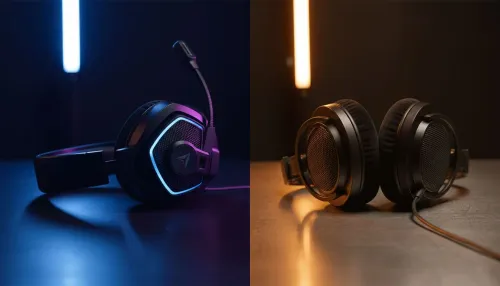
- Compare gaming headset vs studio headphones; - Assess comfort, mic and sound; - Recommend best daily picks. Gaming headset vs studio headphones: learn which suits work, music and casual gaming. 🎧⚖️