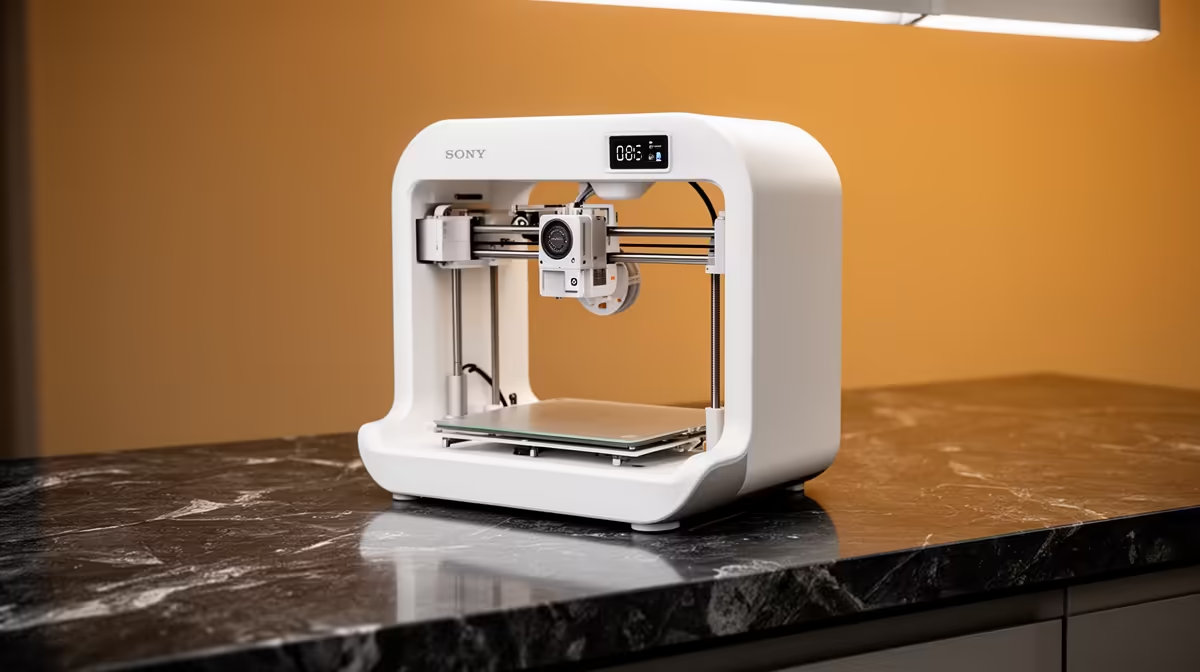
Your first printer taught you to slice, level a bed and pull a clean single-colour print off the plate. The next itch is colour, and two machines dominate that conversation in South Africa right now. The multicolour upgrade path splits cleanly: the Bambu Lab A1 Combo at roughly R12,495 bolts a four-spool AMS Lite onto an open bedslinger, while the Creality K2 at around R17,900 builds multicolour into an enclosed CoreXY frame. The R5,400 gap buys you a very different machine, not just a different colour system.
Quick Answer
For a first step into multicolour, the A1 Combo at about R12,495 is the better-value pick: four colours, a gentle learning curve and an open frame that suits PLA and PETG. Spend the extra R5,400 on the Creality K2 at roughly R17,900 only if you want an enclosed chamber for ABS and ASA, faster CoreXY motion and a tidier filament system. Both are stocked locally with spares.
What Multicolour Actually Costs You
Adding colour is not free in time or filament. Every colour change on a single-toolhead system means a purge: the printer flushes the old filament out of the hotzone before the new one flows clean. That purged plastic becomes a "poop" pile and adds minutes per layer. A four-colour model that prints in ten minutes single-colour can easily stretch past forty once the purging stacks up.
Both the A1 Combo and the K2 work this way, with one shared nozzle. Neither uses true independent toolheads, so manage your expectations: multicolour is brilliant for logos, signage, tabletop minis and labelled parts, and wasteful for large surfaces drenched in four colours. Once you accept the purge tax, the choice comes down to frame, chamber and how the filament feeds.
The A1 Combo: Open Frame, Four Colours, Easy Start
The A1 is a bedslinger. The print platform travels forward and back along one axis, while the toolhead handles the remaining two. It is open, so there is no heated chamber. That sounds like a limitation and mostly is not for a first multicolour machine, because the materials new makers actually print, PLA and PETG, prefer cooler air and warp less without an enclosure trapping heat.
The AMS Lite is the headline. Four external spool holders feed a combiner that routes one filament at a time to the toolhead. Loading is forgiving, the spools sit in plain view so you can watch them deplete, and Bambu's slicer handles the colour assignment with a clean preview before you commit. For a maker moving up from one colour, this is the shallowest possible on-ramp.
Where the A1 Wins
Calibration is largely automatic. The bed levels itself, flow and resonance are measured per print, and first-layer success rates are high enough that you stop thinking about them. For schools, side hustles printing keychains and badges, and hobbyists who want colour without a second hobby in tuning, the A1 Combo earns its keep. If you want to see the current bedslinger and CoreXY options side by side, the full 3D printer range carries both Bambu and Creality stock with local warranty.
The Creality K2: Enclosed CoreXY With Native Multicolour
The K2 plays a different game. A pair of motors drives the toolhead across both horizontal axes simultaneously, keeping the build plate fixed on the vertical. That geometry allows higher acceleration without the print wobbling, so the K2 runs faster on tall or detailed models where a bedslinger starts to ring.
The enclosure matters most for materials. ABS and ASA shrink and crack in open air; a closed heated chamber holds them stable, which means the K2 can print functional parts, automotive trim and outdoor-grade pieces that the A1 struggles with. Its CFS filament system feeds multiple colours through an integrated unit rather than open arms, keeping dust off the spools and the desk tidier.
Who Should Pay the Premium
The extra R5,400 is justified if you already know you want engineering materials, if you print tall geometry where speed and rigidity pay off, or if a dust-prone workshop makes the enclosed CFS worth it. A first-time multicolour buyer who mainly prints PLA decor and gifts will not feel R5,400 of benefit. Someone graduating toward paid functional prints will.
Filament, Spares and Running Costs in SA
Whichever you choose, budget for consumables. Multicolour burns more filament through purging, so buy spools in the colours you reprint often rather than a rainbow you use once. Nozzles wear, especially if you move to abrasive or glow filaments, so keep a spare or two on hand. Build-plate sheets, PTFE tube and the odd belt are the usual replacements within the first year of steady use.
Keeping a small kit of plates, nozzles and cleaning tools next to the printer saves you a stalled weekend project, and the accessories and consumables that printer owners reorder most cover the everyday bits without a special trip. Treat them as part of the cost of colour, not an afterthought.
Which One Fits Your Bench
Pick the A1 Combo if this is your first colour machine, you print mostly PLA and PETG, and you want results without a tuning rabbit hole. Pick the K2 if you need an enclosure for ABS or ASA, want CoreXY speed for detailed and tall work, and value a sealed filament system. Both are honest upgrades; the right one is the one that matches what you will actually print this year, not the spec sheet that looks most impressive.
Frequently Asked Questions
Is the A1 Combo enough for a small printing side business?
For PLA and PETG products like keychains, signage, minis and gifts, yes. The four-colour AMS Lite covers most branded work, and the easy calibration keeps your reject rate low. Step up to the K2 only when customers start asking for durable or heat-resistant parts.
Why is the Creality K2 worth R5,400 more?
You are paying for the enclosed heated chamber and CoreXY motion, not just more colours. That combination unlocks ABS and ASA printing, higher speeds on detailed models and a cleaner integrated filament system. If you never print engineering materials, you may not see the value.
Does multicolour printing waste a lot of filament?
Some, yes. Both machines share one nozzle, so each colour change purges old filament to keep the next colour clean. Designs with frequent swaps across large areas waste the most; logos, labels and accents waste very little. Plan colours to minimise unnecessary changes.
Can I print ABS on the open A1 Combo?
It is not the right tool for it. Open frames let warm air escape, and ABS warps and cracks without a stable heated chamber. Stick to PLA, PETG and similar on the A1, and choose the enclosed K2 if ABS or ASA are on your list.
What should I keep in stock as spares?
A spare nozzle or two, extra build-plate sheets, PTFE tube and basic cleaning tools cover the common wear items in the first year. Multicolour use wears nozzles a little faster, so a backup nozzle is the single most useful spare to own.
Ready to add colour to your bench? Compare the Bambu A1 Combo and Creality K2 specs, pricing and local stock in the full 3D printer range at Evetech and pick the upgrade path that matches what you print most.