Quick Answer
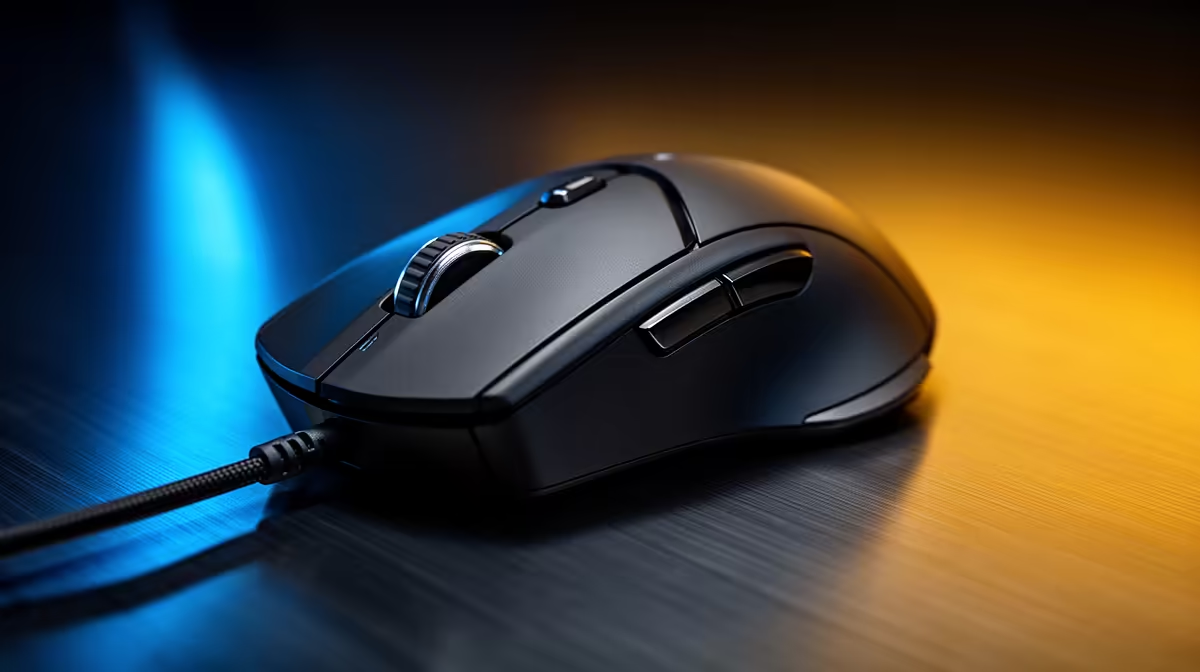
For architecture portfolio work, choose a mouse for precision and comfort, not gaming speed; a R600 to R1,500 mouse with an accurate sensor and a few programmable buttons suits long hours in Revit, AutoCAD and Photoshop. Portfolio work rewards a high-DPI sensor for fine cursor control and side buttons for pan and zoom, not a featherweight esports shell.
What Portfolio Work Demands
Architecture students spend hours panning drawings, nudging elements and retouching renders, so cursor accuracy and a comfortable grip matter most. A precise sensor that tracks cleanly from 800 to 3,200 DPI gives the fine control fine-detail work needs. Programmable buttons mapped to pan, orbit or undo cut repeated keystrokes across a long session.
A lightweight esports mouse optimised for flick shots adds little here; comfort over hours beats raw speed. Look for a shape that fits your grip and a sensor that does not jitter at low DPI, since that is where precise placement happens in CAD and image editing.
The Starter-To-Serious Mouse Path
Start with a comfortable R600 mouse with a reliable sensor and two side buttons for pan and undo. Step up to a R1,000 mouse with more programmable buttons and onboard profiles for different software. Reserve a R1,500-plus mouse for an ergonomic or vertical shape if wrist comfort over long modelling and rendering sessions is a concern.
Wired Or Wireless For Studio Work
Wired keeps it simple and never dies during a long crit-week push. A good 2.4GHz wireless mouse runs near 1ms and frees the desk, but confirm strong battery life so it lasts a full studio day. Either way, prioritise sensor accuracy and comfortable shape over weight for portfolio work.
FAQ
What mouse specs matter for architecture work?
A precise sensor with clean low-DPI tracking for fine placement, a comfortable shape for long hours, and programmable buttons for pan, orbit and undo. Raw speed and ultralight weight matter far less than in gaming.
Is a gaming mouse good for CAD and rendering?
Yes, a good gaming mouse offers an accurate sensor and programmable buttons that suit CAD and image editing well. Just prioritise comfort and precision over a featherweight esports shape.
Wired or wireless for portfolio work?
Wired never dies mid-session and keeps it simple. Choose 2.4GHz wireless for a clean desk only if the battery comfortably lasts a full studio day.
mouse side buttons to pan, orbit and undo; the time saved across a long Revit or Photoshop session adds up fast.