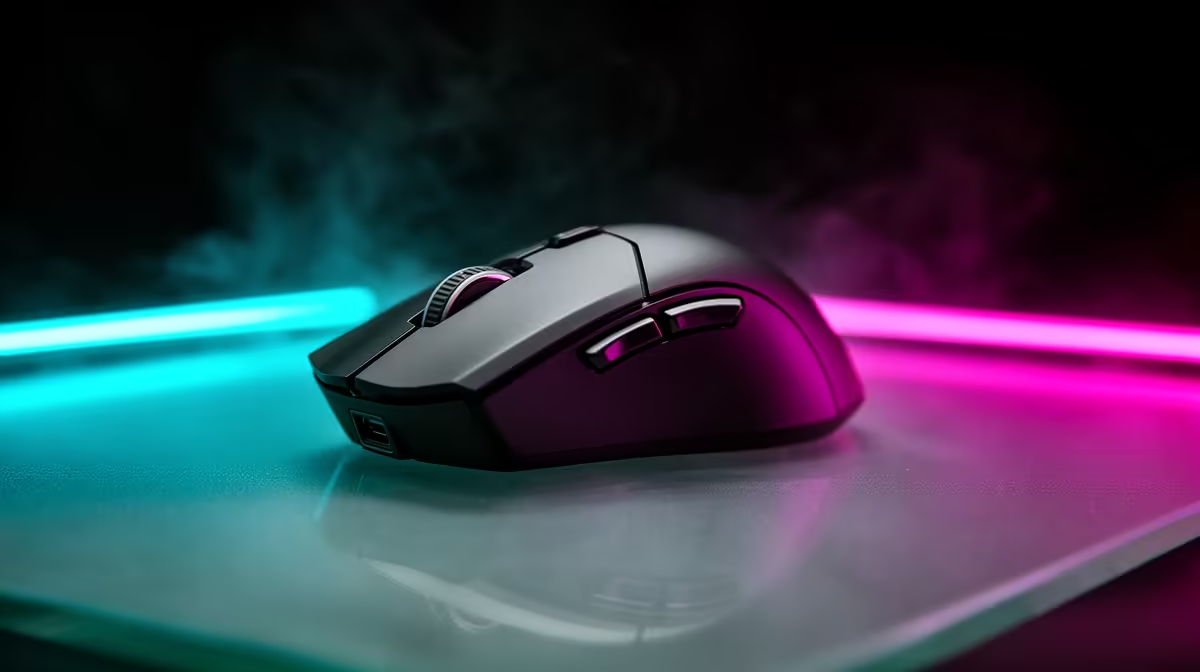
A gaming mouse lives or dies on shape, weight and sensor quality, so fit and a flawless sensor matter far more than a DPI number you will never actually use.
Quick Answer
For quiet late-night gaming sessions, a lightweight mouse that fits your grip with a quality optical sensor is the right call, around R400 to R1,800. Shape and weight matter more than a sky-high DPI you will never use, and a flawless sensor beats marketing numbers.
Shape, Weight And Grip
The mouse that suits your hand size and grip style beats any spec sheet, since comfort drives accuracy over long sessions, which matters for quiet late-night gaming sessions. A lighter mouse (under roughly 80g) helps quick flicks and reduces fatigue, while a heavier one suits a slower, steadier aim. Try palm, claw or fingertip grip in mind when picking the shell shape.
Sensor, Switches And Connection
A modern flagship sensor tracks flawlessly well below its maximum DPI, so a 26,000 DPI rating is mostly marketing; most players sit between 800 and 1,600 DPI. Durable switches rated for tens of millions of clicks resist the double-click fault that kills cheap mice. Wired or a quality 2.4GHz dongle gives the lowest latency, while Bluetooth suits travel over competitive play.
Build, Feet And Longevity
Quality PTFE feet glide smoothly and the cable or wireless connection should feel drag-free, which suits quiet late-night gaming sessions. A solid shell that does not creak, a reliable scroll wheel and onboard DPI memory add daily polish. For travel-friendly setups, a compact lightweight mouse with a long battery or a simple wired link is easier to live with than a heavy feature-stuffed unit.
FAQ
Does a high DPI make a mouse better?
Not really. Most players game between 800 and 1,600 DPI, and a quality sensor tracks flawlessly well below its maximum. Shape, weight and switch durability matter far more than a headline DPI number.
Is a lighter mouse worth it?
For fast-paced play, often yes. A mouse under roughly 80g eases quick flicks and reduces fatigue over long sessions. A heavier mouse can suit slower, steadier aim, so it comes down to your style.
Wired or wireless for gaming?
A quality 2.4GHz wireless dongle now matches wired latency, so either works for competitive play. Bluetooth is fine for travel but adds lag, so keep it for general use rather than gaming.
shape and weight that fit your grip, favour a proven sensor and durable switches, then treat sky-high DPI as marketing.