Quick Answer
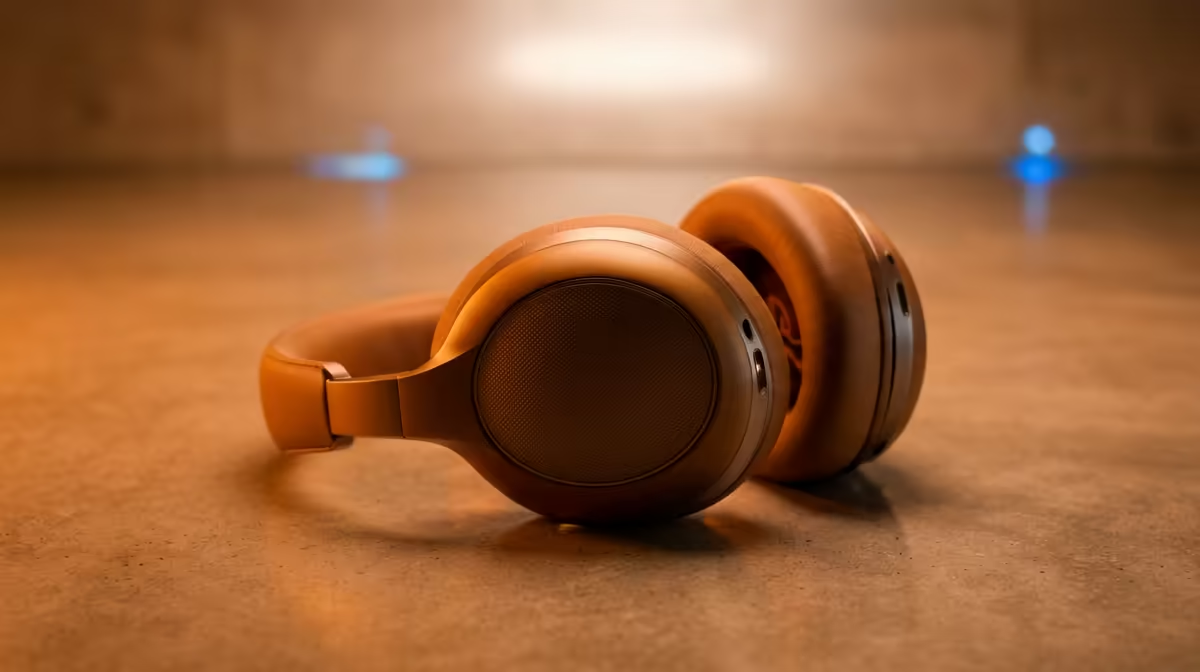
A 40-hour rating is measured at moderate volume with ANC and RGB off. Real-world life sits between 28 and 36 hours depending on volume, ANC use, and wireless protocol. Manage those three variables deliberately and you can consistently push close to the rated ceiling.
What Drains the Battery Fastest 🔋
Active noise cancellation is the biggest power draw after the drivers. On headsets rated at 40 hours without ANC, enabling it cuts runtime to around 24 to 30 hours. Running at 80 percent volume instead of 100 percent recovers 15 to 20 percent of runtime. RGB lighting adds a small consistent drain, and keeping your 2.4GHz dongle within 2 metres of the headset reduces transmission power needs, marginally extending battery on weaker signal environments.
Daily Habits That Extend Runtime 🎯
Set the auto-off or low-power timeout in your companion app to 5 to 10 minutes rather than the default 30 minutes. Over a week of sessions, this single change saves two to three charging cycles. Store the headset at around 50 percent charge if unused for more than a few days, since lithium batteries held at full charge for extended periods degrade faster. South African summers reach 35 degrees Celsius or more in Gauteng, and heat accelerates battery degradation, so avoid leaving the headset on a sunny desk or in a hot car. Partial charges throughout the day are fine on modern USB-C headsets with lithium-ion cells.
Charging Smart to Protect Long-Term Capacity 🔌
Most wireless gaming headsets in the R1,500 to R3,500 range use lithium-ion or lithium-polymer cells rated for 300 to 500 full charge cycles before capacity noticeably drops. Keeping the battery between 20 percent and 80 percent for daily use can effectively double useful cycle count. When a long session is coming, top up to 100 percent just before you start. Quick-charge features on headsets like the Razer Barracuda Pro give around 3 hours of playback from a 15-minute charge, which is a practical fallback rather than a daily habit.
Auto-Off Setting Check ⚡
Open your headset's companion app and check what the idle auto-off timer is set to. Many headsets ship with a 30-minute default you can reduce to 5 minutes. Setting it lower preserves meaningful battery charge every day without any other effort.
FAQ
Does keeping the headset plugged in after a full charge damage the battery?
Modern wireless headsets include charge management circuits that stop active charging at 100 percent. Short top-up periods are fine, but leaving a lithium cell at full charge constantly does accelerate long-term capacity loss compared to regular cycling.
Why does battery life drop in winter?
Lithium batteries deliver less capacity in cold temperatures. In South African highveld winters where overnight temperatures can drop below 5 degrees Celsius, a headset left in a cold room may show reduced runtime until it warms up during use. This is temporary and not permanent degradation.
Can I replace the battery if capacity drops too much?
Most sealed wireless gaming headsets do not have user-replaceable batteries. If capacity has dropped significantly after two to three years, contact the brand's local warranty or service agent. Some manufacturers offer a battery replacement service for out-of-warranty headsets at a flat fee.
Looking for a wireless headset with strong battery life? Evetech stocks a wide selection of wireless gaming headsets with 30-plus-hour ratings so you can game through the longest sessions without hunting for a cable.