Quick Answer
Gold-plated connectors resist corrosion better than standard tin or nickel connectors, which matters in SA's humid coastal climates. For digital signals like DisplayPort and HDMI, gold plating does not improve signal fidelity directly, but it prevents the oxidation that causes intermittent contact failures over time.
What Gold Plating Actually Does for Digital Cables 🔧
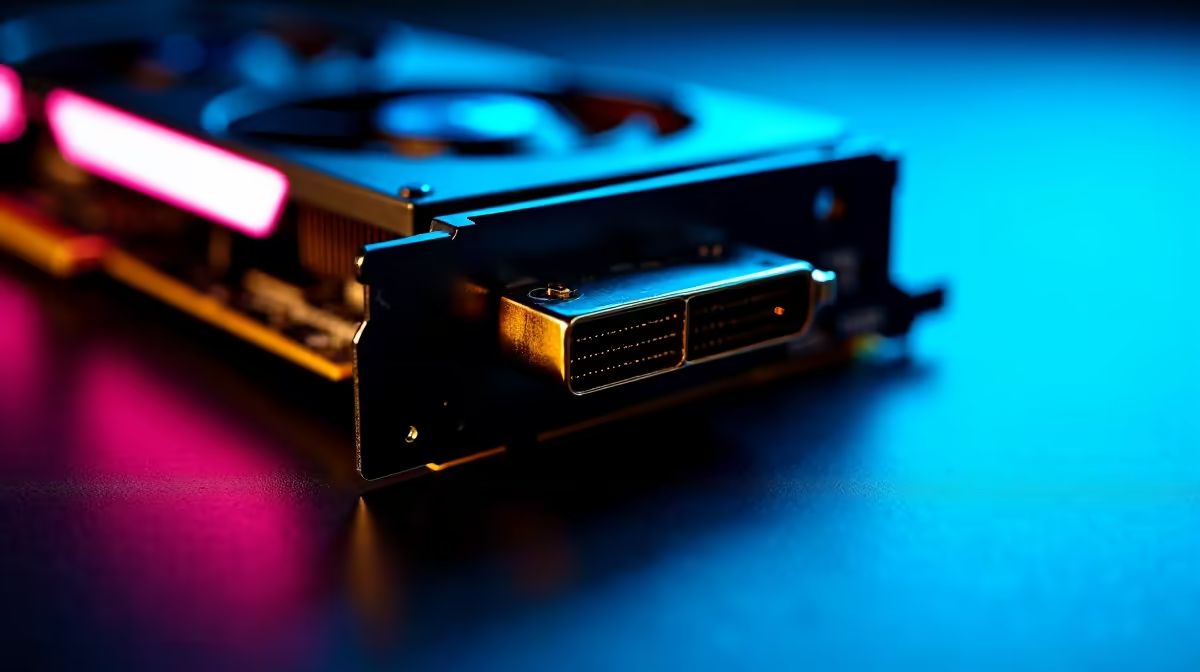
Digital signals are binary: a connection either passes data or it does not. Unlike analogue audio where connector quality affects frequency response, DisplayPort and HDMI carry packets that are either received intact or flagged for retransmission. Gold plating's primary job is corrosion resistance. Gold does not oxidise, which keeps contact resistance stable over years of use. Standard tin-plated connectors oxidise gradually, increasing contact resistance and eventually causing signal dropout, flickering, or the monitor failing to detect the source. In Durban or Cape Town, where humidity accelerates corrosion, gold plating extends connector lifespan noticeably compared to tin alternatives.
Thickness and Purity: What the Specs Mean 💡
Gold plating is measured in microns. Consumer cables typically use 2 to 30 microns of gold over a base metal. Thicker plating lasts longer but is not meaningfully better for signal quality once you exceed around 15 microns. Some budget cables advertise gold plating but apply only a flash coat of 1 to 3 microns over nickel, which wears off quickly. Mid-range cables from established brands stocked at Evetech, typically priced from R250 to R600, use adequate gold thickness over a proper nickel undercoat that prevents gold from cracking during flexing. The nickel undercoat is as important as the gold itself for long-term connector integrity.
When Standard Connectors Are Fine 🖥️
In a dry inland climate like Johannesburg or Pretoria, standard nickel-plated connectors on a desktop cable that is rarely unplugged perform reliably for years. If you are buying a cable that will stay permanently connected between a fixed GPU and monitor, connector material is a secondary concern behind cable construction and shielding quality. The benefit of gold plating is most pronounced for cables that are frequently connected and disconnected, such as a laptop display cable or a portable monitor setup. For permanent desktop installs in dry environments, do not pay a premium specifically for gold plating.
Plug in Straight, Pull Out Straight ⚡
The fastest way to damage any connector, gold or standard, is to remove it at an angle. Always grip the connector housing and pull directly in line with the port. Angled removal bends the internal pins and defeats any benefit from premium plating.
FAQ
Do gold connectors make my display image sharper?
No. DisplayPort and HDMI carry digital signals that are identical regardless of connector material, as long as contact is maintained. Image quality improvements come from cable bandwidth rating and shielding, not connector metal.
How long do gold-plated connectors last compared to tin?
In typical indoor conditions, gold-plated connectors outlast tin by three to five years before oxidation becomes an issue. In coastal or high-humidity SA environments, that gap widens further in favour of gold.
Are gold connectors worth the price difference in South Africa?
Most quality cables priced above R300 already include gold-plated connectors as standard. You are unlikely to find a meaningful price gap between gold and non-gold in the premium cable segment, making it a non-issue at that price point.
Looking for cables built to last in SA conditions?
Evetech stocks display cables with quality connectors suited for gaming rigs, workstations, and home office setups. Check out the full selection at Evetech.