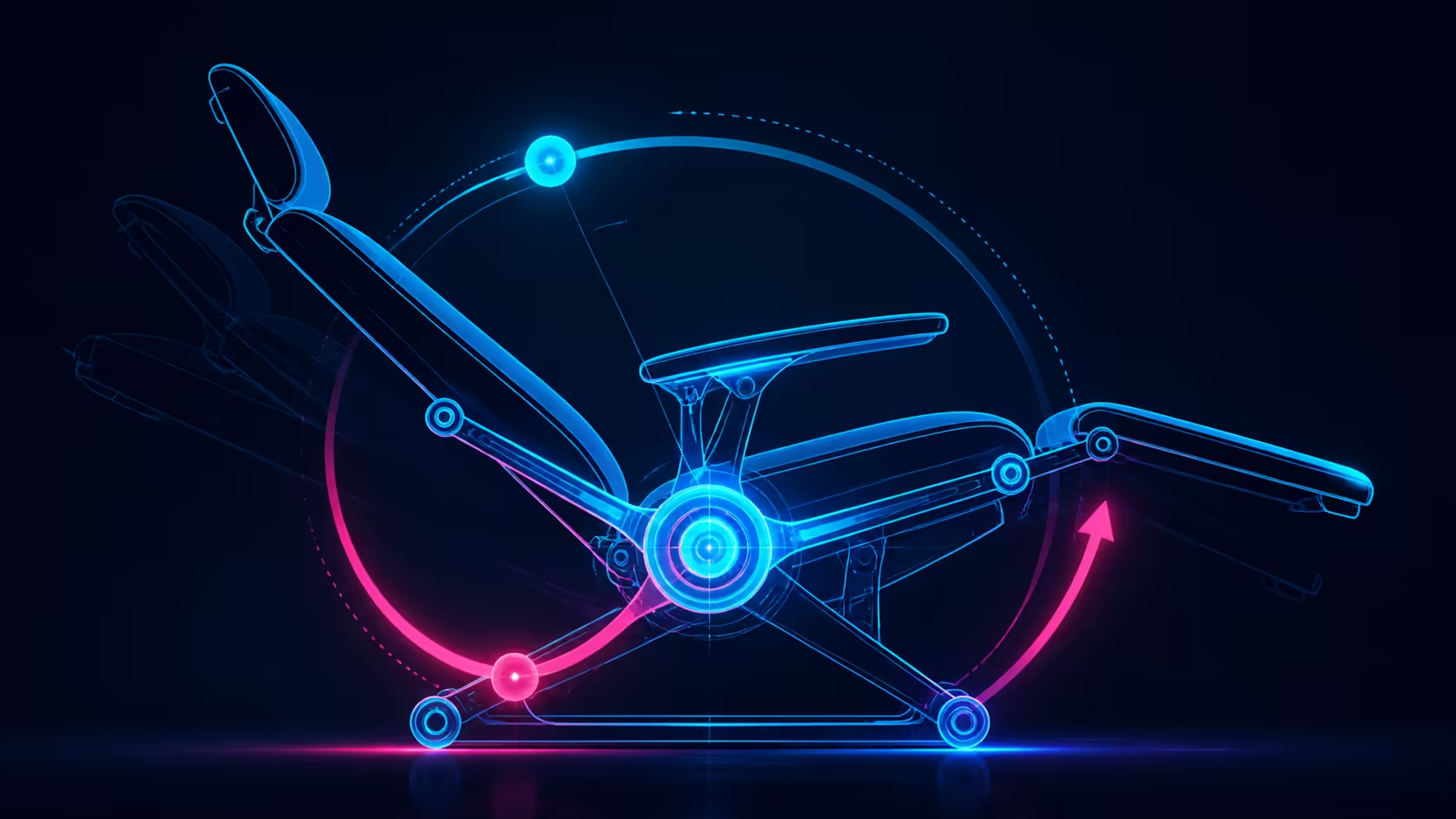
A gravity-sensing chair chassis is a general recline concept in which the seated user's loading influences response. The category does not standardise resistance, return, locks or feel, so the precise mechanism must be tested instead of inferred.
Quick Answer
The E3 Ultra includes a gravity-sensing chassis that adapts to the user's weight and posture, alongside four recline levels up to 140 degrees.
Gravity-responsive systems adapt recline behaviour to the user, and the R9,599 E3 Ultra includes that chassis. It detects changes in weight and posture, provides four recline levels and reaches 140 degrees.
⚙️ Understand what the category can mean
In general, a gravity-sensing design uses seated loading and body position as inputs to recline behaviour. The concept may reduce some manual tuning in certain products, but a label cannot explain the geometry or how the response changes through the range.
Do not assume automatic balance, a particular force curve, quiet operation or effortless movement. These are chair-specific outcomes. Obtain the actual control instructions and learn which parts lock, release or adjust before entering deeper recline.
Separate chassis from angle
Recline angle describes how far a backrest can travel, while chassis type describes aspects of the mechanism. The E3 Ultra supplies both answers: a gravity-sensing chassis that adapts to weight and posture, plus four positions ending at 140 degrees.
Use Evetech's HBADA office-chair selection to preserve this distinction when comparing models.
🛡️ Conduct a safe first movement test
Clear space behind the chair, place both feet securely and sit fully back. Begin with a small backward movement while keeping hands away from joints. Pause, observe the response and return slowly before using more range.
Check whether the chair returns predictably and whether any control changes the behaviour. Do not bounce against a stop or use abrupt movement to test strength. A label cannot establish capacity; obtain an explicit load rating tied to the exact chair.
Repeat the trial with the workstation in place. Screen position, desk edges, nearby furniture and cables can restrict otherwise usable movement.
📐 Examine task fit through the range
Different angles suit different activities. Upright input generally needs access to keyboard and pointer, while reading may tolerate a changed view. A video call introduces its own camera and screen constraints. Test only the positions relevant to the planned routine.
The E3 Ultra's 4D biaxial headrest has a 70-degree rotation-and-tilt span. Head support can move relative to the display during recline, so check its contact after changing the backrest. Its omni armrests also need retesting because desk distance and forearm angle shift.
Recline variation does not replace movement beyond the chair. Standing, walking and task changes remain part of a working day, without turning the mechanism into a health promise.
🔍 Compare mechanisms with an evidence sheet
Create rows for chassis type, adjustment method, movement feel, return behaviour, locks, range, capacity, desk clearance and price. Leave unknowns open. This makes it impossible for a broad category term to fill several unrelated cells.
At R9,599, judge the E3 Ultra through its adaptive chassis, 140-degree recline and complete fit. Aluminium alloy forms its support bar as well as its five-star base, a separate construction detail rather than the source of the gravity response.
Evetech's office seating department can populate the comparison with alternative mechanisms. Use the same controlled trial for each candidate and keep product labels exact.
Include repeated-use behaviour
A single lean cannot show whether a mechanism remains predictable during a normal day. Repeat the controlled movement after typing, after a call and when returning from a break. Note whether the user can enter and leave the preferred angle without abrupt effort.
Shared users should run separate trials because body mass, proportions and movement style can change perceived response. A gravity-sensing concept may seek adaptation, but it cannot promise identical balance for everyone. Save individual observations rather than declaring one universal feel.
Any unusual noise, looseness or damaged part should stop the experiment and trigger appropriate inspection. Do not use aggressive movement to diagnose the chassis. Material, price and recline range do not make continued use of a questionable mechanism safe.
Record the backrest angle that serves each task rather than aiming for maximum travel. A smaller working range can be more relevant than the headline endpoint.
Keep the full chair in view
The E3 Ultra also includes 8D adjustable lumbar support and armrests with a 720-degree omni range. These controls may change how the torso and forearms relate to the backrest, so recheck them after selecting a working gravity-responsive position.
Seat fit, load capacity and exact dimensions remain separate. A buyer should resolve these before spending time comparing subtle recline behaviour. The chair must first accommodate the intended user and room.
At the value stage, R9,599 includes the E3 Ultra's gravity-sensing mechanism as well as its adjustable support package. Another chair should receive the same credit only when that capability belongs to its exact design.
Do not convert recline into a medical claim. Changing seated angle may support task variety, but movement breaks, workstation placement and professional health advice retain their own roles. The comparison should describe observable control and fit.
Finally, rehearse a safe reset: return upright slowly, restore keyboard reach, check head contact and ensure cables remain clear. A mechanism that works well in isolation can still fail the workstation if the return position is obstructed.
If another regular user will share the chair, repeat the complete sequence from upright without transferring the first person's response assumptions. Their notes should identify task angles and control behaviour independently.
Review the room at the deepest intended angle rather than the maximum simply because it is available. Furniture, screens and nearby movement routes can set the practical limit. Record that usable endpoint separately.
Use a slow trial to learn how the mechanism responds, keeping feet stable and space clear. Gravity sensing answers the resistance-adaptation question, while the four positions answer range. Neither removes the need to return to an upright, task-ready posture.
The gravity-responsive mechanism should be judged through all four recline positions, not only the deepest angle, and the return path should remain controlled at each one. Observe whether lumbar wings maintain broad contact and whether the headrest can follow the new posture without pushing the chin or losing support.
The four-position sequence should be assessed as one adaptive system: observe the initial weight response, the controlled travel at each stage and the return to an upright working angle.
Frequently Asked Questions
Which general idea sits behind gravity-sensing recline?
It is generally a recline concept that uses the occupant's loading or body position as part of the response. Exact engineering varies between chairs.
Does every gravity system behave the same way?
No. Geometry, controls and tuning can produce different resistance, travel and return behaviour, so one category name cannot predict feel.
Is gravity sensing included on the E3 Ultra?
Yes. The chassis changes its response with the user's weight and posture, complementing four recline levels up to 140 degrees.
What recline capability does HBADA provide?
The backrest can travel to 140 degrees. That figure should not be expanded into undocumented locks, automatic response or resistance details.
How should movement be tested safely?
Clear the surrounding area, sit centrally with stable feet, move through a modest angle, pause and return slowly before exploring more travel.
Can the chassis label establish load capacity?
No. Mechanism category and supported weight are different properties; use a model-specific rating before deciding whether a chair suits its user.
Ready to compare recline mechanisms through controlled observation?
Explore Evetech office chairs with chassis type, angle, movement behaviour and capacity kept in separate columns.