Quick Answer
High-porosity front grills consistently outperform closed front panels for GPU and CPU temperatures, typically delivering 5 to 10 degrees Celsius lower GPU temps under sustained load. If you prioritise cooling performance, choose mesh. If you prioritise interior visibility, a closed glass front with well-designed alternate intake paths is an acceptable but thermally inferior trade-off.
How the Physics of Closed vs Open Fronts Play Out 🌬️
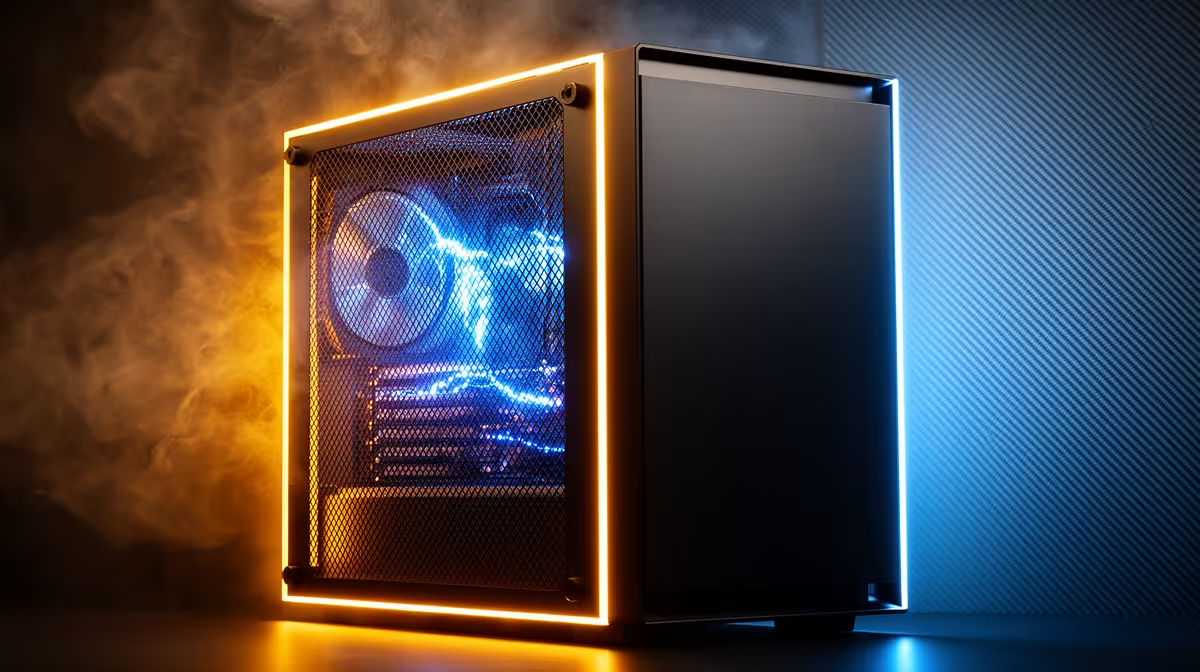
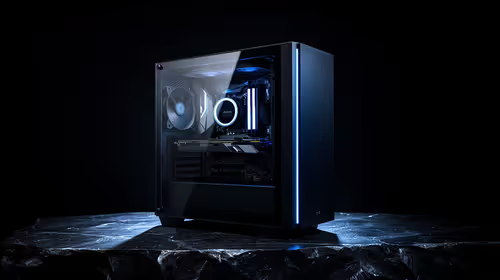
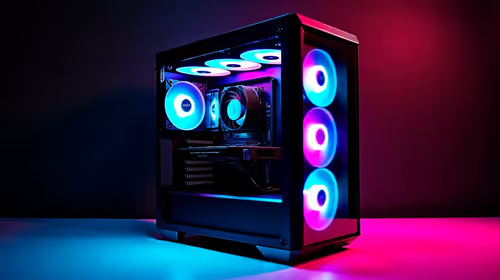
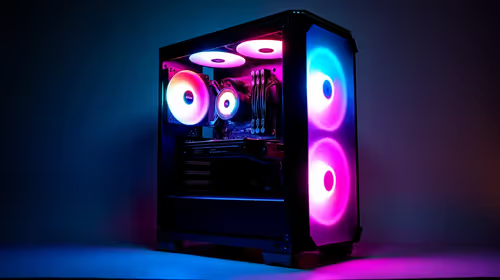
A closed glass front panel has near-zero airflow through the front surface. Cases with this design compensate by routing intake air from the base or sides, often through slots with small filter areas that introduce considerable static pressure resistance. The fans must work harder and spin faster to pull the same volume of air compared to an open mesh front. A high-porosity grill with 65 to 75 percent open area presents almost no restriction to the intake fans, letting them operate efficiently at lower RPM. Controlled tests comparing glass-front and mesh-front versions of the same case model typically show GPU temp differences of 6 to 8 degrees Celsius at the same fan speeds. For South African gaming sessions that run two to four hours, this sustained temperature advantage translates to more consistent frame delivery.
Sound Levels and the Acoustic Trade-Off 🔉
Mesh-front cases can be quieter in practice despite having no acoustic dampening between you and the fans. Because fans run slower to achieve the same cooling thanks to lower intake resistance, the noise from blade frequency and motor hum is lower. A glass-front case forces fans to spin faster to compensate for restricted intake, which is often louder despite the glass acting as a partial sound barrier. The exception is a very expensive panoramic case with specially engineered base intake volumes, typically priced above R5,500 in the local market.
When a Closed Front Panel Makes Sense 🖥️
Choosing a closed glass front is a valid decision if the build is primarily aesthetic, housed in an air-conditioned room where ambient temperature stays below 22 degrees Celsius, and running components with a combined TDP under 400W. A Ryzen 5 9600X paired with an RTX 5070 in a glass-front case in a well-cooled home office is an entirely reasonable setup. Problems arise in high-TDP builds, in warm SA rooms in summer, or in builds where the builder does not maintain the smaller base filters that glass-front cases rely on.
Swap Front Panel If Possible ⚡
Several popular cases ship with both a glass front and a mesh front panel in the box, or sell the mesh alternative as an affordable accessory. Fitting the mesh front for South African summer months costs nothing extra and provides meaningful temperature relief during the hottest part of the year.
FAQ
Does a mesh front affect the visual look of my build significantly?
Mesh fronts obscure the view of internal fans and RGB slightly compared to clear glass, but most quality mesh fronts have a clean, modern aesthetic. ARGB fans are still partially visible through the mesh and light bleeds through effectively.
Will a mesh front let more dust into my PC?
Counterintuitively, no, if positive pressure is maintained. A mesh front with a good filter and fans creating positive pressure actually keeps more dust out than a glass front where restricted intake forces negative pressure and dust ingress through unfiltered gaps.
Can I add a mesh front to my existing glass-front case?
Sometimes. Check if your case manufacturer sells a mesh front panel upgrade for your model. If a direct upgrade is not available, fitting additional fans at the base of the case to improve intake CFM is the next best option.
Ready to choose the right front panel design for your build?
Evetech carries a wide selection of ATX cases with mesh fronts, glass fronts, and convertible designs. Browse the full range to compare specs and find the best fit for your cooling needs.