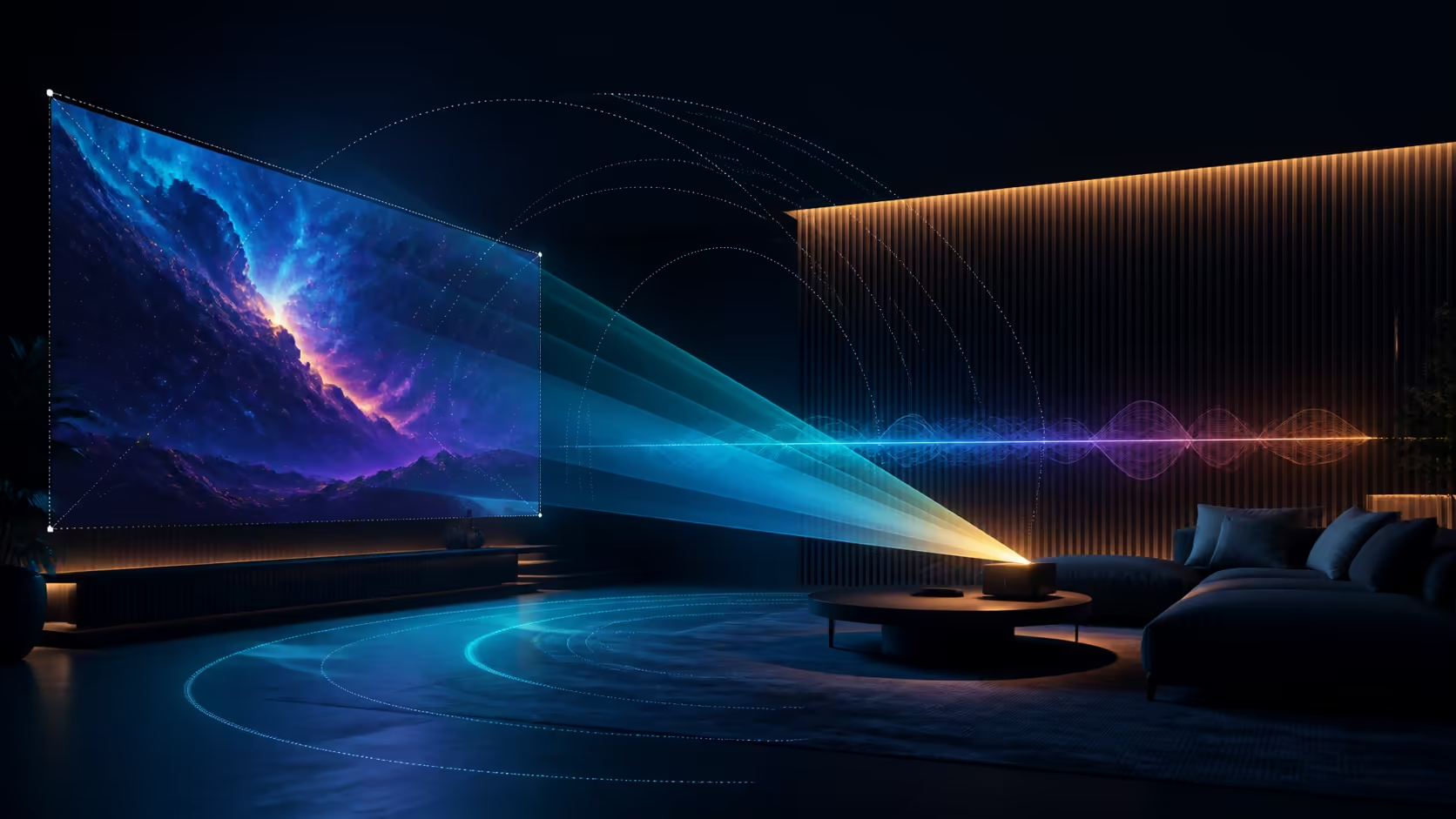
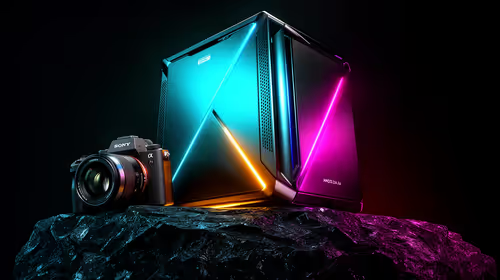
A home projector earns its place by balancing picture scale, visible detail, room light and sound from the actual seats. Home projector screen size, audio and picture quality are connected decisions, yet each has its own test. The WANBO Cube 2 Pro offers a 40-130 inch native-1080p image and an 8W speaker at R3,999, providing a concrete setup to evaluate.
Quick Answer
A good home-projector result combines enough brightness, native detail, suitable screen size, quiet cooling and an audio path matched to the room; the Cube 2 Pro supplies each except a quantified speaker output.
Select screen size from seat comfort and ambient-light visibility, confirm native-1080p detail with a clean source, and test dialogue from every main position. The Cube 2 Pro costs R3,999, produces 500 ANSI lumens and includes an 8W speaker. A 130-inch range endpoint does not guarantee equal picture or audio quality across every room.
🧭 Choose image size from the viewing positions
Mark several rectangles between 40 and 130 inches on the intended surface. Begin at the main seat and use familiar content with faces, subtitles and rapid movement. Increase the diagonal until the frame feels immersive, then check whether the nearest viewer has to move their head or scan excessively.
Move to the farthest seat. Subtitles and interface text should remain readable, while fine detail should still matter at that distance. A two-row room may need a compromise between front-row comfort and rear visibility.
Treat 130 inches as a range value
The maximum supported size is not a measured promise about brightness, sharpness or contrast in a particular installation. Required throw distance must also be confirmed for the chosen diagonal. A room cannot use a size if it lacks a sensible lens position or clear beam.
The Evetech projector category helps compare alternatives after the seating and image target are documented.
🧭 Make light output part of the size decision
Five hundred ANSI lumens describes the Cube 2 Pro's output. As picture area increases, that light spreads across more surface. Compare the marked sizes with the same source, curtains, lamps and picture settings, then score dark-scene separation and subtitle visibility.
Surface behaviour deserves its own control test. A coloured wall can influence the reflected picture, and texture can disrupt fine Full HD detail. Compare a smooth neutral sample before deciding that the projector or selected diagonal is at fault.
Native 1080p sets the pixel grid, while focus and source determine how clearly it is used. The projector completes time-of-flight focus and keystone in 0.1 seconds. Establish square placement with the 230-degree stand, allow correction to finish, then inspect the centre and corners.
Use two reference clips
One clip should contain subtle dark gradations; the other should contain bright detail and small text. Together they expose limitations that a colourful menu can hide. Keep these files for future placement or source changes.
🧭 Test the 8W speaker around the final layout
Speaker suitability depends on distance, room absorption and the content being played. Begin with quiet speech from the farthest seat, then use a dynamic film sequence at a comfortable volume. Record whether dialogue remains clear without forcing excessive level.
A larger picture can spread seats farther apart while the speaker output stays the same. Recheck side positions and the nearest listener. If separate audio is considered, identify the failed listening condition it will solve rather than adding it automatically.
The projector's operating figure is 28dB. Evaluate it during a pause or soft scene, where it is easiest to notice. Stable furniture and an open airflow path help the room test avoid unrelated rattles or resonance.
Keep audio sources level-matched
Android TV 11 and HDMI may produce different default volume levels. Match them as closely as practical before comparing clarity. USB is another physical connection on the unit, with its intended role verified separately.
🧭 Bring content and controls into the final sign-off
Open every required streaming service in its current form and play representative video. App availability cannot be assumed from the Android TV 11 name alone. Keep an HDMI fallback if a critical service or specialised source needs another device.
Console use adds a response test. Native resolution, image size and speaker wattage do not determine input latency. Connect the actual system and use a familiar game at the selected diagonal. After proving the source path, inspect Evetech's gaming-accessory selection for suitable supporting items.
Finish with a room record: picture diagonal, projector position, main seats, light state, source route, app checks and dialogue result. This makes future changes repeatable and keeps the R3,999 decision tied to a working home arrangement.
Create a seat-by-seat acceptance map
Draw the room and number every regular seat. For each one, record subtitle effort, eye movement, dialogue clarity and awareness of operating sound. Use the same film sequence and volume, then repeat at a second diagonal. This reveals whether a picture that suits the central seat creates a visual or audio penalty at the edges.
Do not average the scores immediately. Mark mandatory seats first, such as the positions used every evening, and require them all to pass. Occasional overflow seating can be treated separately without allowing a weak regular position to disappear inside a mean.
Diagnose picture and audio complaints independently
If a viewer says the experience feels unclear, replay the scene with subtitles, then with a known clean audio source. Determine whether the problem is visual text, dialogue intelligibility or both. Move only one seat or change one setting per run.
Keep the final diagonal, focus reference, volume and light state in the room record. Another household member should be able to reproduce the result without adjusting the projector by intuition.
Plan future changes from the baseline
When furniture, wall colour, source device or streaming service changes, repeat the affected part of the map. The original acceptance result provides a stable comparison and prevents a new room variable from being blamed on projector hardware. Upgrade only when a repeated mandatory failure has been isolated. Invite the viewer who noticed the problem to repeat the corrected scene from the same seat before closing the issue.
Its native 1080p display and triple-coated lens cover picture detail, 500 ANSI lumens define the light source, and the fan system operates at 28dB. Bluetooth speaker support plus an audio port allow external sound, while the 230-degree stand and automatic calibration manage placement. Speaker power remains absent, so room-filling audio should be planned around a named external device when volume matters.
Judge audio at the viewing position instead of listening beside the projector chassis.
Frequently Asked Questions
How should a projector screen size be chosen?
Use the nearest and farthest seats, then test several diagonals with identical content and light. Comfort and visibility matter more than filling the wall.
Does 8W describe how loud the speaker feels?
It is the speaker rating. Perceived level and dialogue clarity also depend on room acoustics, distance and the source material.
Can native 1080p look different at larger sizes?
Yes. Enlarging the picture reveals compression, wall texture and corner softness more readily, even though native resolution stays unchanged.
Is a smooth wall enough for picture quality?
It is a helpful starting point, but colour, flatness, ambient light, source and alignment still influence the reflected image.
Why test operating noise after choosing seats?
The nearest listener and room reflections affect perception. A 28dB rating should be heard in the final layout during quiet material.
Ready to balance screen scale, sound and picture in one room plan?
Compare Evetech projectors after marking the seats, testing two reference clips and listening to dialogue at the chosen diagonal.