Quick Answer
Daisy-chain connectors simplify cable management by connecting multiple fans in a series string from one motherboard header, eliminating the need for a separate fan hub, additional power connectors, or multiple cable runs across the case interior. One cable runs from the header to fan one, a short link to fan two, and another short link to fan three.
The Cable Reduction Maths 🔧
A traditional three-fan setup requires three separate PWM cables routed from three fans back to three different headers, plus potentially a splitter hub with its own SATA power cable. In a mid-tower with fans at the front, top, and rear, those cable runs total 600 to 900 mm of wire. Daisy chaining reduces this to a single cable from the header to the first fan (200 to 350 mm), then two short fan-to-fan links of 100 to 150 mm each. Total wire drops by 50 to 60 percent, and the number of motherboard header connections reduces from three to one.
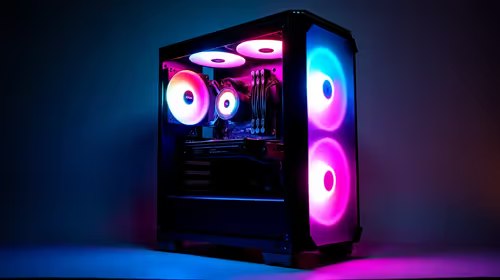
This matters most in glass-panel and mesh-panel cases where the interior is visible. SA builders investing in premium chassis like the Lian Li Lancool 216, Phanteks Eclipse G360A, or Fractal Design Meshify 2 typically spend R2,000 to R3,500 on the case and expect clean internal aesthetics to match. Daisy-chain fan packs make that achievable without extreme cable management effort.
Which Cases Benefit Most from Daisy Chaining 🖥️
Small form factor and compact mid-tower cases benefit most because internal routing space is minimal. In an NZXT H510 or Cooler Master NR200P, running three separate fan cables back to the motherboard requires threading wires through narrow gaps that often leave visible bundles behind the glass panel. A daisy-chain triple pack occupies a fraction of that space. Full towers benefit less because space is not a constraint, but daisy chaining still reduces headers occupied, freeing them for pumps or RGB controllers.
Installing a Daisy-Chain Fan Pack 💰
Start by identifying your primary fan header: CHA_FAN1 or SYS_FAN1, rated at 1A or higher. Mount all three fans in their case positions first. Connect the first fan's main connector to the motherboard header. Attach the short daisy-chain cable from fan one's secondary port to fan two's input. Repeat from fan two to fan three. Route the single main cable behind the motherboard tray through the nearest grommet. Tuck inter-fan links against the case frame using velcro ties. Total installation time is under 20 minutes. Daisy-chain fan packs in SA retail from R1,000 to R1,800 for a quality triple set, currently stocked at Evetech.
Label the Lead Cable Before Routing for Easy Future Access ⚡
Once a daisy-chain cable run is hidden behind the motherboard tray, tracing which chain connects to which header is difficult during future upgrades. Before routing, place a small cable label or coloured zip tie at the header end of the lead cable. When you next open the case six months later, you will immediately know which chain is which without tracing wires through tight gaps.
FAQ
Can I use a daisy-chain fan pack with any motherboard brand?
Yes. Daisy-chain connectors use standard 4-pin PWM and 3-pin headers found on all modern ATX, micro-ATX, and mini-ITX motherboards from any manufacturer.
Does the order of fans in the daisy chain affect performance?
No. All fans in the chain receive the same PWM signal regardless of their position in the sequence. Airflow direction and mounting orientation determine performance, not chain order.
What is the maximum number of fans I can safely daisy chain without a hub?
Three 120mm fans drawing approximately 0.3A each brings total draw to 0.9A, close to the standard 1A header limit. Chaining four or more fans risks exceeding that rating. Use a powered fan hub for setups requiring four or more fans from a single header.
Want cleaner cable routing in your SA gaming build?
Browse daisy-chain fan packs and cable management accessories at Evetech, stocked locally.