



Marvel Rivals launch in South Africa
Marvel Rivals launch needs a balanced parts plan, not a random basket. Map the CPU, GPU, RAM, SSD, cooling, and monitor target to the budget so SA builders know where to spend first.
Read moreWalk through Does a 100 Million Click Lifecycle Actually Last in Practice step by step starting with Gen-4 optical switch durability and long-term double-click drift. Follow the setup order and you skip the common pitfalls.
At typical gaming usage of 6 hours per day, a 100 million click lifecycle lasts approximately 4 to 10 years in practice, depending on how click-intensive your play style and game genre are. Action and FPS players click more per hour than strategy players, so the realistic range varies significantly by game type.
The most useful number to calculate is your clicks per hour. In a fast-paced FPS like CS2 or Valorant, an active player fires between 500 and 1,500 shots per round across 25 to 30 rounds per match, plus additional right-clicks for scopes and utility. A rough estimate for a 6-hour FPS session is 8,000 to 15,000 left clicks. For strategy players in StarCraft II, click rates can exceed 60,000 per hour during intensive play, though MOBA players typically average 2,000 to 5,000 per hour for casual sessions.
Using a mid-range estimate of 10,000 clicks per hour across a 6-hour daily session, you produce 60,000 clicks per day, reaching 100 million in approximately 4.6 years. At casual rates of 3,000 clicks per hour for 3 hours daily, the lifecycle extends to approximately 30 years, far exceeding any other component's realistic lifespan.
Manufacturer lifecycle ratings are measured in controlled lab conditions: constant temperature, constant humidity, standardised click force, and a mechanical actuator pressing exactly the same spot on the button. Real-world conditions deviate from all of these. Humid coastal conditions in Durban or Cape Town accelerate metal oxidation on mechanical switch contacts.
For optical switches like Razer Gen-4, rated at 90 million clicks, real-world conditions have less impact because there are no metal contacts to oxidise. The mechanism degrades only through housing wear at the pivot and LED dimming, both effectively non-factors within any realistic use period.
In most gaming mice, the switches are not what fails first. Cable fraying, battery capacity degradation, PTFE glide pad wear-through, and scroll wheel encoder degradation all typically occur before a quality switch reaches its rated limit. Wireless mice with built-in lithium batteries experience capacity loss after 500 to 700 charge cycles. Mice with replaceable AA batteries sidestep this issue entirely.
Software like WhatPulse tracks total mouse clicks across your system and reports them per application and day. Running it for two weeks gives you a precise personal clicks-per-day figure, which you can divide into 100 million to calculate your exact projected switch lifecycle.
Yes. Switch lifecycle ratings apply per switch. A mouse rated at 100 million clicks means each individual switch is rated to that figure, so the mouse has effectively 200 million total rated clicks across both primary buttons.
A mechanical switch beyond its rated life begins exhibiting contact bounce, where one physical press registers two clicks (double-click failure). An optical switch beyond its rated life might show increased actuation force variability or missed clicks if the LED emitter dims. Neither failure is sudden; both degrade gradually.
For casual users, a 50 million Omron switch will last over a decade at normal usage rates. The 100 million rating is worth the premium for professional or semi-professional players who clock 6 or more hours of click-intensive gaming daily, where the shorter-rated switch may approach failure within 2 to 3 years.
Invest in a mouse rated to go the distance. Evetech stocks gaming mice with 80 to 100 million click lifecycle ratings across wired and wireless options. Browse the range at Evetech and find a mouse built to outlast your current gaming setup.
Marvel Rivals launch needs a balanced parts plan, not a random basket. Map the CPU, GPU, RAM, SSD, cooling, and monitor target to the budget so SA builders know where to spend first.
Read more
Path of Exile 2 launch needs a balanced parts plan, not a random basket. Map the CPU, GPU, RAM, SSD, cooling, and monitor target to the budget so SA builders know where to spend first.
Read more
Black Myth Wukong launch needs a balanced parts plan, not a random basket. Map the CPU, GPU, RAM, SSD, cooling, and monitor target to the budget so SA builders know where to spend first.
Read more
Hollow Knight PC requirements should be mapped to resolution, settings and upgrade budget before choosing a tier. Verify current requirements, then balance GPU, CPU, RAM and SSD around SA pricing.
Read more
Hollow Knight build planning should focus on the target resolution, settings and total system balance. Treat launch wording as time-sensitive, then verify requirements before choosing SA PC parts.
Read more
Fallout 4 PC requirements should be mapped to resolution, settings and upgrade budget before choosing a tier. Verify current requirements, then balance GPU, CPU, RAM and SSD around SA pricing.
Read more
Best Value Laptops South Africa 2026 — Find top picks, local prices and buy tips to maximise performance per rand. Compare deals for students, creators and gamers. 🔎💸
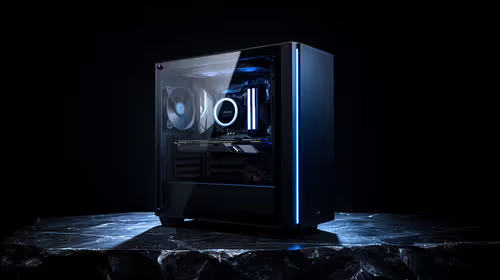
Struggling with a weak Desktop PC Wi-Fi signal? 📶 Discover expert tips on positioning your tower and external antennas to eliminate lag and maximize your internet speeds for gaming and streaming. 🚀
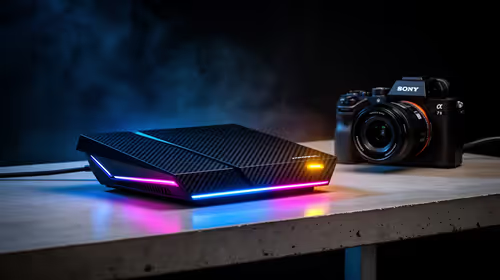
Tired of loadshedding router restarts killing your Wi-Fi? ⚡ Discover why power cuts disrupt your connection and learn expert tips to get back online faster after the lights return. 🌐
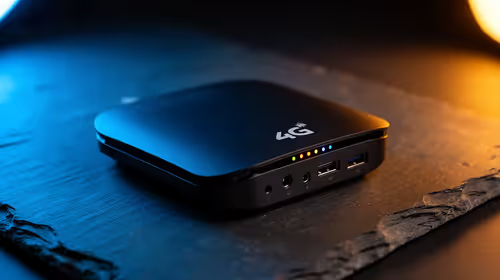
Master using a Nano SIM 4G router as your primary internet solution. Get stable speeds and seamless connectivity for gaming and streaming at home! 🌐🚀
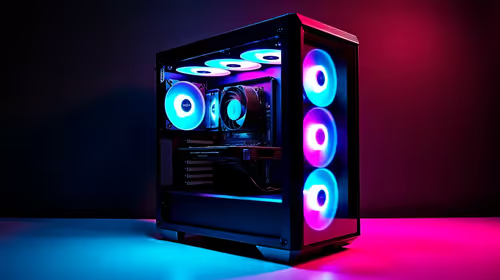
Gauteng r30 000 needs practical checks before you choose. Compare fit, workload, support, setup needs, timing, and delivery expectations without relying on live availability or fixed 2026 claims.

Gauteng r40 000 needs practical checks before you choose. Compare fit, workload, support, setup needs, timing, and delivery expectations without relying on live availability or fixed 2026 claims.

Gauteng r50 000 needs practical checks before you choose. Compare fit, workload, support, setup needs, timing, and delivery expectations without relying on live availability or fixed 2026 claims.
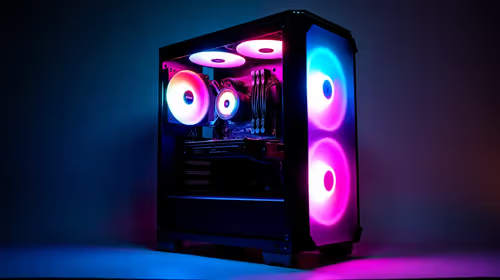
Gauteng r60 000 needs practical checks before you choose. Compare fit, workload, support, setup needs, timing, and delivery expectations without relying on live availability or fixed 2026 claims.
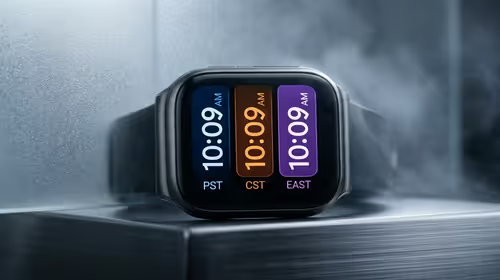
Three-tier smart watch plan for commuting should be shortlisted around the job it must do. South African buyers should compare fit, performance, compatibility, and upgrade room, warranty path, and upgrade room before treating any pick as best.
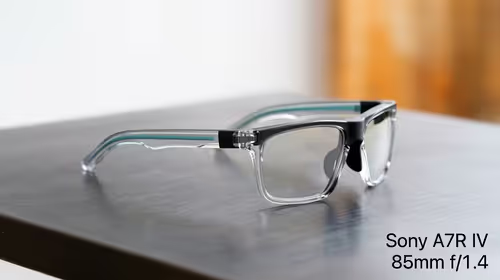
AR Glasses buying order for commuting students should be shortlisted around the job it must do. South African buyers should compare fit, performance, compatibility, and upgrade room, warranty path, and upgrade room before treating any pick as best.
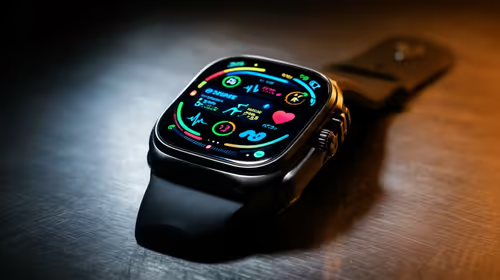
Smart Watch buying order for commuting should be shortlisted around the job it must do. South African buyers should compare fit, performance, compatibility, and upgrade room, warranty path, and upgrade room before treating any pick as best.
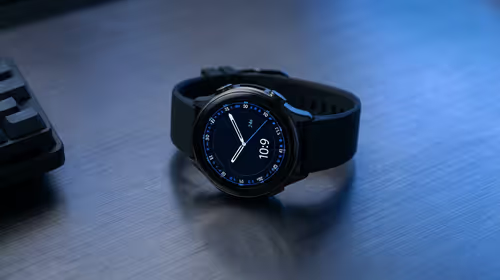
Smart Watch buying order for quiet PC builds needs a balanced parts plan, not a random basket. Map the CPU, GPU, RAM, SSD, cooling, and monitor target to the budget so SA builders know where to spend first.