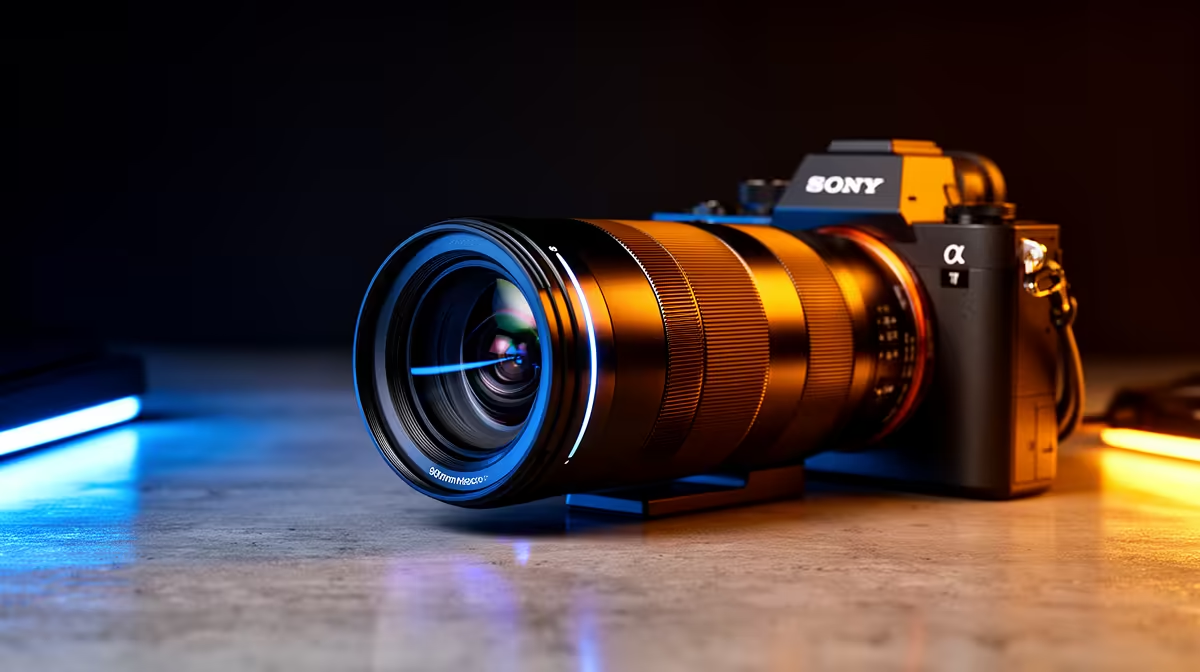
The 4K label on a streaming camera box is now common enough that it tells you very little on its own. What separates a camera that looks professional from one that merely checks a resolution box is the sensor, the autofocus system, and the lens, and each of those drives the price in South Africa. Budgeting for a pro 4K streaming camera in SA means understanding which features justify the spend at each price point before you commit.
Quick Answer
A genuine pro 4K streaming camera in South Africa costs around R3,000 to R5,000. That tier delivers a larger sensor, reliable autofocus, and a wide field of view. AI subject tracking and Sony STARVIS low-light sensors push the upper range toward R6,000 and above.
💰 What the R3,000 to R5,000 Range Actually Buys
The R3,000 to R5,000 band is where cameras cross the line from competent to genuinely usable for professional content. Below that threshold you typically encounter small sensors with limited low-light performance, fixed-focus optics that cannot track a presenter who moves, and aggressive processing that smears fine detail in shadows.
At the lower edge of the pro tier, around R3,000 to R3,500, a camera should deliver a larger sensor footprint than entry webcams, continuous autofocus that tracks faces reliably, and a field of view wide enough to show a desk setup without needing to sit far back. At 1080p delivery these cameras produce a noticeable step up from cheaper options.
Moving toward R4,000 to R5,000 adds meaningful refinements. Sensors in this range tend to be physically larger, which improves low-light performance directly. Autofocus systems become faster and more confident, with fewer hunting cycles visible as the focus shifts during a stream. Some cameras in this tier begin to offer dual output modes, allowing simultaneous 4K recording to a local drive while streaming a processed 1080p feed.
Where the Price Ceiling Is and Why
Beyond R5,000, the two features that reliably account for the jump are AI-assisted subject tracking and back-illuminated low-light sensors. AI framing, which keeps a presenter centred in the frame without manual camera adjustment, requires dedicated on-device processing that adds cost. It is genuinely useful for solo creators who cannot adjust their camera angle mid-session.
Back-illuminated sensor architecture, most commonly identified with Sony's STARVIS branding, captures more light per pixel than conventional sensor designs. The benefit is clean shadow detail in dim environments, which is relevant for streamers and creators who cannot fully control room lighting. Cameras combining both features sit in the R6,000 to R8,000 range in SA, and for full-time creators who monetise their output, the investment is justified by the polished result.
Pro Tip ⚡
Before committing to the top tier, assess your room lighting honestly. A STARVIS sensor earning its cost requires a setup where ambient light genuinely drops. If you stream in a well-lit dedicated room with consistent overhead lighting, R4,000 buys more than enough quality, and that R2,000 to R4,000 gap is better directed at a dedicated microphone or better key lighting.
🔆 Sensor Size: The Spec That Matters Most
SA buyers sometimes focus on the megapixel count or frame rate spec when comparing cameras at the same 4K label. Sensor physical size is the more reliable predictor of output quality. A larger sensor in a 4K camera means each pixel occupies more of the sensor surface, gathering more light and producing less noise at low ISO settings.
At equivalent price points, favour the camera with the larger specified sensor size over the one listing a higher megapixel count or an advertised AI feature count. A sensor specified at a quarter-inch physical size behaves very differently under dim lighting conditions from a one-third-inch or half-inch sensor, even if both are marketed as 4K.
This distinction also matters for South African creators in coastal cities. Cape Town and Durban apartment setups tend toward warmer, lower-intensity ambient lighting rather than the bright, north-facing natural light common in Joburg suburbs. A larger sensor handles that warmer, dimmer environment more forgivingly.
🎯 Matching the Budget to the Use Case
Not every professional streaming use case justifies the full R5,000-plus outlay. A corporate presenter or educator delivering polished video calls needs reliable autofocus and good colour accuracy. A gaming streamer with a fixed camera angle and consistent RGB lighting in the room needs dependable 1080p or 1440p output without autofocus hunting. Neither necessarily requires a STARVIS sensor or AI framing.
Evaluate the primary constraint for your own setup first. If low-light performance is the limiting factor, sensor quality justifies the higher spend. If autofocus reliability is the problem, the mid-tier is likely sufficient. If colour accuracy and white balance stability are the concern, check that the cameras you are comparing offer manual white balance lock, which appears across the price range.
Frequently Asked Questions
Is a R2,800 entry model worth considering for professional streaming?
At R2,800 you are at the edge of what qualifies as a professional result. Some models at that price point offer reasonable autofocus and acceptable 1080p output, but the sensor size tends to be smaller and the dynamic range narrower. For an occasional-use setup or a creator just starting out, it is a reasonable starting point with a clear upgrade path. For daily professional use, the R3,500-plus tier is more reliable.
Does brand name affect price significantly for 4K cameras in SA?
Yes, meaningfully. Cameras from established sensor manufacturers typically sit R800 to R1,500 higher on the shelf than cameras from newer or less-established brands with similar specification sheets. That gap sometimes reflects genuine sensor quality, but not always. Third-party reviews and sample footage are more reliable indicators than brand name alone.
Can I use a R5,000 streaming camera for professional video calls as well as streaming?
Absolutely. A camera at that tier produces more than enough quality for executive video conferencing, client presentations, and recorded interviews. The autofocus and wide field of view that suit streaming are equally valuable in a video call context. Most cameras at this tier connect over USB and appear in Microsoft Teams, Zoom, and Google Meet without additional software.
Why does a bigger sensor cost more even at the same 4K resolution?
Manufacturing larger sensors with consistent pixel quality is more expensive and has a lower yield rate than manufacturing smaller ones. The additional material cost, combined with more complex optics required to fill the larger sensor surface, flows through to the retail price. That cost premium corresponds to a genuine performance difference in low-light and dynamic range, which is why the sensor size is worth paying for rather than optimising away.
What is a realistic upgrade path from a basic webcam?
A reasonable progression is to start with a standard 1080p webcam around R800 to R1,500, identify what the limiting factor is after six months of regular use, and then address that specific gap. If the image is soft and lacking depth, a sensor upgrade to the R3,000 to R5,000 tier makes sense. If the audio is the actual bottleneck, a microphone upgrade delivers more visible improvement per rand than moving to a more expensive camera.
Ready to find the right 4K streaming camera for your SA setup and budget?
Browse the streaming camera range at Evetech and compare sensors, autofocus systems, and price tiers to find the model that fits what you actually need.