Quick Answer
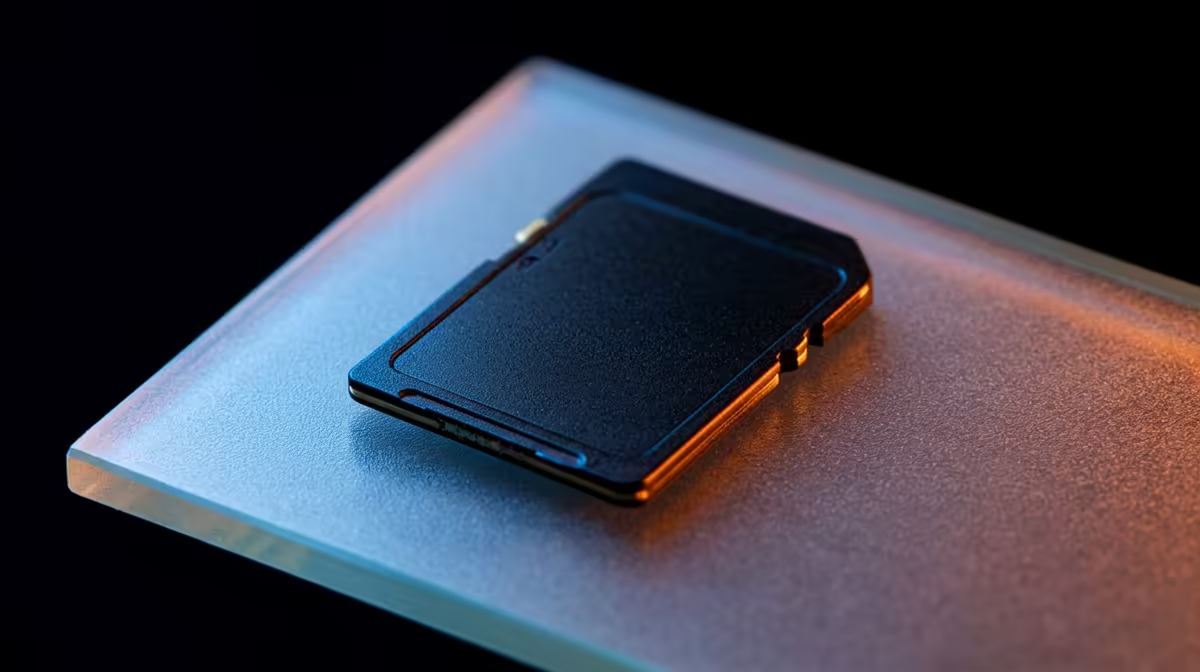
For reliable 4K Ultra-HD recording, choose an SDXC card rated V30 or higher (minimum 30MB/s sustained write speed), UHS-I or UHS-II bus interface, and at least 64GB capacity. Cards meeting the V60 or V90 spec are required for 4K at high bitrates (200Mbps+) or 8K recording on professional mirrorless cameras.
Understanding the Speed Ratings That Matter for 4K 📹
Four overlapping rating systems appear on SD card packaging, which creates confusion. Video Speed Class (V30, V60, V90) is the one that directly governs minimum sustained write speed: V30 guarantees 30MB/s, V60 guarantees 60MB/s, V90 guarantees 90MB/s. UHS Speed Class (U1, U3) is older: U3 also guarantees 10MB/s minimum, which maps roughly to the V30 threshold but is less precise. Class 10 (the circular C10 symbol) guarantees only 10MB/s and is insufficient for 4K. A card labelled C10 U3 V30 is the minimum safe spec for 4K recording at typical consumer camera bitrates of 60 to 100Mbps.
Capacity Planning for 4K Shoots 💾
At 4K 30fps in H.265 at 60Mbps (typical for Sony ZV-E10 II or Fujifilm X-S20), a 64GB card holds approximately 90 minutes of continuous footage. At 4K 60fps or All-I codec recording at 200Mbps, a 64GB card holds roughly 40 minutes. For travel videographers or South African drone operators (DJI Mini 4 Pro shoots at up to 150Mbps), a 128GB card is the practical minimum for a day's shooting. 256GB cards provide a full-day buffer without card swapping and price around R600 to R1,200 for reputable V30 UHS-I models at South African retail. Always carry a second card equal in size to your primary as insurance against data loss or card failure in the field.
Bus Speed: UHS-I vs UHS-II for 4K Workflows 🔧
UHS-I maxes out at 104MB/s read speed and suits cameras recording below 200Mbps. UHS-II adds a second row of pins and pushes theoretical speeds to 312MB/s, dramatically shortening file offload times from card to PC. The speed benefit only applies during offload (reading files off the card to a laptop), not during in-camera recording, where bitrate dictates the required write speed regardless of bus interface. For 4K creators in South Africa who shoot long sessions and need to back up and re-use cards quickly between shoots, a UHS-II card with a dedicated UHS-II card reader cuts 64GB offload from roughly two minutes (UHS-I) to under 45 seconds. Note that UHS-II cards in UHS-I readers revert to UHS-I speeds; the camera or reader must be UHS-II capable to access the higher bus speed.
Always Shoot to Two Cards When Available ⚡
Many mirrorless cameras with dual card slots allow simultaneous recording to both slots as backup insurance. When shooting important footage at weddings, sports events, or commercial work in South Africa, set one slot to primary recording and the other to overflow or backup copy mode. A corrupted primary card with a backup copy on the second slot has saved countless irreplaceable shoots.
FAQ
Can I use a V30 card for 4K 120fps slow-motion recording?
4K 120fps at high bitrates (200Mbps and above, as produced by Sony A7 IV and similar) requires V60 minimum. The data rate exceeds V30's 30MB/s guaranteed floor and can cause recording interruptions.
How do I test if my SD card is fast enough for my camera?
Use the camera itself as the final test: insert the card and start a recording session in the highest bitrate mode the camera offers. If the camera displays a write speed warning or stops recording, the card's sustained write speed is insufficient.
Are branded SDXC cards worth more than generic ones for 4K video in South Africa?
Yes. Generic cards often meet their stated maximum speed under ideal conditions but have inconsistent sustained write speeds under thermal load, which causes dropped frames mid-recording.
Shooting 4K and need a card that keeps up?
Evetech stocks SDXC cards across V30, V60, and V90 speed classes for cameras, drones, and action cams. Browse the full storage range at Evetech to match the right card to your recording setup.