Quick Answer
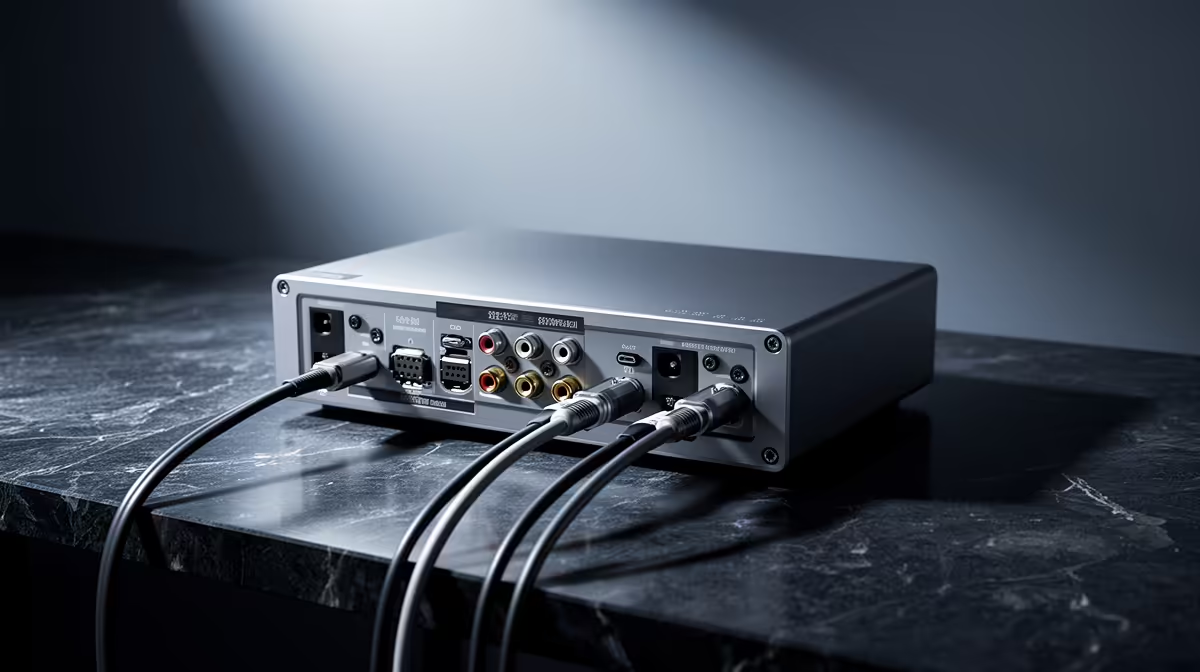
Fix cable clutter from HDMI, DisplayPort, and built-in speaker setups by using a monitor with a cable management channel in the stand, routing cables through the stand spine, zip-tying remaining runs along desk-edge cable trays, and eliminating redundant cables by consolidating to one display input and using the monitor's built-in audio rather than a separate speaker chain. A tidy setup typically comes down to three cable runs: power, display signal, and USB.
Understanding Where the Clutter Comes From 🔧
A typical South African gaming desk generates eight to twelve cables by default from monitor, PC tower, keyboard, mouse, and headset. The worst offenders are the display signal cables, monitor power, USB hub cables, and speaker connections. When a monitor includes built-in speakers and a USB hub, it consolidates multiple cable runs into the single display cable and one USB upstream, reducing the visible tangle significantly. Monitors with a cable management slot in the stand post (common on ASUS and MSI gaming models) route cables internally from panel to desk base, making the stand area appear clean from the front. For SA setups positioned in view of the room or on camera for streaming, this visual cleanliness matters.
HDMI vs DisplayPort: Choose One and Eliminate the Other 🖥️
The most effective cable reduction for a single-GPU, single-monitor setup is to pick one signal cable and remove the other. For PC gaming, DisplayPort 1.4 is the correct choice: it carries higher bandwidth, supports higher refresh rates without compression, and does not require handshake negotiation on every power cycle that some HDMI implementations need. Remove the HDMI cable from the PC-to-monitor run entirely. If you have a console connected to the same monitor, use the monitor's second HDMI port for the console only, and switch inputs via the monitor OSD or input button. This gives you one DisplayPort cable from PC and one HDMI cable from console, cleanly separated and never redundant.
Managing Built-In Speaker Cables and Power 🎮
A monitor with built-in speakers eliminates the dedicated speaker power cable, speaker audio cable, and any separate amplifier. The audio signal arrives through the display cable (both DisplayPort and HDMI carry audio natively) and no additional cable is needed. If your monitor lacks built-in speakers but you want to remove speaker cables, a USB-powered monitor bar speaker below the panel uses a single USB cable for both power and audio. Velcro cable ties (available at local hardware stores like Builders Warehouse for under R80 per pack) are the most practical cable management tool for SA home setups: they allow repositioning without cutting, unlike zip ties. {{TipBox title:"Three-Cable Target for Monitor Setups ⚡" , Aim for three cables at the monitor: power, one display signal (DisplayPort for PC), and one USB upstream to the PC for hub functionality. If you are counting more than four cables at the monitor, identify which devices can consolidate via USB hub passthrough. This reduces physical cable count while keeping full functionality and makes the desk look considerably cleaner.
FAQ
Do monitors with built-in speakers sound good enough for gaming in South Africa?
For casual gaming, background music, and video content, built-in monitor speakers at 2 to 5 watts per side are adequate.
Is there a cable management desk accessory worth buying in South Africa?
A cable management tray mounted under the desk edge is the most effective single purchase. It routes all cables horizontally along the desk underside and drops them vertically at the tower end. These cost R150 to R500 locally and dramatically improve desk appearance.
Should I use a DisplayPort to HDMI adapter to reduce cables?
Adapters introduce a potential weak point and may limit bandwidth. Use the correct native cable for each device rather than adapting. DisplayPort from GPU to monitor for PC, HDMI from console to monitor.
Looking for a gaming monitor with built-in cable management and speakers?
Browse Evetech's monitor range for options with integrated cable routing, USB hubs, and built-in audio across multiple screen sizes.