Quick Answer
To prevent GPU sag in a full-tower case, use one of three methods: activate the case's built-in GPU support bar if present, install an aftermarket PCIe slot GPU support bracket available at Evetech for R120 to R280, or use a vertical GPU mount with a PCIe riser cable to eliminate horizontal gravity stress entirely. The built-in support bar is the cleanest solution.
Understanding Why GPU Sag Happens in Full-Tower Cases 📐
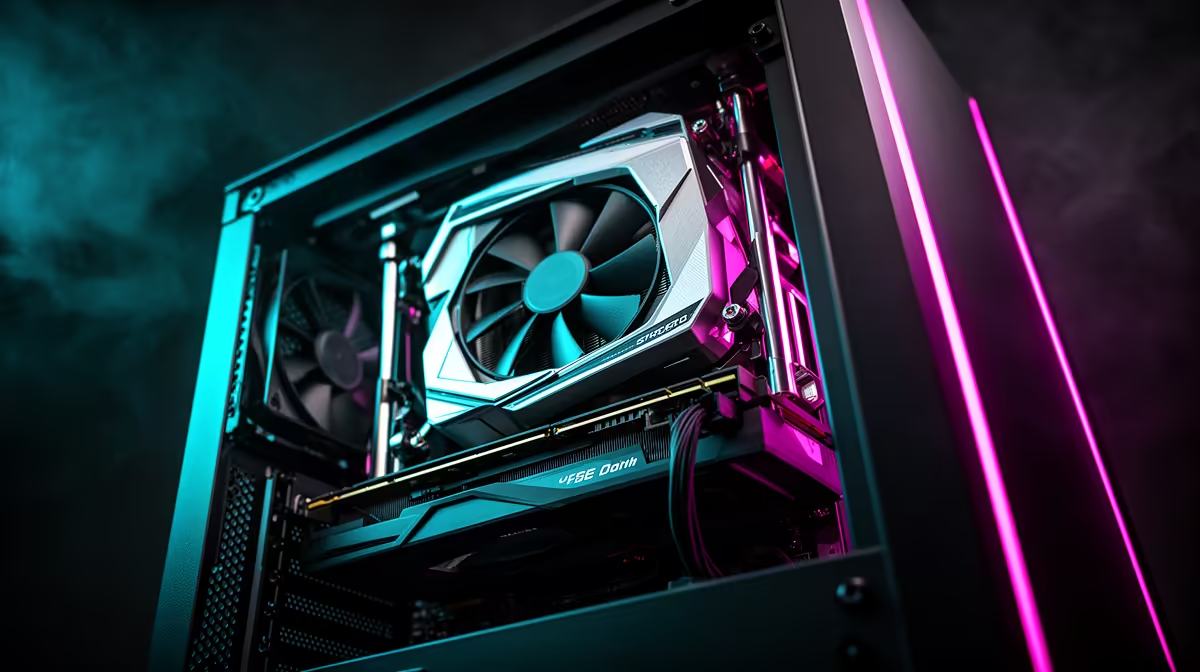
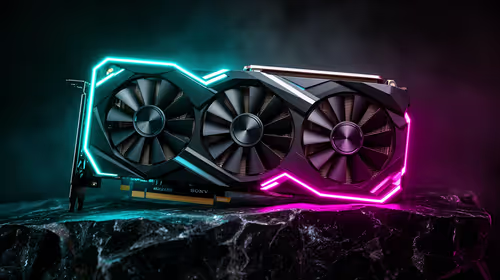
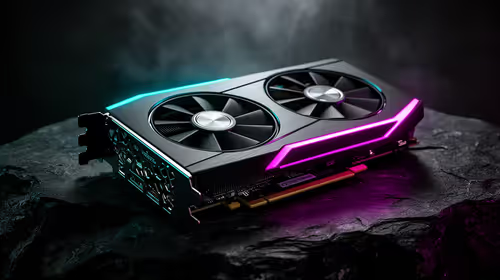
Full-tower cases suspend the GPU from a PCIe x16 slot positioned higher above the case floor than in a mid-tower. This greater height creates more lever arm force on the PCIe slot for the same card weight. An RTX 5090 triple-fan card weighing 2.5kg exerts more rotational stress on the PCIe connector in a full-tower, making sag prevention more important, not less.
PCIe x16 slots lock the card against horizontal extraction forces, not against gravity. Over months and years, the card's weight bends the slot's contact pins incrementally, reducing signal integrity and eventually causing display flickering or GPU disconnects during gaming.
Method 1: Built-In GPU Support Bar 🔧
Many full-tower cases in the R2,500 to R5,000 range include a sliding support bar mounted to the case floor. Slide the bar outward until it contacts the underside of the GPU shroud, then lock it with the thumbscrew. The bar should apply zero upward force; it is a contact support, not a lifting mechanism. This method is preferred because it integrates with the case structure, does not occupy a PCIe slot, and supports cards of any weight.
Method 2: Aftermarket PCIe Support Bracket 💡
A support bracket mounts to an empty PCIe slot cover and extends a padded arm under the rear of the card. Available at Evetech in standard, ARGB-lit, and white powder-coated variants, installation takes under five minutes. The limitation is PCIe slot usage: if your build uses a capture card in a lower slot, the bracket may conflict with it.
Method 3: Vertical GPU Mount 🌟
A vertical PCIe riser cable repositions the GPU perpendicular to the motherboard, standing it upright against the side glass panel. In this orientation gravity eliminates sag completely, pulling the card flat against the riser bracket. Vertical mounts require a high-quality PCIe 4.0 or 5.0 riser cable as poor-quality risers introduce signal integrity issues. Riser cables are available at Evetech for R350 to R700.
Post-Install Sag Check Routine ⚡
After fitting a heavy GPU, view the card through the glass from a metre away. If the GPU rear droops more than 3mm below horizontal, the sag is significant enough to address immediately. Activate the support bar or install a bracket before beginning regular gaming use to protect the PCIe connector.
FAQ
Can GPU sag damage an RTX 5090 permanently?
Over years of operation, yes. Two years of unsupported sag on a 2.5kg card degrades connector contact quality, causing intermittent texture errors or display disconnects. Prevention costs under R280 and avoids an expensive board or GPU replacement.
Is vertical GPU mounting worth it for a showcase build?
Yes. Vertical mounting fully faces the GPU cooler toward the glass panel, making fans, heatsink fins, and ARGB lighting directly visible. For white-themed or showcase builds on a desk, vertical mounting is a standard aesthetic choice.
Does a GPU support bar affect airflow inside the case?
Negligibly. Support bars are thin metal rails positioned at the bottom of the case interior, well below the GPU's primary airflow zone. They do not obstruct the airflow path from front intake fans to the GPU cooler.
Fitting a heavy flagship GPU and want to prevent sag?
Evetech stocks GPU support brackets, vertical riser mounts, and cases with built-in GPU support bars to keep your card perfectly level from build day onward.