Spec sheets throw around architecture names as if everyone already knows what they mean, and Xe2-HPG is one of the newer ones doing the rounds among video editors and 3D artists shopping for something other than a gaming card. Underneath the branding sits a genuine design shift in how Intel handles rasterisation, ray tracing, and compute together on a single die. This piece unpacks what that means for a 24gb creator graphics card built around it, without leaning on jargon that does not actually explain anything.
Quick Answer
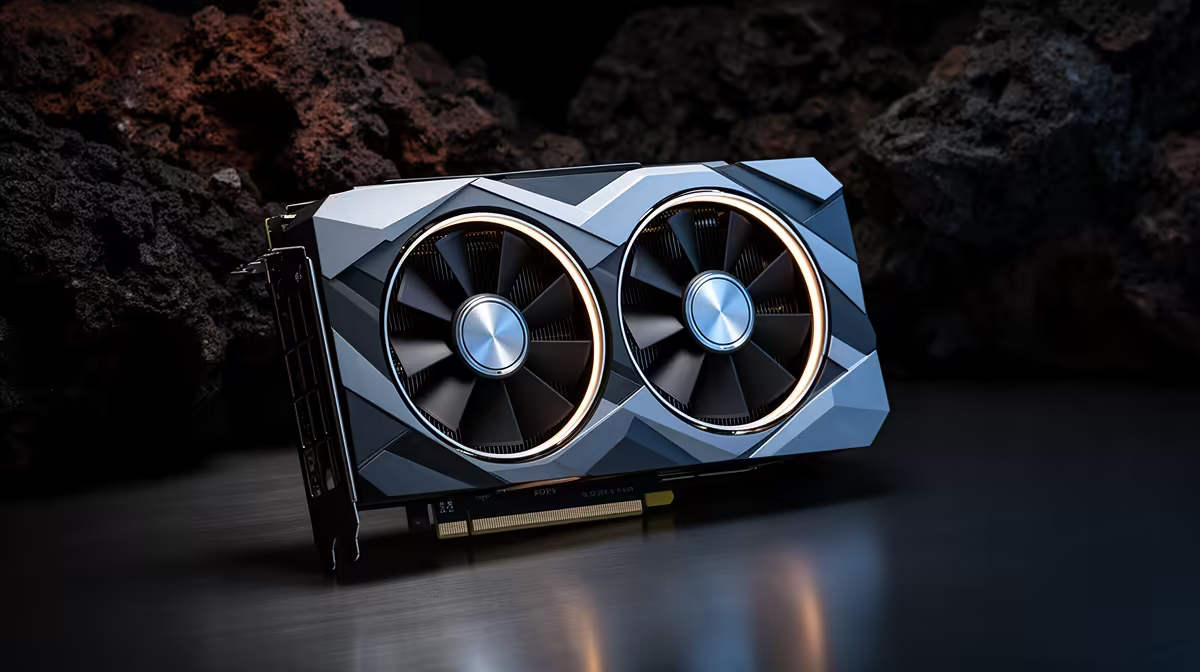
Intel Xe2-HPG architecture handles rasterisation, ray tracing, and compute work through dedicated execution units designed to run creative workloads efficiently rather than purely for gaming frame rates. This architecture powers the ASRock Intel Pro B60 Creator, a R14,399 card running at a 2400 MHz clock alongside 24GB of GDDR6 memory, giving 3D and video work the headroom to use it properly.
🧩 What Xe2-HPG Actually Changes
Graphics architectures are, at their core, arrangements of execution units, ray tracing hardware, and cache that decide how efficiently a GPU turns instructions into finished frames. Xe2-HPG restructures how those pieces talk to each other compared with earlier Intel designs, aiming for better throughput per clock cycle rather than simply raising clock speed to chase performance.
Execution Units and Ray Tracing Units
Each execution unit on the chip handles shading work, the calculations that determine colour, lighting, and texture detail for every pixel on screen. Dedicated ray tracing units sit alongside them, calculating how light bounces, reflects, and scatters through a scene without forcing the general-purpose execution units to do that math themselves. Splitting the work this way means a scene with heavy ray traced lighting does not starve the rest of the rendering pipeline, which matters directly for anyone previewing lit 3D scenes or ray traced video effects in real time.
Where AI Acceleration Fits In
Xe2-HPG also carries dedicated AI hardware in the form of XMX engines, built to accelerate the matrix operations behind AI-driven features like denoising, upscaling, and object detection inside creative software. Rather than borrowing cycles from the shading pipeline, these tasks run on hardware built specifically for them, which keeps the rest of the GPU free to keep working on the actual render or edit.
🎨 How the Architecture Behaves in Real Creative Apps
Architecture diagrams only matter if they translate into a smoother day at the desk, so it is worth grounding this in actual creative workflows rather than abstract throughput numbers.
Video Editing and Colour Grading
During colour grading, a GPU is constantly recalculating how colour adjustments affect every pixel across a frame, often across multiple layered nodes. The combination of Xe2-HPG's shading throughput and a 2400 MHz clock keeps that recalculation fast enough that scrubbing through a graded timeline stays fluid rather than dropping frames every time a node gets adjusted. On denser 4K and 6K timelines, the 24GB GDDR6 buffer becomes just as important as the architecture itself, since it determines how much of that timeline can stay cached rather than being reloaded constantly.
3D Rendering and Viewport Preview
For 3D artists, the architecture's ray tracing units show their value most clearly in viewport preview modes, where lighting changes need to render close to instantly to stay useful during the creative process. A scene with several material layers and complex geometry benefits from the dedicated ray tracing hardware handling lighting calculations separately from the shading work needed for surface detail and texture mapping.
🧠 XMX Engines and AI-Assisted Workflows
AI features have become a standard part of creative software, from noise reduction in low-light footage to intelligent object masking in editing timelines. The XMX engines built into Xe2-HPG exist specifically to accelerate those operations, meaning tasks that would otherwise slow down the whole GPU instead run on purpose-built hardware. That distinction is easy to miss on a spec sheet but noticeable in practice, particularly on longer render queues where every saved second compounds across dozens or hundreds of frames. Full DirectX 12 Ultimate support ties into this too, since it standardises how creative software can call on both the ray tracing units and the shading pipeline together rather than treating them as separate systems.
💵 Positioning the Architecture Against the R14,399 Price Tag
Architecture alone rarely justifies a purchase decision, so it is worth weighing Xe2-HPG against what else R14,399 buys in the current market. Reading through the B60 Creator product page lays out the full spec sheet alongside this pricing, which is useful context before comparing it to anything else in Evetech's range of workstation cards. Anyone specifically weighing Intel's approach against other brands should also look at ASRock's graphics card selection to see how this model fits within the broader lineup carrying the same architecture.
Frequently Asked Questions
Is Xe2-HPG built for gaming or creative work?
It handles both, but its execution unit layout and dedicated ray tracing hardware are particularly suited to the mixed rasterisation, ray tracing, and compute demands of creative software.
How does Xe2-HPG differ from a typical gaming GPU architecture?
The core building blocks are similar, but the balance and memory configuration on this card favour large working sets and AI acceleration over pure gaming frame rates.
Do I need special software to use the XMX engines?
Your creative application needs to support hardware AI acceleration, which most modern editing and 3D suites increasingly do through their built-in AI-driven tools.
Does the 2400 MHz clock speed limit what Xe2-HPG can do?
No, the clock speed works alongside the architecture rather than against it, keeping shading throughput consistent while the dedicated ray tracing and AI units handle their own workloads separately.
Is 24GB of GDDR6 necessary to benefit from this architecture?
Yes, in practice. The architecture's ray tracing and AI hardware perform best when a scene's full texture and geometry data can stay resident in memory rather than being swapped constantly.
Will Xe2-HPG feel unfamiliar if I have only used other GPU brands?
Day to day, no. Creative applications interact with the GPU through the same DirectX 12 Ultimate API regardless of brand, so workflows and menus remain largely the same even though the underlying architecture differs.
Does the architecture affect long-term software compatibility?
Full DirectX 12 Ultimate support built into Xe2-HPG means the architecture stays aligned with the same standard modern creative applications are increasingly built against, rather than relying on a narrower, older feature set.
Ready to learn what Xe2-HPG architecture changes for creators?
Find ASRock's 24GB workstation GPU found in Evetech's stock of creator GPUs, now at R14,399, designed to bring Intel's newer Xe2-HPG architecture to a creator desk.