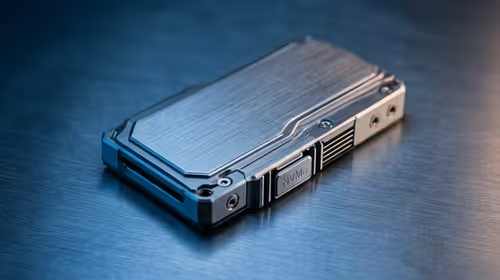
Comparing internal PCIe cards tech accessory only helps when the choice is tied to daily device use. Use USB-C compatibility as the storage pass tie-breaker for internal PCIe cards tech accessory.
Quick Answer
For most local buyers, internal PCIe Cards vs High-Speed USB Adapters for Desktop Connectivity comes down to 10 mm fit check, USB-C compatibility and daily build check. If wrong ports is the concern, check daily build check on internal PCIe cards tech accessory in the compatibility pass.
Compare Internal PCIe Cards vs High-speed USB Adapters for Desktop Connectivity In Real Use
Begin with the device chain or workspace you already use for internal PCIe Cards vs High-Speed USB Adapters for Desktop Connectivity. Test internal PCIe cards tech accessory in daily device use during the control pass. Use USB-C compatibility as the upgrade pass tie-breaker for internal PCIe cards tech accessory. For internal PCIe cards tech accessory, confirm 10 mm fit check in the workflow pass.
Trade-Offs Buyers Should Not Ignore For Daily Device Use For Internal PCIe Cards vs High-speed USB
The middle of the listing is where internal PCIe Cards vs High-Speed USB Adapters for Desktop Connectivity often becomes clear. If wrong ports is the concern, check daily build check on internal PCIe cards tech accessory in the device pass. For internal PCIe cards tech accessory, confirm 10 mm fit check in the timing pass. The useful sign for internal PCIe cards tech accessory is repeatable cleaner compatibility after the workflow pass.
Which Choice Fits Desk Fit For Internal PCIe Cards vs High-speed USB
Keep the decision grounded in the first week of ownership for internal PCIe Cards vs High-Speed USB Adapters for Desktop Connectivity. The useful sign for internal PCIe cards tech accessory is repeatable cleaner compatibility after the setup pass. The useful sign for internal PCIe cards tech accessory is repeatable cleaner compatibility after the battery pass. Use USB-C compatibility as the surface pass tie-breaker for internal PCIe cards tech accessory.
Shortlist internal PCIe Cards vs High-Speed USB Adapters for Desktop Connectivity by the problem it solves first, then use 10 mm fit check, USB-C compatibility and daily build check to separate Internal PCIe Cards options.
FAQ
What should I confirm first for Internal PCIe Cards vs High-speed USB Adapters for Desktop Connectivity during Daily Device Use in Day-one use?
If wrong ports is the concern, check daily build check on internal PCIe cards tech accessory in the durability pass. That gives internal PCIe Cards vs High-Speed USB Adapters for Desktop Connectivity a practical test before style.
When is Internal PCIe Cards vs High-speed USB Adapters for Desktop Connectivity worth stepping up for Desk Fit in Day-one use?
If wrong ports is the concern, check daily build check on internal PCIe cards tech accessory in the surface pass. The useful sign for internal PCIe cards tech accessory is repeatable cleaner compatibility after the comfort pass.
What is the easiest mistake with Internal PCIe Cards vs High-speed USB Adapters for Desktop Connectivity in Desk Setups for Day-one buyers?
Use USB-C compatibility as the layout pass tie-breaker for internal PCIe cards tech accessory. Internal PCIe Cards vs High-Speed USB Adapters for Desktop Connectivity should fit desk setups as well as the main use case.