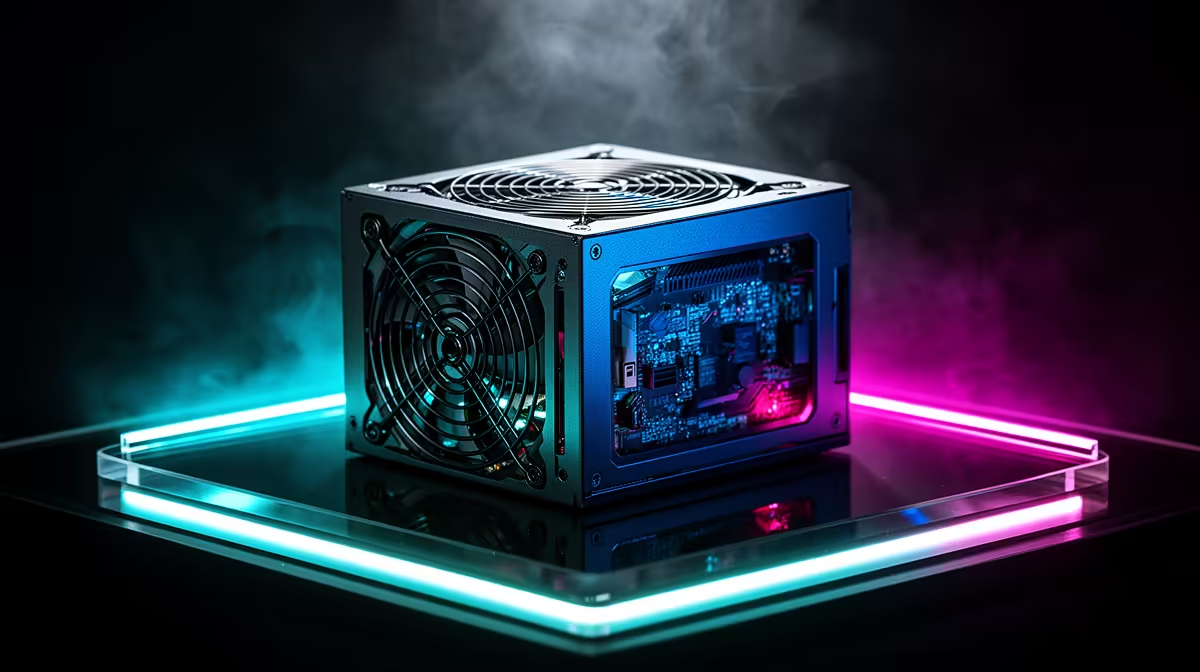
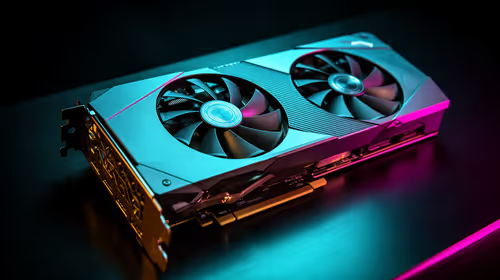
A quality 750W power supply is the right size for a standard RX 9070 XT gaming PC. AMD's 304W board-power figure and 750W system recommendation leave useful space for a strong gaming CPU without pushing you into a four-figure PSU class. The word quality carries weight here: the unit has to manage changing GPU load, deliver its rated 12V output and provide the connectors required by your exact card.
Quick Answer
Choose 750W for an RX 9070 XT build running a mainstream or high-end gaming processor at sensible settings. Confirm the partner card's recommendation because factory limits and connector layouts vary. Move to 850W for a power-hungry workstation CPU, extensive tuning or a future GPU plan that gives the extra capacity a purpose.
You can compare Corsair PSU models and the wider best-selling PSU range. If your power target is lower, the current Radeon RX 9060 XT range gives you another AMD tier to consider alongside the complete build budget.
What the 304W Figure Tells You
Board power describes the graphics card, not the PC at the wall. The CPU, motherboard, memory, storage, cooling and attached devices all draw from the supply as well. Conversion efficiency also means wall measurement and delivered component power are different numbers.
On a 750W unit, a 304W graphics board does not consume half of the available nameplate capacity. That leaves useful room for the rest of a gaming platform and short changes in demand. You still need to consider the actual CPU settings. A top processor left under unrestricted motherboard limits can draw far more than a gaming-focused chip during production work.
AMD's system recommendation is the practical starting point. Treat it as guidance for a stated reference configuration, then verify the exact partner card. Some models carry raised power limits or altered plugs.
Why Short Power Peaks Matter
GPU demand moves quickly as a workload changes. The average number shown by a monitoring overlay cannot describe every brief event that the PSU has to handle. A well-designed unit can keep output controlled through these changes and respond through its protection system when conditions leave the safe range.
This is where a generic 750W sticker stops being useful. Independent testing can show voltage regulation, ripple, response to sudden load and whether protection thresholds behave sensibly. Search by full model and revision. Manufacturers can use related names across different platforms, so a review of one series member may not describe the unit in your basket.
Capacity margin helps, but it is not a substitute for a proven design. An unknown 850W product can be a worse foundation than a tested 750W supply.
Choose the Connectors Before the Case Is Closed
Check the sockets on your exact RX 9070 XT. Many Radeon partner cards use familiar PCIe power plugs, though the count and placement can differ. Use the PSU's intended PCIe cables and follow both makers' instructions on cable routing.
Where the supply provides separate leads, avoid placing the card's full demand through an improvised chain. Never use modular cables from another PSU. The equipment-end plug may fit while the PSU-end wiring differs.
Wide coolers can put a plug close to the side panel. Measure the space, let the cable turn without a hard fold and inspect each connection after the card is fixed in position. A secure cable path is part of compatibility, much like card length and cooler thickness.
Does a Fast CPU Push You Past 750W?
A gaming CPU does not hold its maximum synthetic-load draw during every game. In many titles, the graphics card carries more of the work. That is why 750W can support a strong gaming combination without sitting at its limit.
The answer changes if the machine spends hours rendering on CPU and GPU together, runs a large pump and fan array, or has both component limits raised. Add those real workloads to your plan. For a workstation-flavoured build with a flagship processor, 850W can provide cleaner operating room and a quieter fan curve.
Do not size from CPU and GPU marketing maxima added blindly. Use credible measured consumption for the exact settings, then respect the higher system recommendation published by a component maker.
ATX 3.0, ATX 3.1 and a Radeon Build
A current ATX design can offer clearer transient-load requirements and modern cable support. That is useful when you are buying a PSU for several upgrade cycles. The standard label does not make every implementation equal, and an older high-quality design does not become incapable by calendar alone.
For an RX 9070 XT, focus on tested electrical performance, the native connectors you need, warranty, acoustic behaviour and physical fit. If two suitable 750W units are close in cost, the newer compliant platform may give you a more flexible next upgrade.
Check an Existing 750W Unit
Reusing a good supply keeps the upgrade efficient. Record its exact model, age and 12V rating. Inspect the external cables and plugs for damage, then clean dust from the case without opening the PSU housing. Confirm that you still have the correct original modular leads.
Warning signs include new electrical smells, buzzing that changes with load, unexplained blackouts or a fan that cannot turn. Stop and diagnose those symptoms. Do not keep launching a heavy game to see whether the fault repeats.
After the RX 9070 XT is installed, begin with stock GPU and CPU behaviour. Monitor temperatures and power readings during a known game, followed by a controlled combined test if you are comfortable with the tools. Stability in the work you use is better evidence than a single idle boot.
FAQ
What PSU does AMD recommend for the RX 9070 XT?
AMD's reference guidance points to 750W for a card with 304W board power. Check the maker page for your partner model and account for the rest of the system.
Is 650W too low for the RX 9070 XT?
It sits below the reference recommendation, so it is not the normal choice for a new build. A narrowly calculated system should still follow the exact card maker's instruction rather than a generic estimate.
Can a high-end CPU push past the comfort zone?
Yes. Sustained CPU and GPU production load, open power limits and extra hardware can make 850W the better fit. Normal gaming on a balanced platform is friendlier to 750W.
Should I buy ATX 3.0 or 3.1?
A well-tested current model is attractive for a new long-life build. Compare the actual platform, connectors, protections, noise and warranty instead of choosing from the standard name alone.
Start an RX 9070 XT build with a proven 750W PSU, verify the partner card's cable and system guidance, and move higher only when the CPU or upgrade plan earns it.