Quick Answer
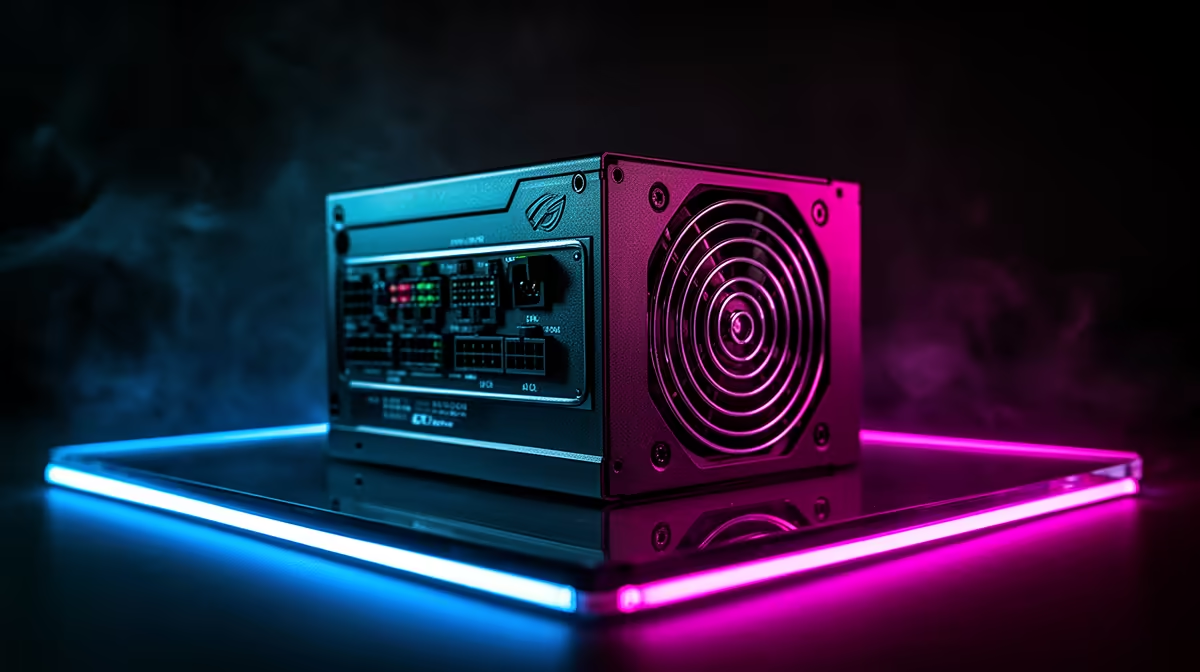
For most single-GPU builds using an RTX 5080 or below, a 1000W ATX 3.1 unit is sufficient and the better value. A 1200W PSU is worth it specifically for RTX 5090 builds, Threadripper or Xeon workstations with a single flagship GPU, or builders who want a single PSU that will survive the next GPU generation without replacement.
When 1000W Is Enough 🖥️
The RTX 5080 has a 300W TDP. Paired with a Ryzen 9 9950X at up to 170W, and adding 100W for drives, fans, AIO pump, and board overhead, peak system draw lands around 570W to 620W under heavy gaming. That puts a 1000W PSU at roughly 60% load, close to its efficiency sweet spot. The RTX 5070 Ti (285W TDP) in a similar system draws even less. At 60% load, a 1000W 80 Plus Gold unit delivers around 90% efficiency, keeping waste heat low and fan noise minimal. Unless you are actively future-proofing for a next-gen GPU expected to exceed the RTX 5080's power requirements, 1000W is the practical ceiling for these cards.
The RTX 5090 Case for 1200W 🔋
NVIDIA's RTX 5090 has a 575W TDP and recommends a 1000W minimum PSU. In practice, the card draws brief transients above 700W during shader compilation and large compute bursts. A Ryzen 9 9950X simultaneously pulling 200W under a CPU-heavy game or rendering task pushes combined instantaneous draw above 950W, leaving the 1000W PSU running at its ceiling. At that load level, the PSU fan is at high RPM, efficiency drops, and long-term component stress accumulates. The 1200W unit running the same system sits at 80% load, stays quieter, runs cooler, and operates within its design envelope. In South Africa, the price difference between a 1000W and 1200W ATX 3.1 Gold fully modular PSU from the same brand is roughly R600 to R1,200 depending on import conditions, a reasonable insurance spend on a build that includes an RTX 5090.
Future-Proofing Reality Check 💡
GPU power requirements have risen steadily across generations. The RTX 4090 introduced the 12VHPWR connector for its 450W TDP. The RTX 5090 raised the bar to 575W. If historical trajectory continues, the RTX 6090 class card in 2027 or 2028 could plausibly exceed 600W TDP. A 1200W PSU purchased today for an RTX 5080 build leaves room for that upgrade without a PSU swap. A 1000W unit may become marginal. The argument is speculative, but PSU lifespans of seven to ten years make one-generation future-proofing a legitimate factor in the buying decision.
Check Actual Wall Draw, Not TDP Specs ⚡
TDP figures are sustained thermal targets, not peak electrical draw. Use a smart plug or inline power meter to measure your system's actual wall draw under your heaviest workload. This real number, not the component TDP sum, is what determines whether your PSU is genuinely at risk of hitting its ceiling.
FAQ
Does a 1200W PSU cost more to run than a 1000W unit?
No. Both units draw only what the system demands. A 1200W PSU running a 600W system pulls about 670W from the wall at Gold efficiency, the same as a 1000W PSU under identical load. Idle draw and light-load consumption are nearly identical between the two.
Will a 1200W PSU be quieter than a 1000W unit under the same load?
Typically yes. At the same absolute load, the 1200W unit is at a lower percentage of its capacity, so the fan controller runs the fan at a lower RPM. In zero-RPM mode, both fans stay off at low loads, but the 1200W unit will enter silent mode more reliably because that load represents a smaller fraction of its capacity.
What is a realistic budget for a 1200W ATX 3.1 PSU in South Africa?
Quality 1200W 80 Plus Gold ATX 3.1 fully modular units currently run roughly R4,000 to R5,500 locally. Platinum-rated 1200W options sit between R5,000 and R7,000. Prices shift with the rand-dollar rate, so check current stock at Evetech for accurate figures.
Building around an RTX 5090 or planning a future flagship upgrade?
Browse Evetech's 1000W and 1200W ATX 3.1 power supply range to find the unit that keeps your system running cleanly at peak load, stocked locally for fast delivery across South Africa.