



PCIe 5.0 vs PCIe 4.0 for Video editing in 4k in SA
PCIe 5.0 vs PCIe 4.0 for video editing in 4k is mainly about fit, features, compatibility, cost, and upgrade path, not one automatic winner. SA buyers should match the choice to the setup.
Read moreRacing simulator setups for Assetto Corsa Competizione in SA split into three real tiers, from a starter wheel and pedal kit up to a full direct drive rig. Evetech stocks gear across all three tiers, so you can enter at whichever rung matches your budget.

You can race Assetto Corsa Competizione with a controller, a starter force-feedback wheel or a full direct-drive cockpit. The right SA budget tier depends on what you already own: gaming PC, display, seat and a place to mount the controls. Price the finished station. A wheel box on its own cannot tell you what it costs to race.
Start with the game and a compatible controller when you want to learn ACC before committing to hardware. The first wheel tier adds force feedback and pedals on a secure desk or stand. The middle tier should improve braking and mounting. The full tier adds direct drive, a rigid cockpit and the display or PC performance your competition target needs. Use named July 2026 product prices for every rand figure.
Evetech's sim-racing range helps you assemble the car controls. If the cockpit will also host a yoke, throttle or stick, use the flight-simulator gear range to plan shared mounting before buying a frame.
ACC's load changes with resolution, weather, grid size, mirrors and graphics settings. Check the current official requirements, then compare independent tests for your CPU and GPU.
Run a busy race, not an empty practice lap. Watch frame time, GPU use, CPU per-core load, VRAM, system RAM and temperature.
A wheel upgrade cannot fix a PC that misses the frame-rate target. Stable performance makes braking and steering response easier to read.
A controller can get you into ACC with no cockpit. Tune steering speed, dead zones and assists, then focus on braking markers and consistency.
When you add a starter force-feedback wheel, secure it to a desk that can handle the clamp. Stop the pedals sliding against a wall, mat or simple frame.
At this rung, spend on a complete wheel-and-pedal kit rather than a base that leaves you without controls. Check PC or console compatibility for the exact version.
Force feedback communicates steering load, kerbs and loss of grip. It can help you catch slides and understand when the front tyres are overloaded.
Entry gear-drive systems may feel notchy or sound mechanical. Tune the force so it does not clip every strong corner into one weight.
The limit is often pedal consistency. A light brake that moves across the floor makes repeated pressure difficult.
The middle rung should solve the parts that cost lap time. A load-cell brake or firmer pedal set can make threshold braking repeatable.
A rigid wheel stand keeps the base, pedals and chair aligned. Add a chair stop when castors roll under braking.
You can keep a capable gear or belt wheel at this tier. A better base earns less when the pedals and seating still move.
Belt drive can smooth small corrections and reduce gear chatter. It suits long ACC sessions when you value quieter, cleaner steering.
Compare the full bundle, including rim buttons for pit limiter, lights, wipers and menus. ACC uses enough controls that keyboard reach can interrupt a race.
Check the ecosystem for pedals and shifter support, though a manual H-pattern shifter is not required for GT3 racing.
Direct drive removes gears and belts between motor and steering shaft. It can deliver faster detail and greater force headroom.
A rigid cockpit becomes part of the requirement. High force on a light desk wastes detail and can move the display.
Set torque for information and safety, not a gym test. Use the base's stop control where supplied and keep hands clear during a crash.
A good brake can survive several wheel-base upgrades. Check load range, adjustment, pedal-plate strength and software calibration.
Mount the pedals so hard braking does not flex the tray. Adjust the seat so you can reach full force without locking your knee.
Clutch and handbrake are optional for normal ACC GT racing. Buy them when another simulator or car needs them.
A single 16:9 monitor is the simplest start. An ultrawide expands horizontal view without the setup of triples. Triple monitors can improve side awareness and cockpit scale.
Triples demand desk or stand space, matching panels and more GPU output. They are not a required middle-tier purchase.
VR can create strong presence but adds headset comfort, image clarity and performance demands. Test it before building the whole station around it.
Measure eye distance and screen width, then use ACC or a trusted calculator to set a realistic field of view. A wide incorrect view can make corners look faster and distances harder to judge.
Move the monitor close enough to use its size, with safe clearance from the wheel. Keep the screen centred at eye height.
A correct single display can teach better judgement than three poorly placed panels.
Tyre, engine and spotter audio give useful cues. A clear headset can serve a shared room and league voice chat.
Speakers feel open but may compete with wheel and pedal noise. Choose the arrangement that lets you hear cues without excessive volume.
Position the microphone away from the wheel base and keyboard. Test push-to-talk before a league session.
Use Ethernet when practical. Test packet loss, jitter and latency to a stable target, then to the league server where possible.
Raw download speed does not guarantee a clean race. Background uploads and Wi-Fi interference can create short spikes.
Pause large sync jobs and updates before an event. Keep the router firmware and network driver stable.
List what you own, then add PC work, display, wheel, pedals, stand or cockpit, seat, audio and network changes. Keep the same game and performance target across tiers.
Use named products from the approved price pack and label every amount as of July 2026. Do not turn an accessory minimum into the starting price of a racing setup.
The three tiers are functional rungs, not fixed category prices. Your existing hardware can move the total by more than the wheel choice.
Run a repeatable stint and record valid-lap spread, mistakes and comfort. Upgrade the part that prevents consistent input.
A moving brake pedal supports a stand or cockpit purchase. Force clipping supports better tuning before a stronger base. Low frame rate supports PC work.
Hardware can improve information and control. It cannot replace track study and deliberate practice.
Build the total from what you own and named current products. A controller is enough to start learning; a wheel tier adds feedback and pedals.
No for normal GT racing. Put that money towards braking, mounting or PC performance unless another simulator needs one.
The tier that delivers stable frame time, reliable controls, consistent braking and network stability. That can be a strong middle setup without direct drive.
Price the complete ACC station from the hardware you own, then climb one tier only when the next wheel, pedal or mounting change solves a measured limit.
Build the total from what you own and named current products. A controller is enough to start learning; a wheel tier adds feedback and pedals.
No for normal GT racing. Put that money towards braking, mounting or PC performance unless another simulator needs one.
The tier that delivers stable frame time, reliable controls, consistent braking and network stability. That can be a strong middle setup without direct drive. {{PRODUCTS: { facets: { query: "racing simulator" }, limit: 12, title: "ACC Racing Setup", style: "4" } }}
PCIe 5.0 vs PCIe 4.0 for video editing in 4k is mainly about fit, features, compatibility, cost, and upgrade path, not one automatic winner. SA buyers should match the choice to the setup.
Read more
Wi-Fi 7 vs Wi-Fi 6e for competitive esports comes down to router support, latency goals, device compatibility, and coverage. SA buyers should match the choice to the real network setup.
Read more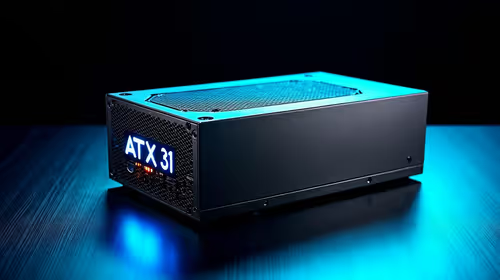
ATX 3.1 vs ATX 3.0 for mMO and live-service games buyers - what changes is mostly about compatibility, budget, upgrade path, and setup fit. SA buyers should check device support and real needs before expecting a clear win from either option.
Read more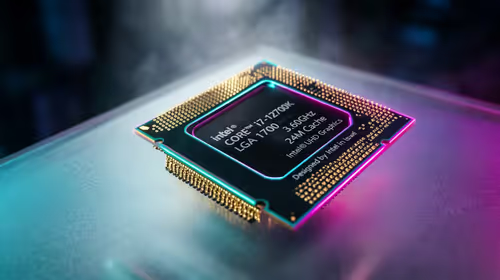
LGA 1851 vs LGA 1700 can affect Twitch and YouTube streaming when gaming and encoding share CPU resources. For SA creators, the real-world difference depends on encoder choice, memory support, motherboard cost, thermals, and upgrade plans.
Read more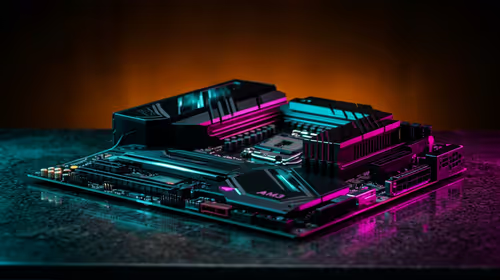
X870E vs X670E for aaa single-player gaming is mainly about fit, features, compatibility, cost, and upgrade path, not one automatic winner. SA buyers should match the choice to the setup.
Read more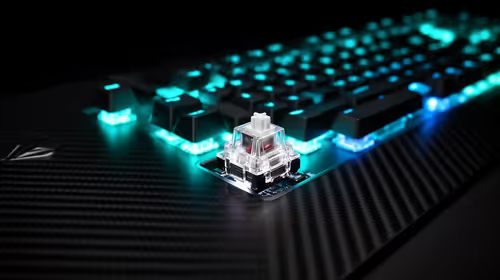
Hall Effect switches vs Mechanical switches for mMO and live-service games is mostly about compatibility, budget, upgrade path, and setup fit. SA buyers should check device support and real needs before expecting a clear win from either option.
Read more
A fake 113GB GTA VI ISO reportedly used empty padding around a small malware payload. SA gamers should delete unofficial builds, keep Windows security active and wait for official channels.

Wi-Fi 6E vs Wi-Fi 6 matters for 4K video editing when files move across a network. The real-world difference between Wi-Fi 6E and Wi-Fi 6 for video editing in 4K depends on NAS access, cloud uploads, router range, and SA creator workflows.

The difference between PCIe 5.0 and PCIe 4.0 for SA gamers is mostly bandwidth headroom. Compare GPU slot needs, NVMe speed, motherboard support, and upgrade timing before paying extra for a newer platform.

Gaming PC stuck pixel checks in South Africa should confirm the monitor fault first. Use colour tests, screenshot comparison, cable swaps, display menu checks, and clear photos before deciding on support.

Shokz OpenFit Air 2 earbuds weigh 7.2g each and use a redesigned dual-driver open-ear layout. SA buyers should choose them for comfort and awareness, not maximum isolation.

AMD's current driver now lists a Radeon RX 9050 4GB, while product coverage details a narrowed memory system. SA buyers should weigh the low VRAM ceiling against current local Radeon options.

Samsung Display has demonstrated a 16-inch 2.5K OLED laptop panel running at 300Hz. SA buyers should wait for a named notebook, full panel specifications and a local price before planning an upgrade.

Microsoft says some Windows 11 game crashes after recent updates are linked to RGB-related drivers. Affected SA gamers should confirm the update and driver before using the published registry workaround.
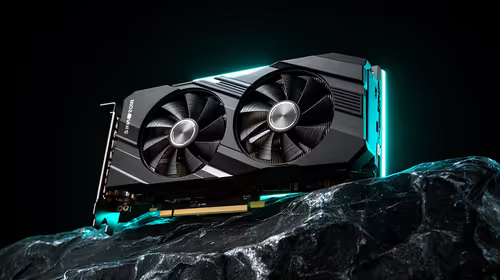
RTX 5090 on a 650W PSU is a tight pairing with very limited headroom. For SA gaming PCs, focus on total system draw, PSU quality, connector support, CPU choice, and avoid OC plans unless the full build is carefully power-limited.
PCIe 5.0 vs PCIe 4.0 for video editing in 4k is mainly about fit, features, compatibility, cost, and upgrade path, not one automatic winner. SA buyers should match the choice to the setup.
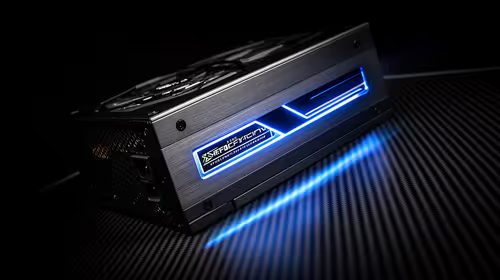
850W PSU safety for RTX 5090 is plausible with a quality unit and balanced parts. In SA, confirm connector support, CPU power draw, case airflow, PSU age, and spare capacity before building around 850W.
Wi-Fi 7 vs Wi-Fi 6e for competitive esports comes down to router support, latency goals, device compatibility, and coverage. SA buyers should match the choice to the real network setup.