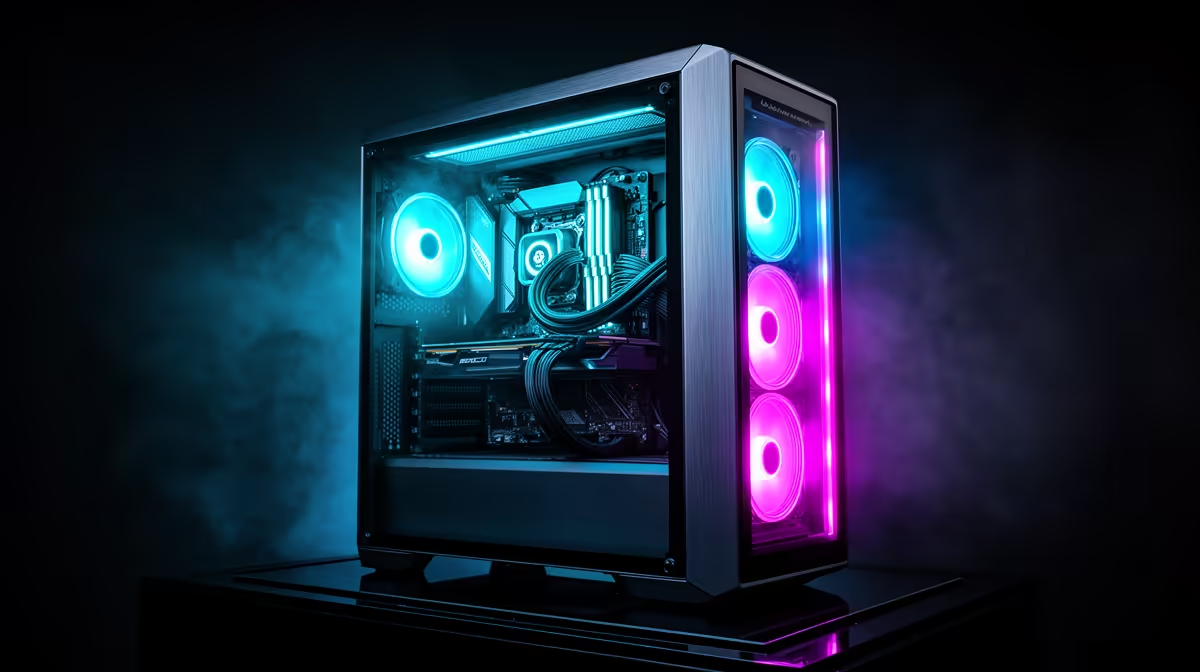
A custom PC can exceed a policy's ordinary electronics limit without looking unusual on a contents list. Whether to itemise a gaming PC on insurance depends on your policy wording, insurer valuation rules and documented replacement cost.
Quick Answer
Do not assume household contents cover, an electronics sub-limit, or specified-item cover applies to your gaming PC in a particular way. Read the policy schedule and wording, then ask the insurer or an authorised adviser how the tower, monitor, peripherals, portable use, surge, theft, accidental damage, depreciation, and replacement basis are treated.
Create a current hardware record by comparing named parts with the Corsair PSU range and the models among PSU best sellers where power equipment is involved. Product pages are pricing evidence, not insurance acceptance. The insurer decides what documentation and valuation it requires.
Start with the policy you have
Find the current schedule, wording, endorsements, excess, limits, exclusions, and renewal date. Search for computer equipment, electronic goods, household contents, specified items, portable possessions, power surge, accidental damage, business use, and proof of ownership.
A general contents sum insured does not tell you whether a sub-limit applies to electronics. A specified item may be used for certain portable or high-value property under some policies, while another insurer can structure cover differently.
Ask in writing whether the PC tower is one item or a collection of components, and whether monitors, controllers, sim-racing equipment, audio devices, and networking gear need separate listing. Keep the reply with the policy.
This is a policy-reading task, not a universal claim that every gaming PC should be itemised. The exact contract and risk determine the answer.
Decide what needs to be documented
List the case, motherboard, CPU, cooler, memory, graphics card, storage, PSU, and operating system. Add the monitor, keyboard, mouse, headset, microphone, controller, wheel, VR headset, and backup power when they form part of the insured setup.
Record brand, full model, serial number where safe, purchase date, invoice, and current condition. Photograph the assembled desk and component labels without sharing the file publicly.
For a custom build, keep individual invoices and the final parts list. For a prebuilt, keep the system invoice and internal specification supplied at purchase. An invoice breakdown can help describe the machine, but only the insurer can confirm whether it accepts that format for valuation or a claim.
Store the inventory away from the PC. A fire, theft, or electrical event can remove both the equipment and a local-only spreadsheet.
Ask how value is determined
Policies may use replacement, new-for-old, indemnity, market, depreciated, agreed, or another defined basis. Do not infer the meaning from the label; read the definition and ask for examples tied to your PC.
Component generations change. The exact GPU or motherboard may no longer be sold after a loss. Ask how an equivalent is selected, whether compatibility-driven replacement is considered, and who approves the quote.
Check underinsurance and average provisions where relevant. If the total contents value is understated, a claim can be affected under some policy structures. Obtain current advice from the insurer or authorised intermediary.
Update the inventory after every upgrade. Removing one GPU and adding another changes both value and serial evidence. Keep disposal or sale records so you do not insure equipment you no longer own.
Separate home use from portable and business use
A desktop that remains at home can sit under different terms from a gaming laptop, handheld, monitor taken to an event, or PC moved to a LAN. Ask where cover applies and whether property in transit needs another section.
Streaming income, freelance editing, esports prizes, or business use can change how a policy treats the equipment. Disclose the use honestly and obtain written guidance. Do not wait for a claim to reveal that the risk description was incomplete.
Student accommodation, a shared home, an outbuilding, and a rented property can also affect location and security conditions. Check who owns the equipment and whose policy names the insured interest.
Understand surge and electrical terms
Ask whether surge, lightning, accidental damage, mechanical or electrical breakdown, wear and tear, and defective equipment are separate causes or exclusions under the wording. A failed PSU does not prove an external surge, and a storm does not prove the cause of component failure.
Keep surge-protector, UPS, electrician, and repair documentation where relevant. A plug-level protector has limits and does not replace safe building wiring or whole-installation assessment.
Never open a PSU or live electrical equipment for claim evidence. Use a qualified technician or assessor accepted by the insurer when a report is required. Preserve damaged parts until the insurer authorises disposal.
Compare itemising with the existing cover
Ask for the cost and effect of specifying the PC or its components. Compare the excess, territorial limit, covered events, valuation basis, security requirements, and claim evidence with leaving it under general contents.
A higher premium or separate item is worthwhile only when it closes a real gap in the current policy. It may duplicate existing cover or still exclude the event you care about.
Do not rely on a retailer to decide what an insurer accepts. A dated itemised invoice or replacement quote is useful evidence, while the insurer controls its underwriting and claim process.
Keep every answer in writing and review it at renewal. Terms and values can change.
Build a clean evidence pack
Create one folder with the policy schedule, insurer correspondence, invoices, parts list, photos, serial record, upgrade dates, and backup location. Protect sensitive personal and serial information.
Once a year, compare the current system with named replacement parts and obtain the valuation format the insurer requests. Do not invent a total from bare component category minima.
Date that review and keep the previous version so every upgrade remains traceable.
After a loss, make the area safe, notify the insurer through its stated route, and follow preservation instructions. Avoid replacing or discarding parts before approval when evidence is needed.
FAQ
Must I specify a gaming PC separately?
Only your policy and insurer can answer. Check electronics limits, valuation, location, portability, causes of loss, and excess, then obtain written advice for the exact system.
Will an itemised parts invoice be accepted?
It can document ownership and configuration, but acceptance and valuation are the insurer's decision. Ask what invoices, quotes, photos, and reports it requires.
Should I include peripherals?
List them and ask. Monitor, audio, controls, sim gear, and backup power may be separate items or part of a broader setup under the policy wording.
Read the current policy with your complete PC inventory, then get the insurer's written answer on limits, valuation, and whether any item needs separate cover.