Quick Answer
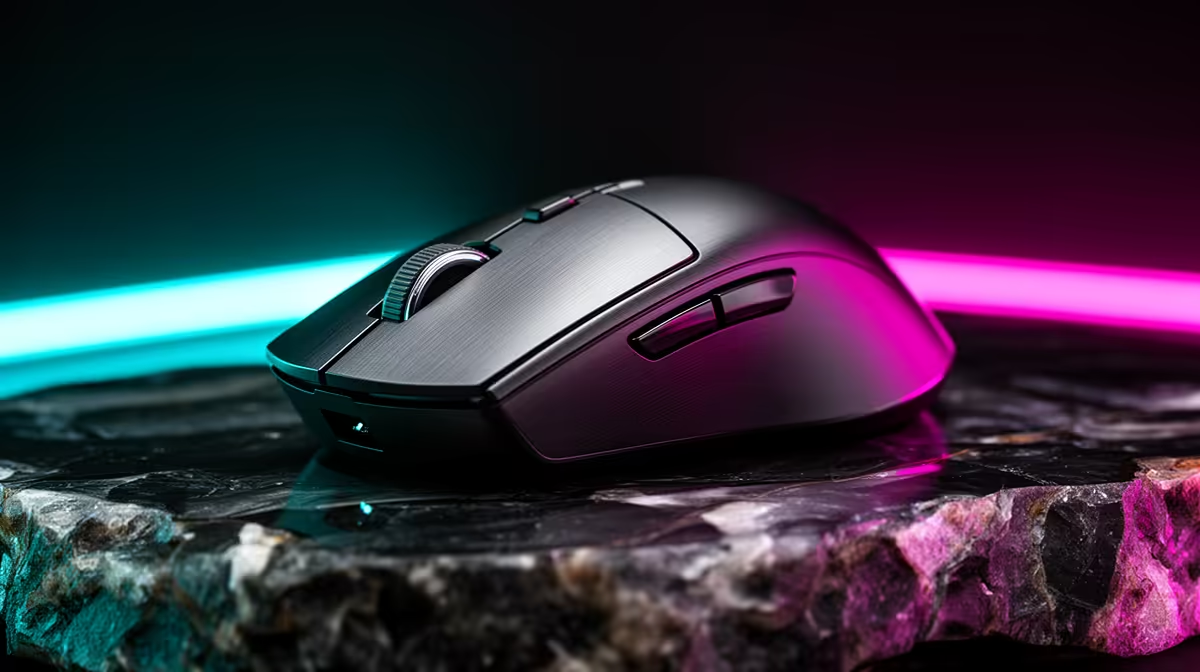
Optical sensor mice suit virtually every South African gaming budget from around R350 upward. The key considerations are maximum tracking speed in IPS, DPI ceiling, and whether the sensor uses zero-smoothing. At R600 and above you access sensors that perform reliably at 400 to 1,600 DPI for FPS, while spending R1,000 to R1,500 adds flagship-tier accuracy with no angle snapping.
Understanding Optical Sensor Specs Before You Buy 🔬
Optical sensors use LED or infrared illumination to photograph the surface beneath the mouse thousands of times per second and calculate displacement. The headline DPI number is less important than accuracy metrics: maximum tracking speed in IPS, acceleration tolerance, and whether the manufacturer certifies zero-smoothing and zero-filtering. A sensor rated for 300 IPS zero-smoothing means it tracks accurately during fast flick shots without artificially straightening your movement path.
ZAR Budget Tiers and What You Get 💰
Below R500: functional optical sensors, 1,000 Hz polling, adequate for casual and student gaming. Common in res and digs setups where a secondary mouse lives beside a laptop. R500 to R900: this is the SA value sweet spot. Sensors like the PixArt PAW3328 deliver 26,000 DPI ceilings and 300 IPS tracking. R900 to R1,500: Hero 25K, Focus Pro 30K, and TrueMove Pro-class sensors with zero-smoothing certification and 500 IPS headroom. Above R1,500: diminishing sensor returns; the premium moves to wireless, weight, and build quality rather than sensor accuracy improvements a typical player would notice.
Surface Compatibility and South African Desk Setups 🖥️
Optical sensors read surface texture via reflected light. Most perform well on standard cloth gaming pads, but budget sensors can struggle on glass, bare wood, or reflective desk surfaces common in minimalist SA home office setups. If you game on a glass or polished desk, look for sensors with adjustable LOD (lift-off distance) settings, which improve tracking consistency across different surfaces. Premium sensors like the Focus Pro 30K include automatic surface calibration, making them more forgiving across the range of materials South African players use, from branded cloth pads to repurposed textured desk mats.
Set Your DPI Before Deciding Your Budget ⚡
your preferred DPI range before shopping: most FPS players use 400 to 1,600 DPI, while MOBA and RTS players often go 1,600 to 3,200. Any sensor in the R600-plus range covers these comfortably. Spending more for a 30,000 DPI ceiling only matters if you genuinely use it, which almost no player does.
FAQ
Do optical sensors work on all mousepad surfaces available in SA?
Most modern optical sensors work on any non-transparent, non-reflective surface. Cloth pads are universally compatible. Hard pads (aluminium or plastic) work well but may require LOD adjustment. Avoid bare glass desks with optical sensors unless the mouse specifically lists glass surface support.
Is there a meaningful difference between R600 and R1,500 sensors for casual gaming?
For casual gaming at normal DPI and moderate movement speeds, no. The difference only becomes relevant at high competitive play speeds exceeding 200 IPS during fast tracking movements. A R600 sensor is genuinely excellent for students, office gamers, and weekend players.
What SA warranty support exists for gaming mice with optical sensors?
Most brands sold through Evetech carry a 1 to 2 year manufacturer warranty. Optical-sensor failure is extremely rare; the most common warranty claim is switch double-clicking, which is a mechanical issue separate from the sensor. Keep your proof of purchase from Evetech for streamlined warranty processing.
Not sure which optical sensor fits your budget?
Evetech stocks gaming mice across all ZAR price tiers with detailed specs listed per product. Head to the gaming mouse category to compare sensors, DPI, and polling rates side by side.