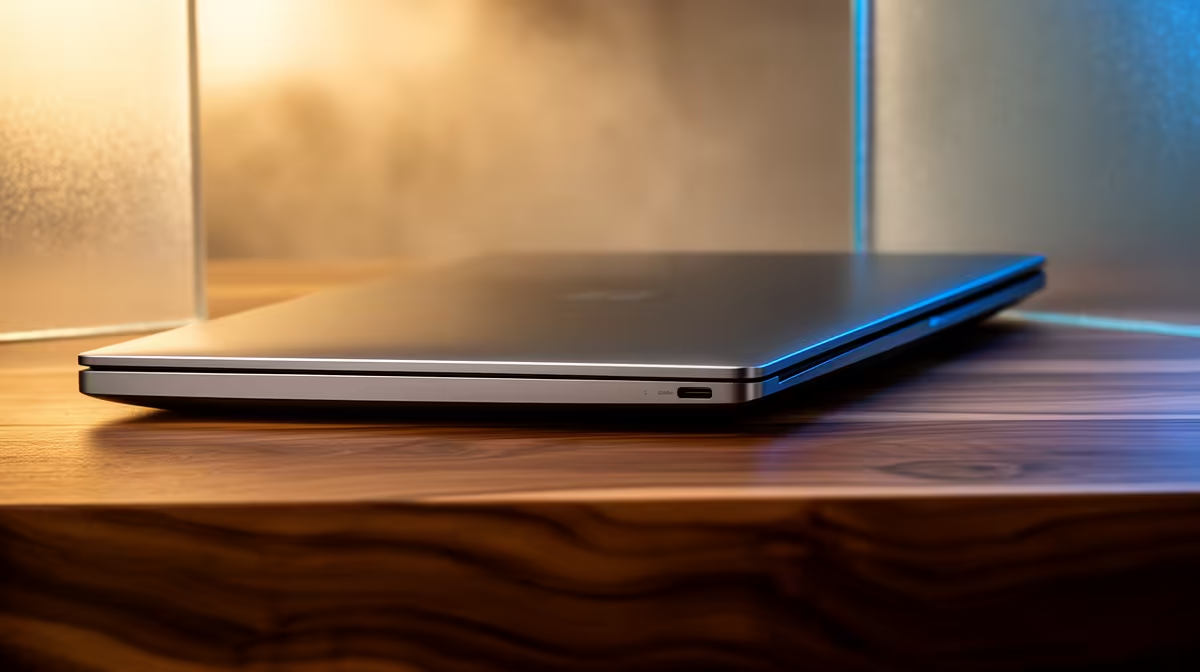
A school laptop should disappear into the work. It should open the research tabs, join the class call, run the spreadsheet and save the assignment without turning each task into a hardware lesson. A laptop under R10,000 can meet that standard in 2026, provided the school does not require specialist creative or engineering software.
Quick Answer
Under R10,000 is a workable South African budget for a new laptop focused on research, documents, presentations, spreadsheets, learning portals and video calls. Look for 8GB of memory, an SSD and a current entry-level processor, then confirm that the memory and storage fit the learner's subjects. Evetech's July 2026 range included the ASUS Vivobook Go 15 with a Core i3, 8GB RAM and 256GB SSD at R7,999, plus 512GB models such as the ASUS Vivobook X1504ZA and HP 255R G10 at R8,499.
📝 Define schoolwork before comparing machines
Most school tasks are lighter than the marketing around laptops suggests. Web research, word processing, slide creation, email, PDF reading and video lessons do not need a gaming GPU. They do need a responsive system, a usable keyboard and enough memory to keep several ordinary applications open.
Subject choices can change the requirement. Coding classes may use lightweight tools, but some development environments and emulators need more RAM. Visual art, technical drawing, video editing and three-dimensional design can demand a stronger processor or dedicated graphics. Ask the school for named software and recommended specifications.
Assessment platforms may have operating-system, browser, webcam or security requirements. A tablet or Chromebook can be excellent for some learners but unsuitable when a Windows-only application is compulsory. Confirm the platform before choosing the cheapest device with a keyboard.
The learner's working style matters too. A machine shared by several family members needs separate accounts and more storage discipline. A boarder or learner moving between homes may value battery life and low weight more than a larger screen.
💻 Aim for a balanced entry specification
Eight gigabytes of memory is the practical baseline for a focused Windows school workload. It can handle a browser, documents and a video call, but many tabs and unnecessary startup applications will narrow the margin. Upgradeable memory is useful, although some budget models solder it to the motherboard.
An SSD is essential for a responsive experience. A 256GB drive can work when school files are synchronised and archived carefully. A 512GB SSD creates more room for offline materials, multiple users and larger projects. In Evetech's dated July 2026 listings, the 256GB ASUS Vivobook Go 15 cost R7,999, while the 512GB ASUS Vivobook X1504ZA and HP 255R G10 were R8,499.
Processor names require context. A current entry-level Core i3 or Ryzen 3 can be entirely adequate for schoolwork, while a very old chip with a familiar badge may not be. Compare the exact model generation, not only the family label.
Screen resolution, brightness and viewing angles affect long sessions. Full HD is useful for fitting documents and browser windows without excessive scrolling. A larger 15.6-inch panel gives more workspace, while a smaller chassis can be easier to carry.
🎒 Check the school-day details
Battery performance depends on brightness, wireless use, video calls and the health of the battery over time. Treat a manufacturer estimate as a controlled comparison, not a promise for every timetable. Make sure the charger can travel safely and that replacement charging arrangements are clear.
Inspect the port selection. At minimum, consider the USB devices the learner uses, a display connection for presentations and an audio solution for online classes. If the laptop relies on one versatile USB-C port, confirm which display and charging features that particular port supports.
The keyboard should be comfortable enough for long assignments, and the trackpad should behave predictably. A low-cost wired or wireless mouse can improve work at a desk, but it should not compensate for a keyboard that is painful to use.
A webcam and microphone are useful, although a basic headset can improve privacy and clarity in a shared room. Network quality still sets the limit for online classes. Test Wi-Fi coverage where the learner actually studies.
Use Evetech's laptop best sellers for a current local shortlist. The gaming laptop deals are relevant only when the required applications need dedicated graphics or gaming is an intentional second use.
🛡️ Plan for years, not only day one
A laptop can last through high school when its physical condition, storage and workload remain under control. Use a protective sleeve, keep liquids away from the desk and avoid carrying the machine by its screen. Teach the learner to shut it down properly and install updates when work is saved.
Data protection is part of the purchase. Synchronise active school folders to an approved cloud service and keep another copy of important work. A warranty may repair hardware; it does not recreate an assignment stored only on a failed drive.
Check the exact warranty terms before buying. Coverage period, service method and accidental-damage exclusions vary. Keep proof of purchase and record the device serial number somewhere other than on the laptop.
A tablet can be better for handwriting, reading and portability, but long-form typing, file management, spreadsheets and Windows applications normally favour a laptop. A tablet with a keyboard can also approach laptop pricing without matching the same software flexibility.
Spend above R10,000 only for a named benefit: 16GB RAM, more storage, a better display, stronger performance or a lighter build. The target is a reliable school tool, not the most impressive specification in the class.
Frequently Asked Questions
What tasks suit a laptop under R10,000?
Research, documents, presentations, spreadsheets, PDFs, learning portals, email, video calls and many basic coding tasks fit this class well.
Will it handle school design projects?
Simple two-dimensional work may be fine. Three-dimensional modelling, rendering and advanced video editing need to be checked against the software vendor's requirements.
How much storage do budget school laptops have?
The category varies. Evetech's July 2026 examples included 256GB and 512GB SSD configurations below R10,000.
Is Wi-Fi and battery life reliable on cheap laptops?
They can be suitable, but model design and workload matter. Check the exact wireless specification and test battery expectations against the real school day.
Can a laptop under R10,000 last through high school?
Yes, when the workload remains suitable and the machine is protected, maintained and backed up. Upgradeability can add useful flexibility.
Should parents rather buy a tablet?
Choose a tablet when touch, handwriting and reading dominate. Choose a laptop when typing, file handling, spreadsheets or Windows software are central.
Does screen quality suffer at this price?
Budget panels can compromise brightness, colour and viewing angles. Compare the display in person or read model-specific specifications instead of judging by resolution alone.
Ready to build a school-ready shortlist?
Get the school's software requirements, choose the storage target and compare Evetech's sub-R10,000 laptops for the ports, screen and service support the learner will use every day.