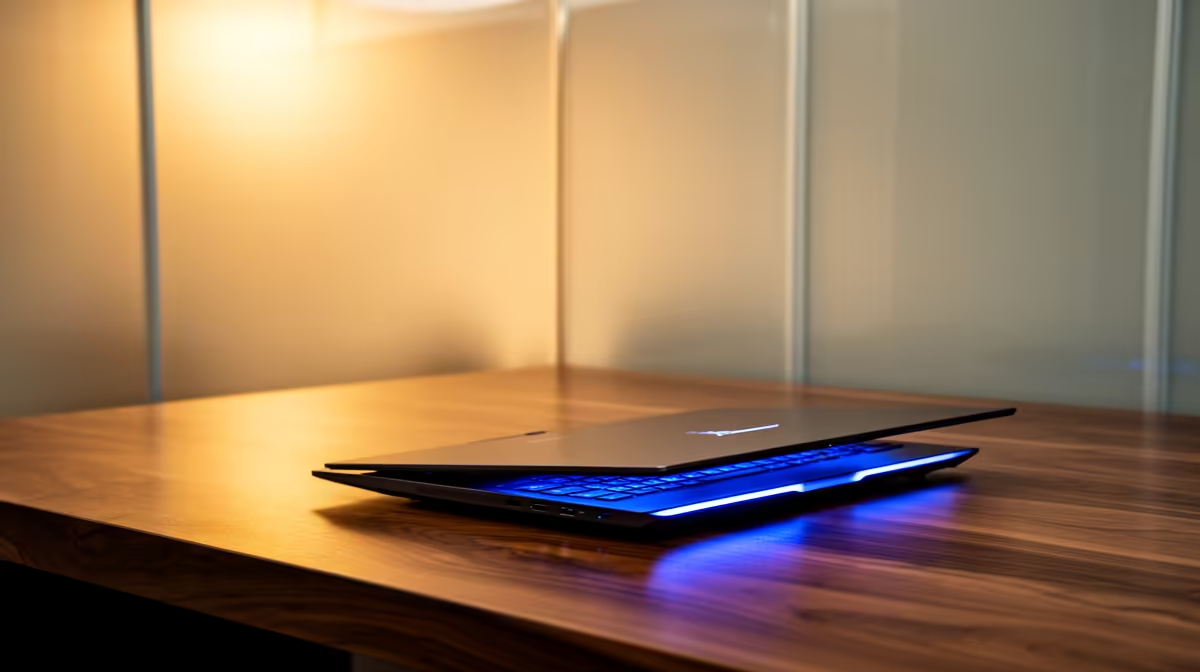
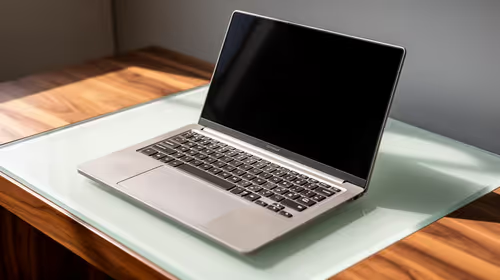
Yes, the ASUS Vivobook S14 OLED at R10,719 is the smartest lightweight laptop pick for South Africans who want a portable machine for experimenting with local AI models without moving straight to a gaming chassis.
Lightweight AI laptop picks
The ASUS Vivobook S14 OLED at R10,719 makes sense if your work is prompts, small model testing, note-taking, browser research, and creator admin. Its OLED screen is the real spec advantage here, because local AI work often means reading long outputs, comparing responses, and keeping reference notes open for hours.
The ASUS ExpertBook P1503 i5 at R9,858 is the more office-first option. Its i5 spec suits lighter local AI use, especially if you are testing compact models, writing content drafts, or running one focused tool at a time rather than trying to push heavy GPU workloads.
The Lenovo IdeaPad Slim 3 i7 at R13,400 and ASUS Vivobook X1504VA i7 at R13,999 are better choices if you want extra CPU headroom in a slim daily machine. The i7 spec matters when the same notebook also needs to handle spreadsheets, browser tabs, research files, and model-related utilities.
Student desk AI testing in SA
On a student desk, lightweight matters because the same machine may move between class, res, and home. The ASUS ExpertBook P5405 at R12,700 is a sensible middle pick when you want a business-style portable system for study work, writing, and controlled local AI experiments.
The Lenovo LOQ RTX3050 at R9,500 is the value exception if model experiments need a dedicated RTX3050 GPU. It is less of a lightweight-first choice, but it gives stronger AI tinkering potential than the slim office options at a surprisingly low price.
Ready to choose the right laptop?
Keep ASUS ExpertBook P1503 i5 at R9,858 on the list for lightweight laptop actually running local; its listed spec is the detail to test against that brief.