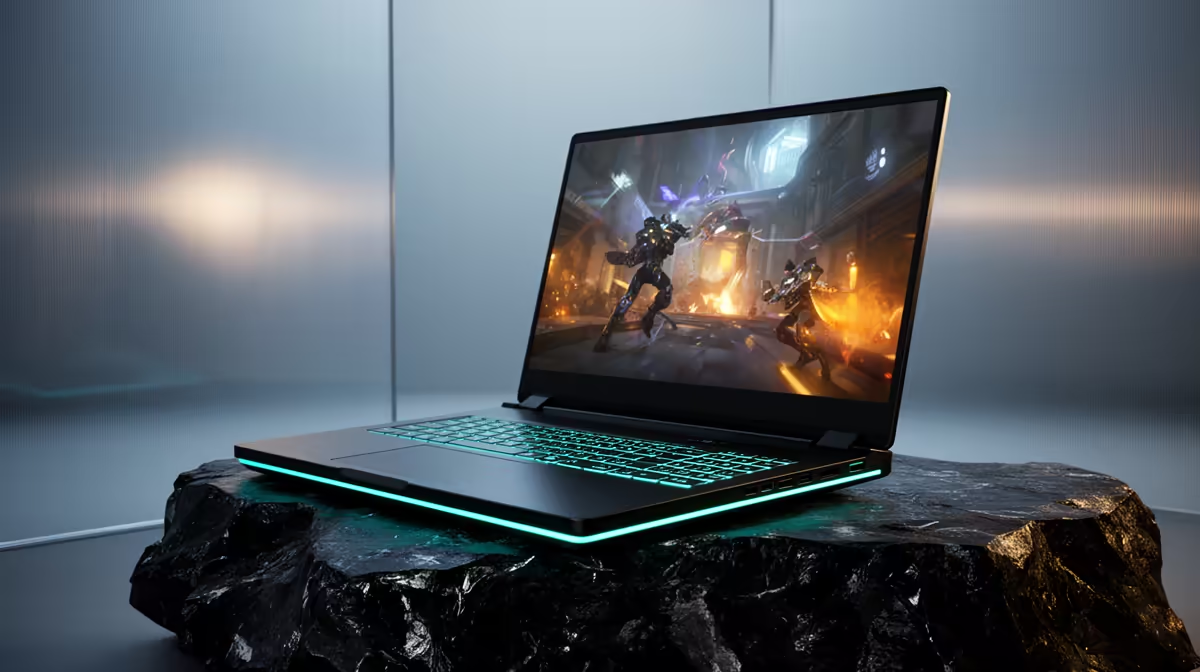
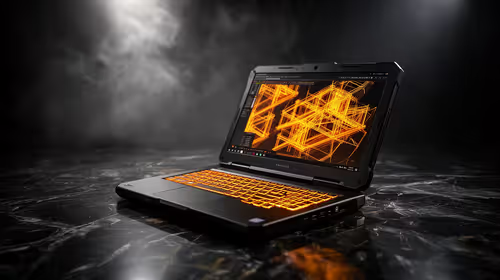
Lenovo LOQ RTX3050 at R9,500 suits an SA esports player who wants a laptop with dedicated RTX3050 graphics before chasing the thinnest possible chassis. A lighter machine can work for travel, campus, or team practice, but competitive play usually rewards stable graphics headroom more than a few hundred grams saved.
When Lightweight Makes Sense
ASUS Vivobook S14 OLED at R10,719 is the cleaner choice when portability and screen quality matter most, because its OLED spec is useful for study, content viewing, and daily carry between sessions. It is a sensible option for a player who also needs one device for class notes, Discord, browsing, and lighter gaming away from a full desk.
Lenovo IdeaPad Slim 3 i7 at R13,400 and ASUS Vivobook X1504VA i7 at R13,999 make more sense for players who prioritise a stronger i7 general-use spec over dedicated graphics. They suit multitasking, admin, streaming dashboards, and school or work software, but they are not the same type of pick as the Lenovo LOQ RTX3050 at R9,500 when match performance is the main concern.
SA Gaming Room Reality
In a shared gaming room, res room, or home desk setup, the Lenovo LOQ RTX3050 at R9,500 is the safer esports-first recommendation because the RTX3050 spec gives the machine a clearer gaming role. ASUS ExpertBook P1503 i5 at R9,858 is better framed as a practical i5 productivity machine for players who mainly need notes, browsing, and team admin between matches.
ASUS ExpertBook P5405 at R12,700 is worth considering when the brief is a neater professional machine for travel and everyday work, while ASUS Vivobook S14 OLED at R10,719 gives the stronger visual experience through OLED. For a serious player, lightweight is useful only after the gaming spec is good enough.
Ready to choose the right laptop?
Use ASUS ExpertBook P1503 i5 at R9,858 as the laptop shortlist benchmark, then check whether its listed spec matches the space, workload, and upgrade path.