


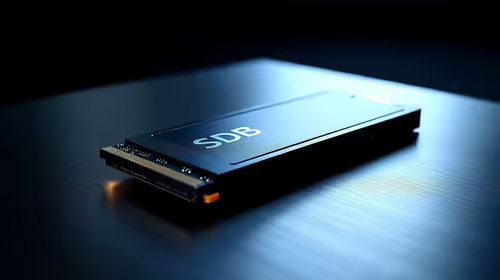
PCIe 5.0 vs PCIe 4.0 for Video editing in 4k in SA
PCIe 5.0 vs PCIe 4.0 for video editing in 4k is mainly about fit, features, compatibility, cost, and upgrade path, not one automatic winner. SA buyers should match the choice to the setup.
Read moreChoose an 8-in-1 hub by checking host compatibility, display output, charging level, network speed and the exact storage ports needed. At R399, the UExtend combines 4K video, 60W Power Delivery, 1000Mbps Ethernet, two USB data ports and SD access for compatible devices.
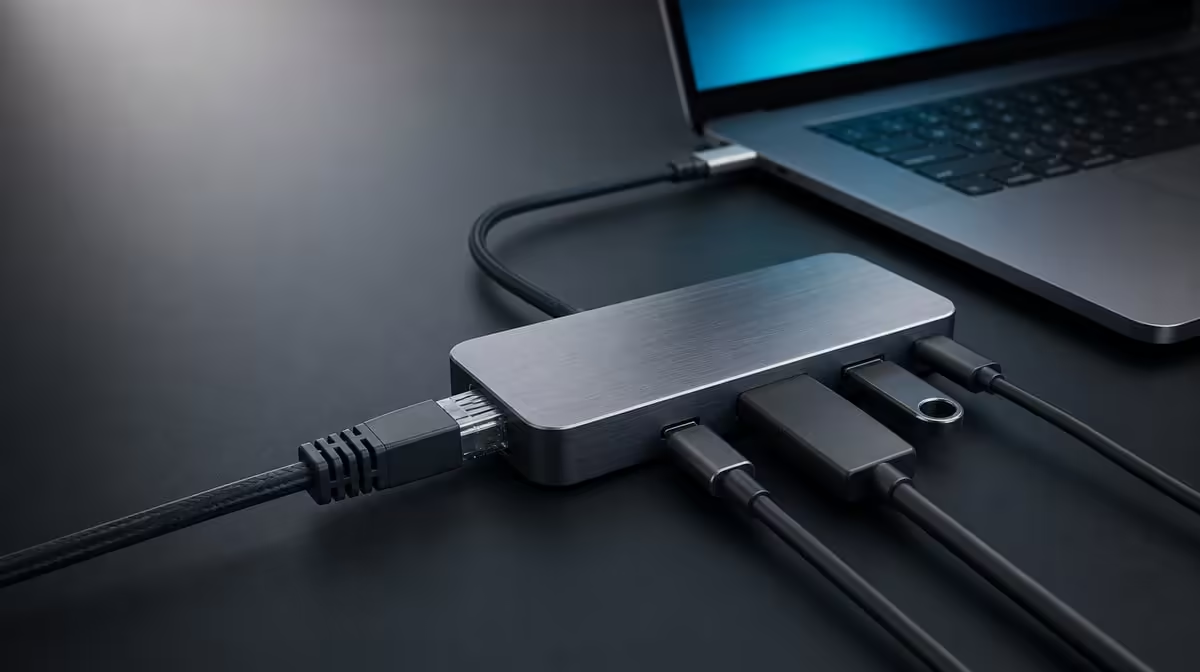
Eight functions are useful only when the laptop can reach them and the desk needs them. Knowing what to look for in an 8-in-1 USB-C hub means tracing the complete route from host capability to display, charger, network, cards, and USB devices before price or port count takes control.
Prioritise a compatible host connection, the required display output, sufficient Power Delivery, the right network rating, and storage ports used regularly. At R399, the UPERFECT UExtend combines 4K video, up to 60W charging, 1000Mbps Ethernet, SD reading, and two fast-data USB ports for supported systems.
Write down the exact laptop or supported device and the functions expected from its USB-C port. Video output, data, and Power Delivery are distinct capabilities; a familiar connector does not prove all three. If several sockets are present, identify the one intended for the hub.
The UExtend names Nintendo Switch, MacBook, and laptop use, but every particular setup still needs a compatible path. A buyer should confirm host video support before relying on 4K output and compare the machine's charging requirement with the 60W passthrough ceiling.
Use Evetech's USB hub selection with that device map beside you. Eliminate options that cannot serve the source before scoring their extra ports.
A stated 4K output is relevant when the host, hub, cable, and monitor can agree on the chosen mode. Decide whether the screen is for a fixed desk, presentation, portable display, or occasional entertainment, then plan the exact cable route. Do not infer refresh behaviour or a display standard that is not established.
Power Delivery should be treated as a negotiated chain. The hub passes compatible charger input towards the host up to 60W; it does not create power. Charger capacity, cable support, laptop acceptance, and system demand determine whether the battery rises, holds, or falls during work.
Test video and charging independently before combining them. A clean baseline helps distinguish a blank display from an underpowered workload.
The 1000Mbps Ethernet port can add a Gigabit wired path to a compatible host. That rating does not guarantee internet throughput, because cabling, network hardware, service, remote destinations, and traffic remain part of the result. It earns value for buyers who regularly work at a desk with a usable network cable.
SD access matters when cards enter the workflow often. The two USB data ports can connect other devices. Test representative media and peripherals so "fast data" is judged through the work it actually completes.
Compare Evetech's docking-station category if the desk requires more power or another confirmed connection. The correct comparison lists missing jobs, not labels.
Build the shortlist around a routine: connect the host, establish compatible charging, activate the display, confirm Ethernet, mount the SD card, and attach the USB devices one at a time. Then run the normal combined workload and note which features are used daily, weekly, or never.
Physical placement belongs in the score. The hub should sit where cables reach without pulling and removable storage can be ejected safely. A compact connection centre loses value if every desk movement disturbs it.
Evetech's gaming-accessories range can reveal how many keyboards, controllers, or other peripherals need data connections. At R399, the UExtend is strong value when its confirmed mix maps directly to those repeated jobs. Check current availability when purchasing.
Create a final pass/fail sheet:
If every essential row passes, the eight-in-one count has meaning. If one required function remains absent, choose around that gap instead of hoping another included feature compensates.
An eight-in-one product can invite feature-by-feature shopping, but the host connection is shared. Build one acceptance session that uses the external screen, charging, wired network, card, and both USB devices in the combinations that occur in ordinary work. Establish each function alone first, then combine them.
Record detection, completion, and recovery rather than chasing simultaneous peak results. A useful hub should reconnect predictably, complete the actual transfer, keep the intended monitor active, and maintain the battery outcome required by the user.
Position the UExtend where cards and USB devices can be reached without shifting the display or power leads. Check cable slack when the laptop lid moves and keep the Ethernet route away from foot traffic. The hub is part of the physical desk, not merely an item in a comparison table.
For travel, pack every required lead and rebuild the station at another surface. Note whether the 4K display, charger, and network cables still fit around the laptop. An eight-function hub loses portability value if its complete kit cannot be placed safely.
If the UExtend fails an essential row, describe the gap precisely: another direct data connection, a different charging requirement, or another confirmed port mode. Compare alternatives only against that gap. A higher price or bigger count should not erase a missing host capability.
If every essential row passes, run a 30-day forecast and count expected use. The R399 package is especially strong when several functions replace separate adapters and reconnection steps. If only one simple function survives the forecast, a more focused device may be better value.
Close the decision by removing product names and prices from the scorecard. Choose the column that fits the task, then reveal cost. This prevents a low price from excusing incompatibility and a high price from being mistaken for stronger performance.
Add a purchase-day verification. Recheck the exact R399 amount and current availability, but keep the technical pass/fail sheet unchanged. If another hub is considered, run it through the same source, display, power, network, and storage rows so a changing product list does not change the definition of success.
Finally, hand the connection card to another user and ask them to rebuild the setup. Any ambiguous cable, port, or step should be clarified. A system that another person can reproduce has moved beyond a one-off successful test.
One last comparison should use the smallest practical shortlist. Keep the UExtend and no more than two alternatives that pass the host test. Run the same screen, charging, Ethernet, card, and peripheral routine for each. This reduces feature noise and makes missing jobs obvious.
The winning eight-in-one hub is the one whose complete route can be explained without caveats hidden behind port count. Preserve the explanation with the setup card so later equipment changes can be checked against the original reason for buying.
No. Unused or incompatible connections add little value to the owner.
No. The source port must provide the required display capability.
It sets the UExtend's Power Delivery passthrough ceiling, subject to charger, cable, and host negotiation.
No. It is the Ethernet rating; the rest of the network and service still affect real throughput.
Use the actual card, USB device, files and host, then record completion time and stability.
Ready to choose eight functions that your laptop will genuinely use? Compare Evetech's USB hubs with a written display, charging, network, SD, and peripheral checklist before deciding.
No. Unused or incompatible connections add little value to the owner.
No. The source port must provide the required display capability.
It sets the UExtend's Power Delivery passthrough ceiling, subject to charger, cable, and host negotiation.
No. It is the Ethernet rating; the rest of the network and service still affect real throughput.
Use the actual card, USB device, files and host, then record completion time and stability.
PCIe 5.0 vs PCIe 4.0 for video editing in 4k is mainly about fit, features, compatibility, cost, and upgrade path, not one automatic winner. SA buyers should match the choice to the setup.
Read more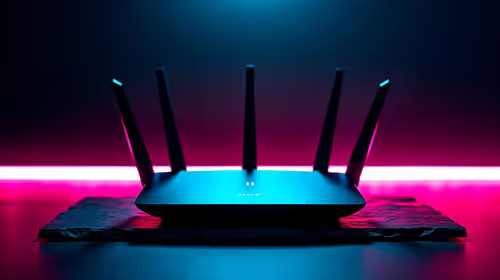
Wi-Fi 7 vs Wi-Fi 6e for competitive esports comes down to router support, latency goals, device compatibility, and coverage. SA buyers should match the choice to the real network setup.
Read more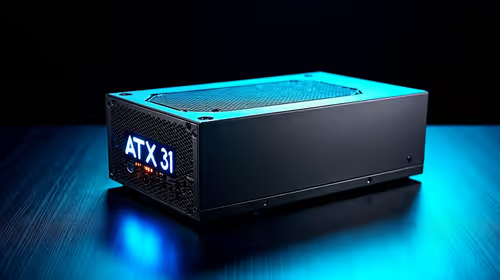
ATX 3.1 vs ATX 3.0 for mMO and live-service games buyers - what changes is mostly about compatibility, budget, upgrade path, and setup fit. SA buyers should check device support and real needs before expecting a clear win from either option.
Read more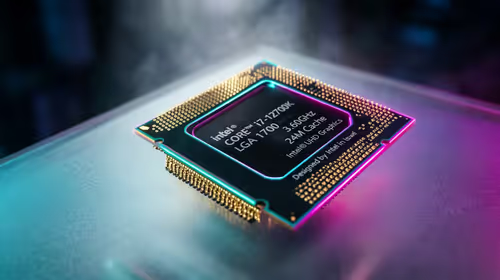
LGA 1851 vs LGA 1700 can affect Twitch and YouTube streaming when gaming and encoding share CPU resources. For SA creators, the real-world difference depends on encoder choice, memory support, motherboard cost, thermals, and upgrade plans.
Read more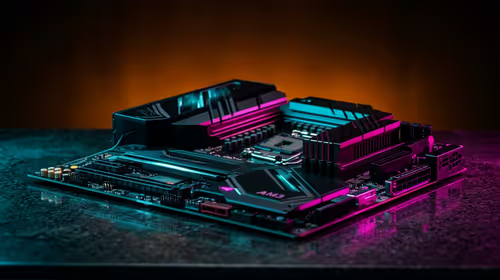
X870E vs X670E for aaa single-player gaming is mainly about fit, features, compatibility, cost, and upgrade path, not one automatic winner. SA buyers should match the choice to the setup.
Read more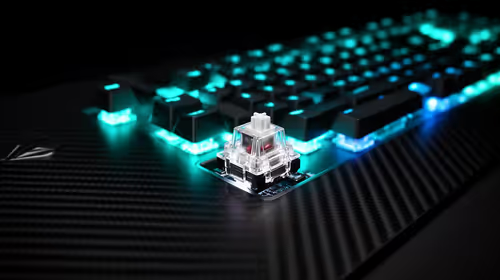
Hall Effect switches vs Mechanical switches for mMO and live-service games is mostly about compatibility, budget, upgrade path, and setup fit. SA buyers should check device support and real needs before expecting a clear win from either option.
Read more
A fake 113GB GTA VI ISO reportedly used empty padding around a small malware payload. SA gamers should delete unofficial builds, keep Windows security active and wait for official channels.
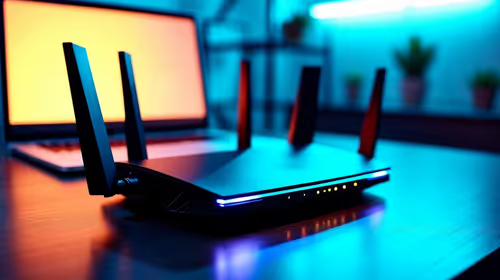
Wi-Fi 6E vs Wi-Fi 6 matters for 4K video editing when files move across a network. The real-world difference between Wi-Fi 6E and Wi-Fi 6 for video editing in 4K depends on NAS access, cloud uploads, router range, and SA creator workflows.

The difference between PCIe 5.0 and PCIe 4.0 for SA gamers is mostly bandwidth headroom. Compare GPU slot needs, NVMe speed, motherboard support, and upgrade timing before paying extra for a newer platform.

Gaming PC stuck pixel checks in South Africa should confirm the monitor fault first. Use colour tests, screenshot comparison, cable swaps, display menu checks, and clear photos before deciding on support.

Shokz OpenFit Air 2 earbuds weigh 7.2g each and use a redesigned dual-driver open-ear layout. SA buyers should choose them for comfort and awareness, not maximum isolation.

AMD's current driver now lists a Radeon RX 9050 4GB, while product coverage details a narrowed memory system. SA buyers should weigh the low VRAM ceiling against current local Radeon options.

Samsung Display has demonstrated a 16-inch 2.5K OLED laptop panel running at 300Hz. SA buyers should wait for a named notebook, full panel specifications and a local price before planning an upgrade.

Microsoft says some Windows 11 game crashes after recent updates are linked to RGB-related drivers. Affected SA gamers should confirm the update and driver before using the published registry workaround.
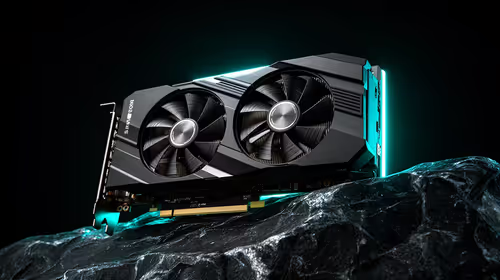
RTX 5090 on a 650W PSU is a tight pairing with very limited headroom. For SA gaming PCs, focus on total system draw, PSU quality, connector support, CPU choice, and avoid OC plans unless the full build is carefully power-limited.
PCIe 5.0 vs PCIe 4.0 for video editing in 4k is mainly about fit, features, compatibility, cost, and upgrade path, not one automatic winner. SA buyers should match the choice to the setup.
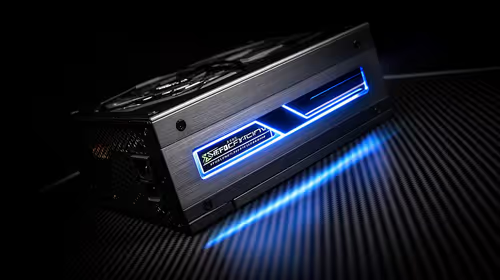
850W PSU safety for RTX 5090 is plausible with a quality unit and balanced parts. In SA, confirm connector support, CPU power draw, case airflow, PSU age, and spare capacity before building around 850W.
Wi-Fi 7 vs Wi-Fi 6e for competitive esports comes down to router support, latency goals, device compatibility, and coverage. SA buyers should match the choice to the real network setup.