Massage and heat can make a seated break feel different, but they do not turn a poorly fitted chair into an ergonomic solution. This massage and heat functions in ergonomic chairs guide separates active comfort from support, power and medical claims. The HBADA X7 includes both functions at R14,999.
Quick Answer
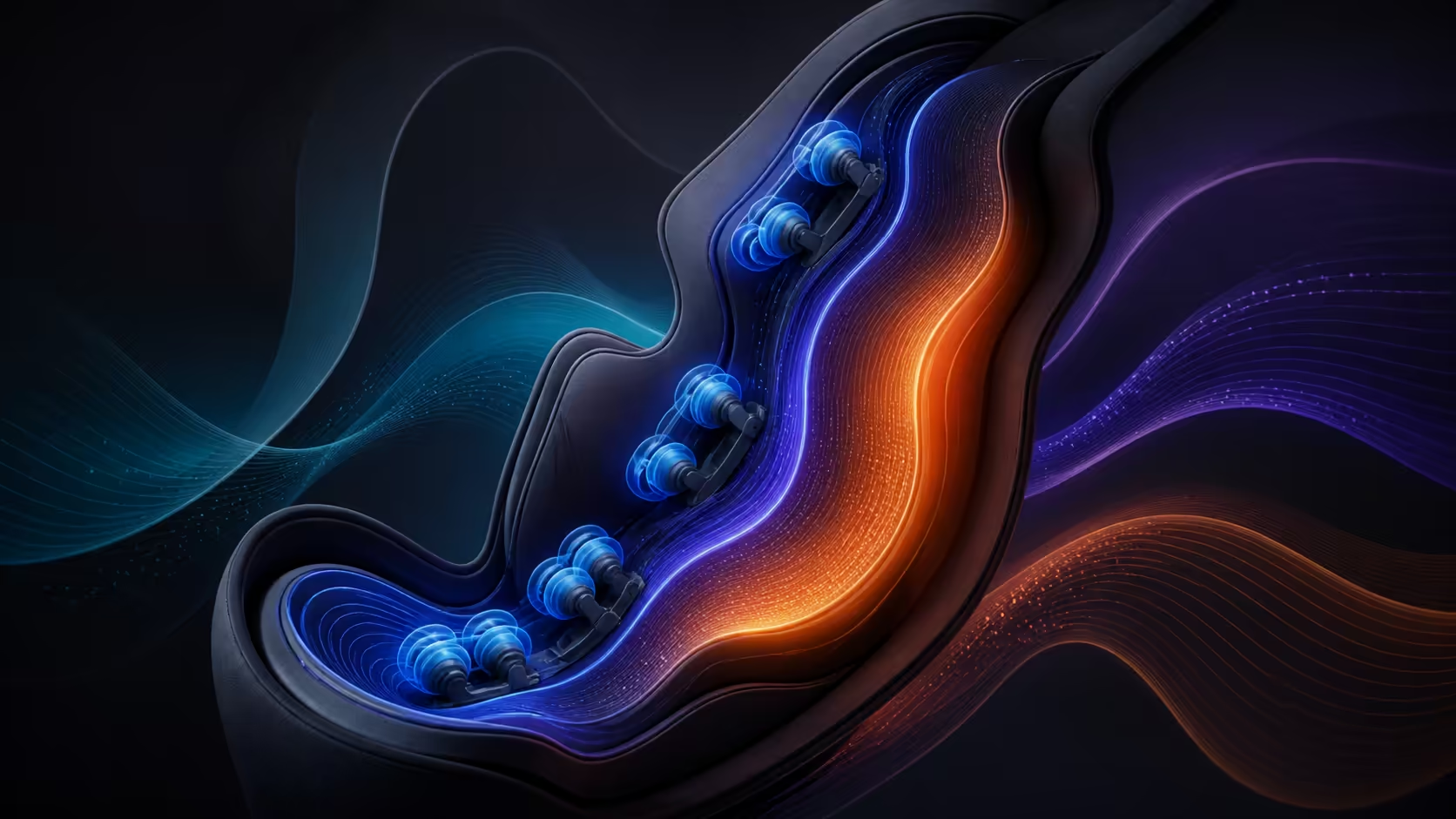
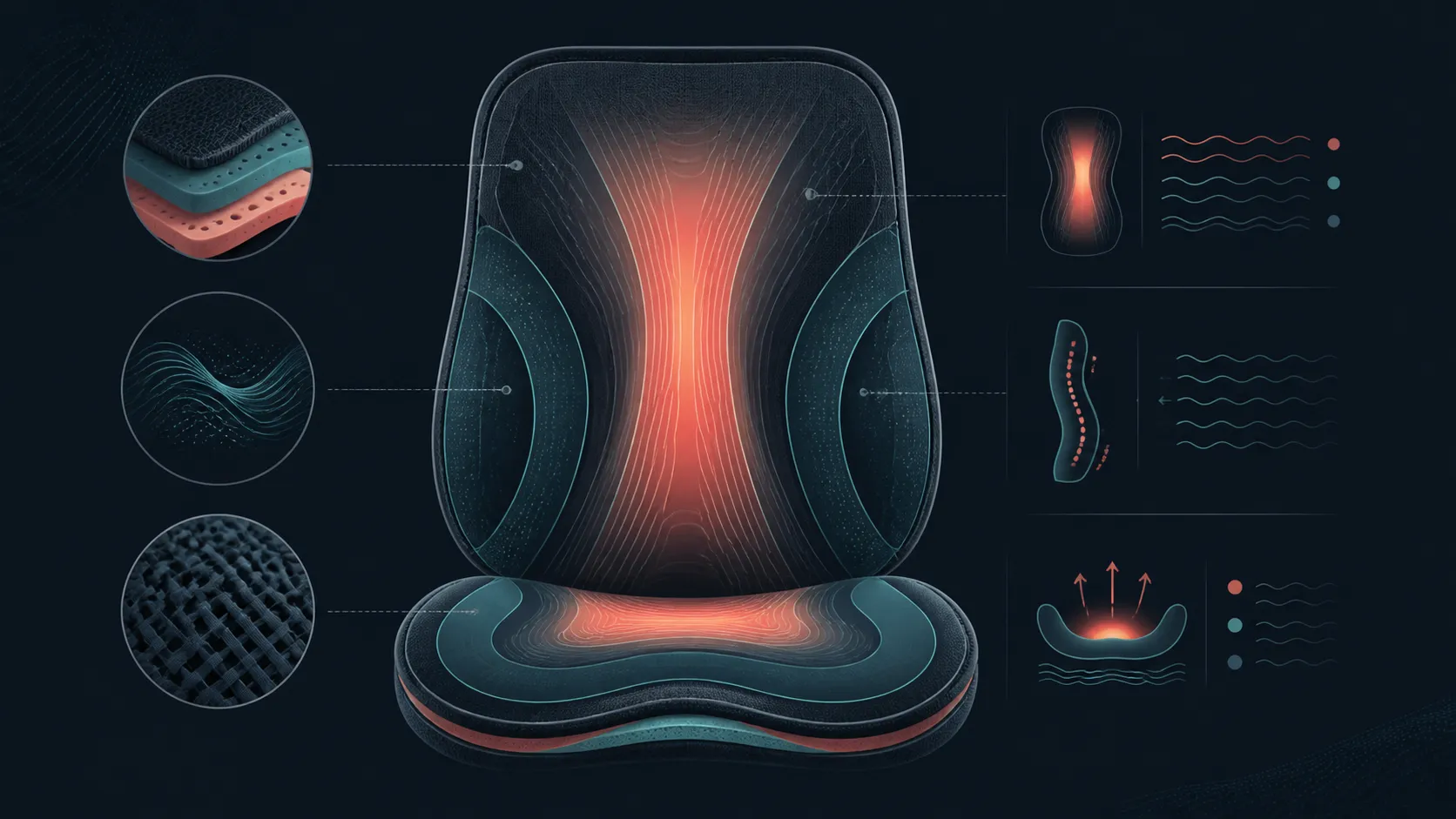
The X7's active comfort package pairs retracting hand-like massage heads with a heated graphene layer, red-light output and three-speed seat ventilation.
Massage and heat are optional comforts to introduce only after seat fit, desk reach and lumbar contact work without them. The R14,999 X7 adds automatic lower-back following, directional support and cushion airflow. Buyers need a separate battery, while massage modes, temperatures, runtime and treatment outcomes remain outside the claim.
🧭 Establish the inactive chair baseline
Set the user where both feet are secure and the desk is reachable without lifting the shoulders. Align the display, then work with massage and heat switched off. Note lumbar contact, seat pressure and the first time discomfort or distraction appears.
This baseline answers whether the chair works as ordinary seating. An active sensation can temporarily draw attention away from a poor fit, so it should not enter the first trial. A standard chair may provide better value when its physical fit is stronger and active functions would remain unused.
Keep ventilation as its own observation
The X7's ventilated cushion uses DuPont Performance Polymers and three fan speeds. It does not identify a foam density or thickness, and it cannot guarantee a specific temperature result. Assess airflow and pressure separately through a normal work block.
Compare baseline fit in Evetech's HBADA office-chair range. Exact dimensions and rated capacity still need to be checked for the intended user.
🧭 Introduce massage as a controlled break
Choose a brief period without precise input. Start massage under the exact guidance, observing comfort, distraction and whether it encourages sitting longer. End operation when sensation is unwelcome or symptoms worsen.
Do not create a mode count, intensity scale or coverage area for the X7. The word massage describes a function, not its internal mechanism. Another chair may implement the concept differently, so compare controls and user experience on exact candidates.
Avoid turning sensation into treatment
Massage in a chair cannot be presented as therapy for a diagnosed condition or a guaranteed solution for pain. Persistent pain, numbness, weakness or other concerning symptoms deserve suitable healthcare assessment. The chair should not delay that step.
After the trial, switch the function off and return to the inactive baseline. Confirm that support and desk reach still work without the sensation. This prevents the active feature from becoming a requirement for tolerating a poor setup.
🧭 Test heat separately and plan power
Use heat on another controlled occasion while keeping the chair position unchanged. Follow the exact instructions and stop if the user feels uncomfortable. No temperature range, warm-up time or automatic shut-off should be attached to the X7 without verified operating detail.
The chair package excludes its battery. Identify the exact item, installation method and safety guidance before powered use, without estimating capacity, charging or runtime from price or feature names.
Add the battery to complete ownership cost
The R14,999 amount covers the chair, while the correct battery is a separate planned item. Include its verified cost once identified. Add chargers, replacement intervals or operating expenses only when the chosen battery arrangement actually requires them.
Use Evetech's wider office-chair selection to compare a standard ergonomic model. Apply equal desk tasks and break periods, then decide whether active comfort justifies the extra power and control steps.
🧭 Score the functions over repeated use
Track how often the user selects massage or heat during a normal week. Record whether the feature supports a planned break, creates distraction or remains unused. Keep automated lumbar tracking and seat ventilation outside this score so each function earns value on its own. Keep the score personal.
Ask another user to follow the operating note if the chair is shared. A smart feature that is difficult to explain may offer less practical value in a home office or team space. Each person should be able to decline the function and restore the physical baseline.
Create a stop condition
Write a clear reason to stop the trial, such as unpleasant heat, increased pain, loss of concentration or unreliable power behaviour. A predefined stop condition protects the user from continuing merely because the feature is present.
Compare active comfort with a non-chair break
Use massage or heat during one planned break, then use a standing or walking break of equal length on another day. Restore the same desk task afterward. Record return effort, perceived comfort and concentration without treating either result as medical evidence.
This comparison shows whether the powered chair function solves a practical workflow need. A user may value remaining near a call setup, while another may benefit more from leaving the seat. The active feature should not discourage ordinary movement merely because it is convenient.
Audit control clarity in a shared environment
Have another user identify the correct battery item, restore the inactive baseline and explain how to stop the function. The person should not need a guessed description of modes or heat range. If the controls are unclear, obtain exact guidance before another trial.
Record each user's preference separately. Massage pressure or warmth that feels pleasant to one person can be distracting to another. Shared value depends on easy opt-in, easy opt-out and a chair that remains comfortable while the functions are off.
After a week, review frequency and stop conditions. Keep only the active functions that entered the routine predictably. The X7 can still earn value through automated lumbar support and ventilation when massage or heat receives a low score.
Keep an inactive-session reference after the week-long review. If massage or heat later feels different, restore ordinary desk fit and repeat the original short trial before changing several controls. This comparison separates a changed workload, posture or room from the powered function and gives support a clear starting point for any proper help request.
These systems are controlled separately from the automatic lumbar motor. Begin with a stable chair setup, introduce one mode at low intensity and assess sensation over a short period. The functions can support preferred comfort, but their presence does not establish a therapeutic outcome.
Ventilation can be evaluated without heat, and heat without massage, which makes the preferred contribution of each system easier to identify. The touch hub should simplify that separation rather than encourage every active mode to run together.
Frequently Asked Questions
Which active functions are included on the HBADA X7?
The chair includes massage and heat functions. Exact modes, intensity, coverage and temperature range require model-specific operating guidance.
Do these functions guarantee a medical outcome?
No. They can be assessed for perceived comfort, but they are not a promise of treatment, prevention or recovery.
How should a user try massage?
Begin from a well-fitted chair, use a short controlled break and follow the exact controls. Stop if the sensation is unpleasant.
How should heat ranges be checked?
Use the chair's operating instructions rather than assuming a range. Test heat separately from massage so the user can identify its effect.
How do the functions relate to lumbar support?
They are separate comfort features. The X7's lumbar system uses automated tracking and adjustable support, which should pass independently.
What package item is excluded?
Powered comfort needs a separately acquired battery whose exact requirement must be confirmed before operation is expected.
Ready to test massage and heat without losing the seating baseline?
Compare Evetech chairs with fit, active-function sequence, stop conditions and power planning separated.