Quick Answer
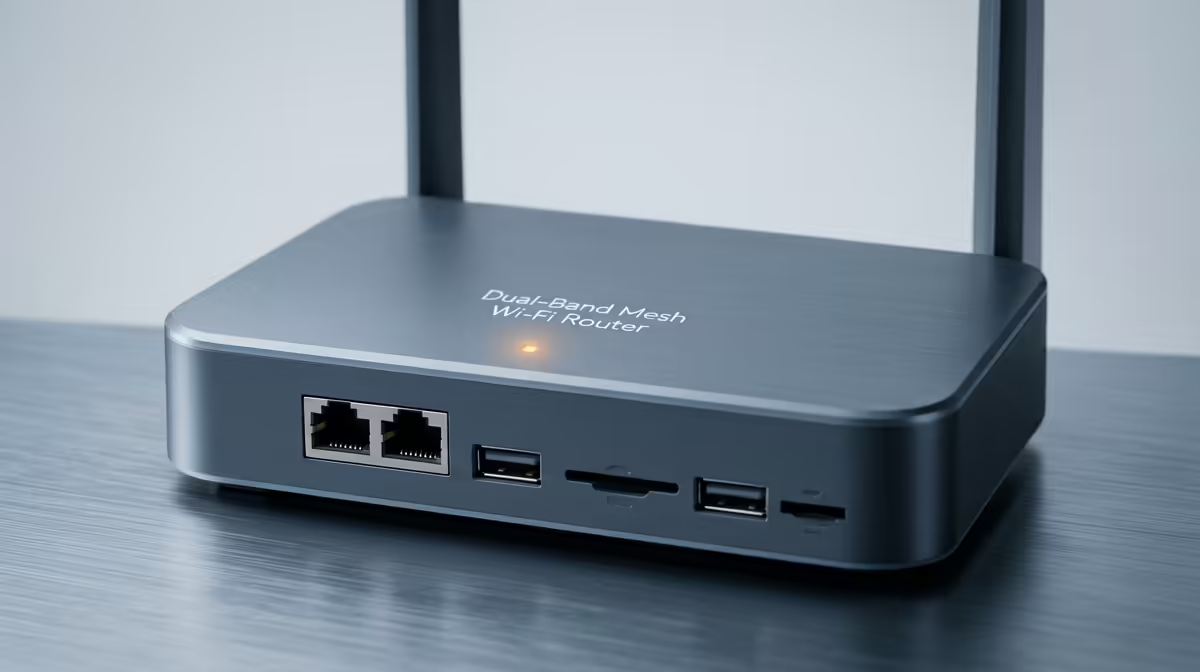
For streamers, the high-value mesh upgrade is a tri-band Wi-Fi 6 kit (around R3,500-R6,000) that reserves a band for backhaul, or simply a wired Ethernet run to your streaming PC. A stable 10-15 Mbps upload with low jitter matters more than headline mesh speed; on SA fibre, wiring the PC is the cheapest path to drop-free streams.
What streaming actually demands
Streaming is upload-bound and jitter-sensitive. A 1080p60 Twitch stream needs ~6-8 Mbps stable upload; a steady connection prevents dropped frames more than raw bandwidth. Tri-band mesh keeps your streaming node off the congested client band, but a wired backhaul beats it outright.
Spend less, notice more
A R3,500 tri-band Wi-Fi 6 kit plus a Cat6 run to the streaming PC gives broadcast-grade stability for a fraction of a flagship Wi-Fi 7 kit. The viewer sees dropped frames, not your router's spec sheet.
SA buyer notes
Check your fibre upload speed, many SA packages are asymmetric. Match your OBS bitrate to roughly 70% of your real upload to leave headroom and avoid dropped frames.
Run a quick speed test at your streaming PC before going live; matching your OBS bitrate to your real upload, not the package's advertised figure, is what actually prevents dropped frames on SA's asymmetric lines.
FAQ
What upload speed do I need to stream at 1080p60?
Around 6-8 Mbps stable upload for a clean 1080p60 Twitch or YouTube stream. Stability and low jitter matter more than peak bandwidth.
Is mesh Wi-Fi or Ethernet better for streaming?
Ethernet, every time. A wired backhaul to your streaming PC removes jitter and dropped frames that even a good tri-band mesh can introduce.
Do streamers need Wi-Fi 7 mesh?
No. A tri-band Wi-Fi 6 kit plus a wired link to the PC delivers drop-free streams. Wi-Fi 7's gains don't help an upload-bound 1080p stream.
Wire your streaming PC to the nearest node and set your OBS bitrate to ~70% of your real upload; pair it with a tri-band Wi-Fi 6 kit from Evetech's networking range.