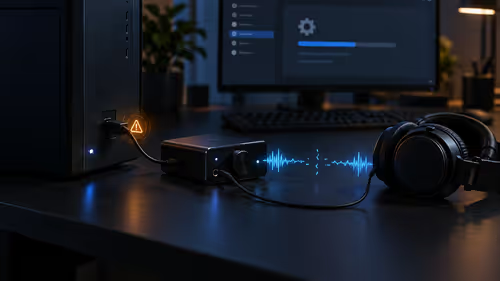
You're in the final circle, crouched behind a rock in Warzone. You hear footsteps... but they feel slightly off. You spin left, but the enemy was actually right. Game over. That tiny, frustrating delay might not be your internet connection. It could be coming from your monitor's headphone jack. For years, South African gamers have debated it. So, does monitor headphone jack latency actually ruin your game, or is it a myth? Let's find out. 🎧
Understanding Monitor Headphone Jack Latency
So, what exactly is monitor headphone jack latency? In simple terms, it's the tiny delay between what's happening in your game and when you actually hear the sound through headphones plugged into your monitor.
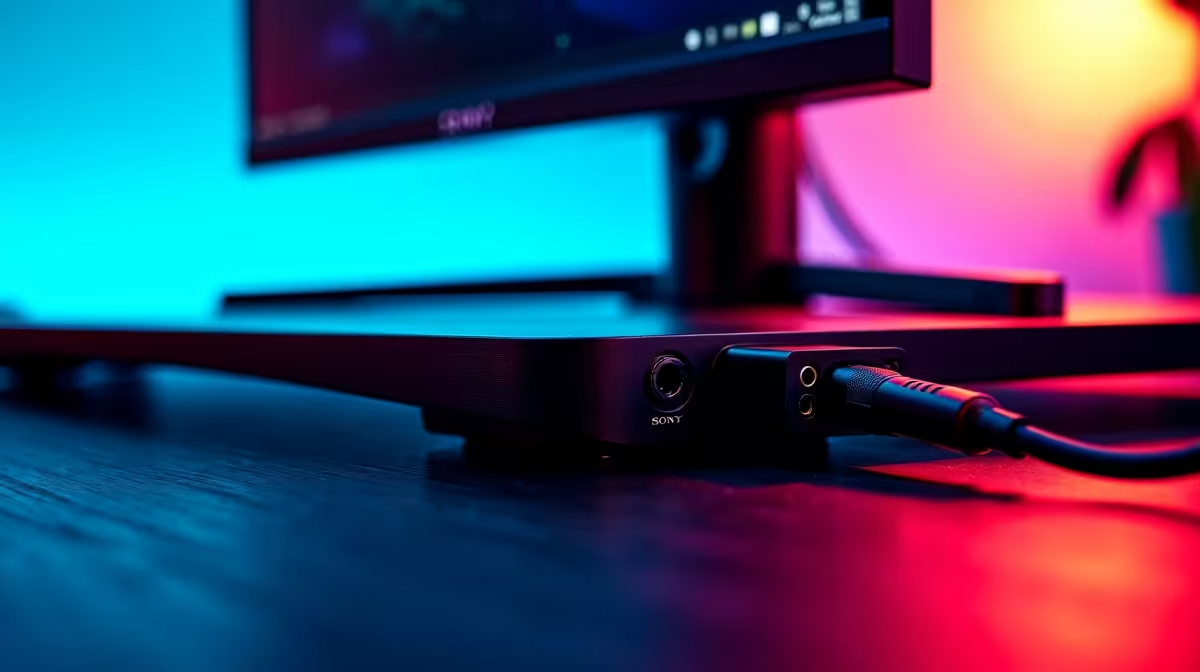
Think of the journey your game's audio has to take. When you plug your headphones directly into your PC's motherboard or case, the path is short and sweet. But when you use your monitor's jack, the audio signal travels from your graphics card, through the HDMI or DisplayPort cable, to your monitor. Inside the monitor, a small chip called a DAC (Digital-to-Analogue Converter) has to process that signal before sending it to your ears.
This extra trip and processing step, however small, adds milliseconds of delay. For casual use, it's unnoticeable. But in competitive gaming, milliseconds matter.
Why Does This Audio Delay Happen?
The core reason for the lag is that your monitor was designed to be a visual device first and an audio device second. The internal electronics, including the DAC, are often built for convenience, not high-fidelity, zero-latency performance.
Here's a quick breakdown of the journey:
- PC to GPU: Your game generates sound.
- GPU to Monitor: The audio is bundled with the video signal and sent over your HDMI/DP cable.
- Monitor Processing: The monitor receives the signal, separates the audio, processes it through its own internal DAC, and amplifies it. This is the primary source of the monitor headphone jack latency.
- Monitor to Headphones: The final analogue signal is sent to your headphones.
This process is more complex than the direct path from your PC's sound card. While manufacturers of high-resolution 4K and 5K monitors might use slightly better components, the fundamental issue of an extended signal path remains.
So, Does It Actually Ruin Your Game? 🤔
The honest answer... it depends.
For a single-player RPG like The Witcher 3 or a strategy game, a 30-50ms audio delay is something you'll likely never notice. The immersion from today's incredible immersive curved gaming monitors will far outweigh any tiny audio lag.
However, in fast-paced, competitive shooters like Valorant, CS:GO, or Apex Legends, sound is everything. Hearing footsteps a fraction of a second late can be the difference between winning a round and staring at a respawn screen. For competitive players, any added latency is a disadvantage. The monitor headphone jack latency might not "ruin" your game if you're a casual player, but it can certainly put you at a competitive disadvantage.
Many displays, from the most basic office screens to advanced models in our full range of gaming monitors, include this feature for convenience. It's great for a quick and tidy setup, especially where your PC tower is far from your seat.
Quick Audio Latency Test ⚡
Want to check your own setup? Pull up an "Audio Video Sync Test" video on YouTube. Watch the visual marker and listen for the beep. If you consistently hear the sound after you see the visual cue, you're experiencing latency. It's a simple, effective way to gauge the delay from your monitor's headphone jack.
How to Eliminate Gaming Audio Lag
Feeling that delay? Don't stress. The fix is usually simple and doesn't require spending a fortune, leaving you with more budget to check out the latest monitor deals instead.
- Plug Directly into Your PC: This is the easiest fix. Use the headphone jack on the front or back of your computer case. This provides a more direct audio path from the motherboard's sound card, significantly reducing latency.
- Use a USB Headset: Most gaming headsets connect via USB. They have their own built-in sound card (DAC), completely bypassing both your motherboard's and your monitor's audio processing. This is the preferred method for most pro gamers.
- Get an External DAC/Amp: For audiophiles, a dedicated external DAC and amplifier offers the absolute best quality and lowest latency, though it's the most expensive option. You can pair these with other essential monitor accessories for a truly pro-level setup.
When Is the Monitor Jack a Good Idea?
Despite the potential for latency, the headphone jack on PC monitors for every budget isn't useless. It’s perfect for:
- Console Gaming: When playing on a PS5 or Xbox connected to your monitor, it's often the most convenient way to get audio without complex setups.
- Cable Management: It keeps your desk tidy with fewer cables snaking back to your PC tower.
- Portable Setups: If you use one of the increasingly popular portable monitors, the built-in jack is a lifesaver.
Ultimately, while monitor headphone jack latency is a real phenomenon, its impact is situational. For casual gaming and convenience, it’s perfectly fine. For the competitive gamer in South Africa chasing every possible advantage... it's time to plug in somewhere else. 🚀
Ready for Flawless Audio?
Solving audio latency is one part of the puzzle. The ultimate solution is a dedicated gaming headset that bypasses the monitor entirely, giving you crisp, lag-free sound. Explore our incredible range of gaming headsets and get the competitive edge you deserve.