


PCIe 5.0 vs PCIe 4.0 for Video editing in 4k in SA
PCIe 5.0 vs PCIe 4.0 for video editing in 4k is mainly about fit, features, compatibility, cost, and upgrade path, not one automatic winner. SA buyers should match the choice to the setup.
Read moreMoza's CRP2 measures brake force through a load cell rather than pedal travel, the upgrade most sim racers chase once stock pedals feel vague. Local stock is thin, so buyers often import direct, though Evetech's sim racing range keeps pedal options ready.
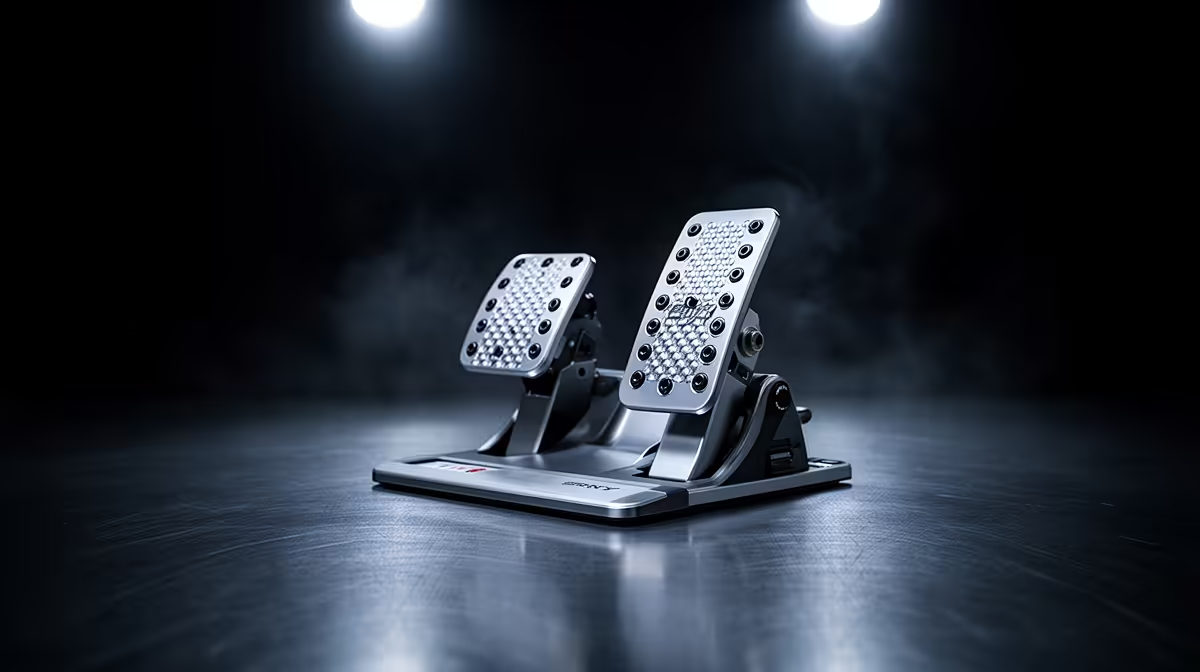
A load-cell brake can make your braking more repeatable, provided the seat and pedal plate stay put when you press it. That practical detail matters more than the brochure when considering Moza CRP2 pedals in South Africa. Availability varies, so compare the full landed route with pedal hardware listed for local purchase.
Moza CRP2 stock and final Rand pricing can move between sellers and shipments in South Africa. A set sourced overseas may add international delivery, customs duty and distant fault handling. Evetech's live sim-racing range shows local pedal and wheel options you can weigh against the CRP2 route.
A basic brake often measures pedal travel. A load cell measures force, letting you build muscle memory around how hard you press. This can improve consistency when the pedal, seat and calibration remain stable.
The hardware cannot fix a moving chair. If your seat rolls backwards or the pedal tray bends, the force at your leg does not reach the sensor in the same way each lap. Stabilise the driving position before judging the upgrade.
Start with a brake force you can reach without locking your knee or lifting your hip. More resistance does not prove a better setup. You need enough range to modulate near the limit through a full race.
Pedal faces affect foot placement. Check their width, height and adjustment range against your shoes and seating angle. A heel plate can reduce fatigue when it supports the foot without forcing the ankle upward.
Throttle feel matters beside the brake. Test whether you can hold partial throttle out of a corner and return to zero without the pedal sticking. A clutch should have a clear take-up point if your cars use one.
Use a telemetry trace if the sim offers it. Look for a smooth rise, a controlled plateau and a clean release. Spikes may come from foot movement, flex, calibration or a noisy sensor.
Measure the pedal plate before purchase. Confirm hole spacing, bolt access and whether the plate can resist your chosen brake force. An adapter plate adds height and may change ankle angle.
Your knee should retain a bend at full brake pressure. Locking the leg can create discomfort and reduces control. Move the seat or pedal deck in small steps, then drive long enough to feel fatigue.
Align the brake with the hip rather than placing all pedals for visual symmetry. Poor alignment can twist the knee during repeated hard stops. Adjust lateral spacing where the hardware allows it.
Reinforce a flexing deck before adding stiffer elastomers. Flex consumes pedal movement and changes the calibration. Mark a reference point on the frame and film it from the side during a hard press to see movement.
Secure every cable away from pedal arms and adjustment slots. Run each pedal through its range with the system powered off. A cable pinched under a heel plate can cause intermittent readings.
Check bolts after the first week. Repeated force can settle plates and loosen fasteners. Use the maker's torque guidance and avoid overtightening threads in softer material.
Evetech's flight-simulator gear offers useful local context for sturdy controls, seating and multi-use simulator desks. If the same frame carries flight pedals, plan a changeover that does not disturb your racing calibration.
Install the current supported software for the exact pedal revision. Record the working version before an update. Keep a screenshot of the baseline calibration and dead zones.
Set the minimum so the brake reads zero when your foot rests nearby. A large dead zone wastes travel, while no margin may cause brake drag. Use the smallest stable value.
Set the maximum through the force you can repeat ten times. One heroic push creates a ceiling you cannot reach late in a race. Warm up first, then calibrate from your seated driving position.
Test the throttle for a clean zero and full reading. Dust or cable strain can create jumps. Move the cable at its fixed points during the test and stop if the signal drops.
Save separate profiles only when the software and game handle them with care. A road-car setup and a formula setup may benefit from different pressure, though too many profiles make troubleshooting harder.
After any elastomer, spring or angle change, recalibrate. The sensor may still work while the force curve has changed under your foot. Drive the same car and corner sequence before deciding whether the change helped.
Do ten threshold-braking runs. Compare stopping point and release into the turn. A pedal upgrade earns its place when the spread shrinks and your leg stays comfortable.
Record the exact CRP2 set, number of pedals, elastomers, mounting plate and included cables. Product photos can show optional pieces, so rely on the written box contents.
For an overseas path, include international freight, border assessment, currency conversion and any return transport. A dense pedal set can be expensive to move twice if a fault appears.
Compare the complete total with a local wheel-and-pedal package. A bundled set may use a simpler brake and give you a supported route into sim racing. The CRP2 case becomes stronger when your rig and driving already expose the limits of your current pedals.
Ask how sensor, controller and cable faults are separated. Photograph the serial label and connections during setup. Keep the original elastomers in labelled bags so you can return to baseline.
For used pedals, inspect the heel plate, pivots, wires and load-cell area. Connect them and hold each pedal at several positions. The signal should stay still rather than flicker.
Look for corrosion around fasteners and controller ports. Sweat and damp storage can reach exposed metal. Clean only through the supported method and replace damaged cables before racing.
Local availability can change with each seller and shipment. Check the exact set, included parts and support route on the day. Evetech's live sim-racing category shows current local alternatives.
They can make braking force easier to repeat. Lap time still depends on calibration, seating, technique and practice. Use telemetry and stopping consistency to measure the result.
The pedals need a stable mount and a seat that does not move under brake force. A loose floor setup wastes the load cell's advantage. Secure the pedals and chair before raising resistance.
That depends on the cars and set configuration. Many paddle-shift cars use throttle and brake, while manual cars may need a clutch. Confirm which pieces are included in the exact package.
Compare brake sensing, mounting needs, adjustment, software, included parts and fault support. Price the cockpit changes as part of the pedal decision.
Ready to improve your braking setup? Check Evetech's current sim-racing range, compare pedal and wheel packages, and choose hardware your cockpit can hold securely.
Local availability can change with each seller and shipment. Check the exact set, included parts and support route on the day. Evetech's live sim-racing category shows current local alternatives.
They can make braking force easier to repeat. Lap time still depends on calibration, seating, technique and practice. Use telemetry and stopping consistency to measure the result.
The pedals need a stable mount and a seat that does not move under brake force. A loose floor setup wastes the load cell's advantage. Secure the pedals and chair before raising resistance.
That depends on the cars and set configuration. Many paddle-shift cars use throttle and brake, while manual cars may need a clutch. Confirm which pieces are included in the exact package.
Compare brake sensing, mounting needs, adjustment, software, included parts and fault support. Price the cockpit changes as part of the pedal decision.
PCIe 5.0 vs PCIe 4.0 for video editing in 4k is mainly about fit, features, compatibility, cost, and upgrade path, not one automatic winner. SA buyers should match the choice to the setup.
Read more
Wi-Fi 7 vs Wi-Fi 6e for competitive esports comes down to router support, latency goals, device compatibility, and coverage. SA buyers should match the choice to the real network setup.
Read more
ATX 3.1 vs ATX 3.0 for mMO and live-service games buyers - what changes is mostly about compatibility, budget, upgrade path, and setup fit. SA buyers should check device support and real needs before expecting a clear win from either option.
Read more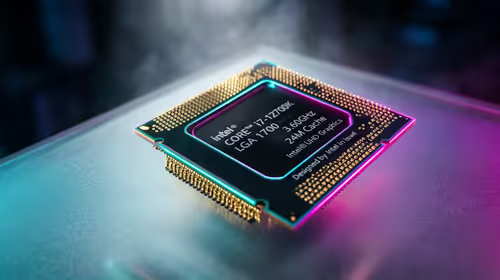
LGA 1851 vs LGA 1700 can affect Twitch and YouTube streaming when gaming and encoding share CPU resources. For SA creators, the real-world difference depends on encoder choice, memory support, motherboard cost, thermals, and upgrade plans.
Read more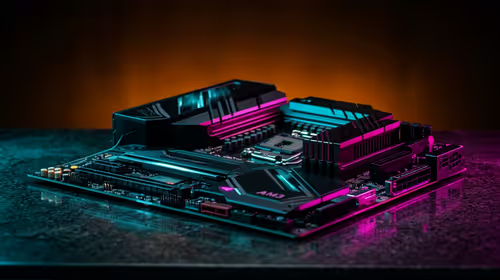
X870E vs X670E for aaa single-player gaming is mainly about fit, features, compatibility, cost, and upgrade path, not one automatic winner. SA buyers should match the choice to the setup.
Read more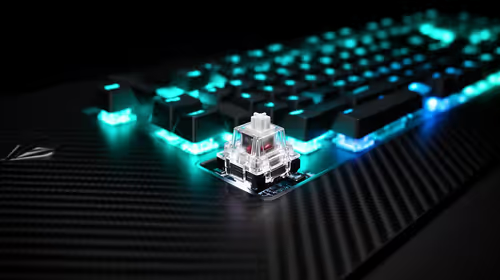
Hall Effect switches vs Mechanical switches for mMO and live-service games is mostly about compatibility, budget, upgrade path, and setup fit. SA buyers should check device support and real needs before expecting a clear win from either option.
Read more
A fake 113GB GTA VI ISO reportedly used empty padding around a small malware payload. SA gamers should delete unofficial builds, keep Windows security active and wait for official channels.

Wi-Fi 6E vs Wi-Fi 6 matters for 4K video editing when files move across a network. The real-world difference between Wi-Fi 6E and Wi-Fi 6 for video editing in 4K depends on NAS access, cloud uploads, router range, and SA creator workflows.

The difference between PCIe 5.0 and PCIe 4.0 for SA gamers is mostly bandwidth headroom. Compare GPU slot needs, NVMe speed, motherboard support, and upgrade timing before paying extra for a newer platform.

Gaming PC stuck pixel checks in South Africa should confirm the monitor fault first. Use colour tests, screenshot comparison, cable swaps, display menu checks, and clear photos before deciding on support.

Shokz OpenFit Air 2 earbuds weigh 7.2g each and use a redesigned dual-driver open-ear layout. SA buyers should choose them for comfort and awareness, not maximum isolation.

AMD's current driver now lists a Radeon RX 9050 4GB, while product coverage details a narrowed memory system. SA buyers should weigh the low VRAM ceiling against current local Radeon options.

Samsung Display has demonstrated a 16-inch 2.5K OLED laptop panel running at 300Hz. SA buyers should wait for a named notebook, full panel specifications and a local price before planning an upgrade.

Microsoft says some Windows 11 game crashes after recent updates are linked to RGB-related drivers. Affected SA gamers should confirm the update and driver before using the published registry workaround.
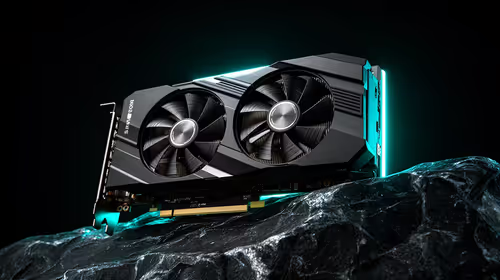
RTX 5090 on a 650W PSU is a tight pairing with very limited headroom. For SA gaming PCs, focus on total system draw, PSU quality, connector support, CPU choice, and avoid OC plans unless the full build is carefully power-limited.
PCIe 5.0 vs PCIe 4.0 for video editing in 4k is mainly about fit, features, compatibility, cost, and upgrade path, not one automatic winner. SA buyers should match the choice to the setup.
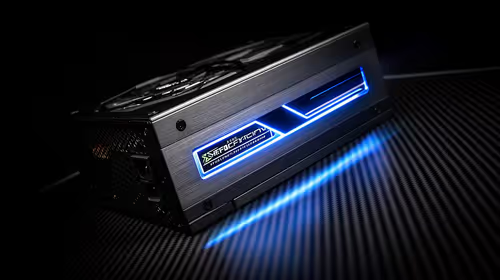
850W PSU safety for RTX 5090 is plausible with a quality unit and balanced parts. In SA, confirm connector support, CPU power draw, case airflow, PSU age, and spare capacity before building around 850W.
Wi-Fi 7 vs Wi-Fi 6e for competitive esports comes down to router support, latency goals, device compatibility, and coverage. SA buyers should match the choice to the real network setup.