Enthusiast spending becomes wasteful when the platform price is discussed without the graphics, storage, power and chassis needed to expose its strengths. Gaming PC upgrade spending in South Africa should begin with a complete outcome and a hard ceiling. The R38,999 9950X3D kit covers the platform core while leaving several major costs open.
Quick Answer
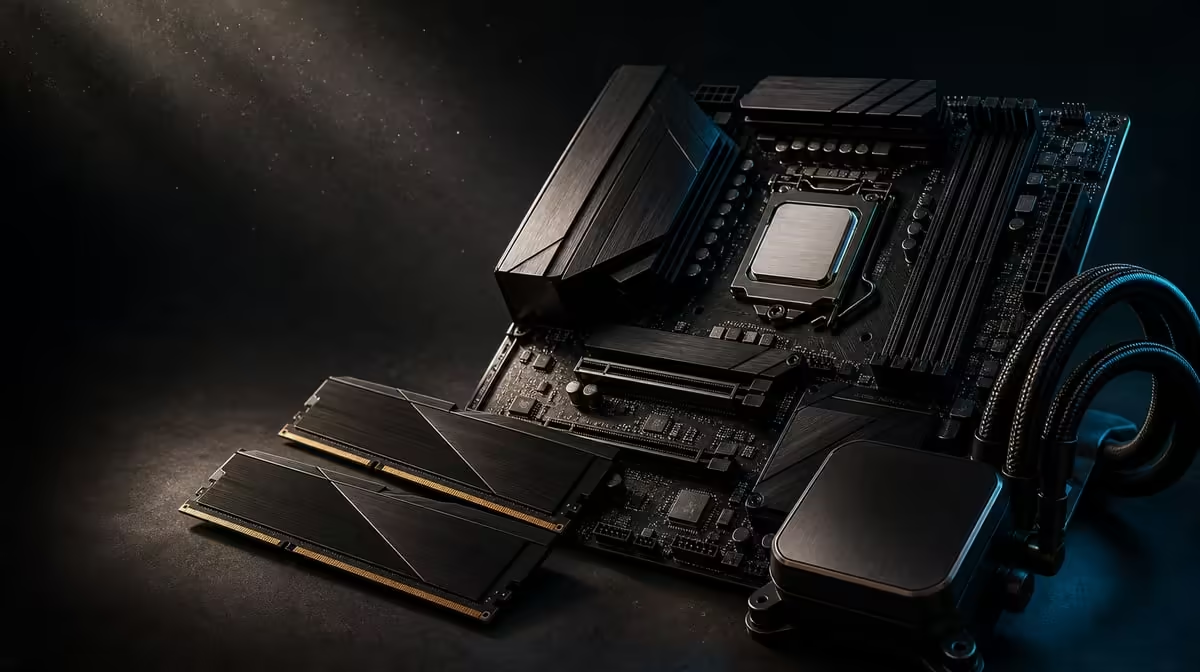
Budget R38,999 for a core containing the 9950X3D, ASUS Dark Hero on X870E, KLEVV 48GB DDR5-7200 and DeepCool LQ360. Then add a GPU suited to the target resolution, storage for games and work, a power supply selected from the complete load, and a compatible case. The platform is justified only when those remaining choices stay strong enough to create a balanced enthusiast PC.
🧾 Define the complete performance target
Write the display resolution, desired frame behaviour, most important games and non-gaming applications. An enthusiast label without outcomes invites open-ended spending. A clear target allows every component to pass, fail or remain optional.
Separate CPU-sensitive and GPU-sensitive work. High-frame-rate games and simulation can place greater emphasis on processor performance, while visually demanding 4K play often needs substantial graphics budget. Creation applications may stress CPU, memory, GPU or storage differently.
The 9950X3D brings 144MB GameCache for responsive titles and an up-to-5.7GHz maximum boost specification. Neither number predicts the entire PC. Use controlled evidence from relevant software.
Compare processors through Evetech's AMD CPU category.
💵 Split the budget into fixed and open rows
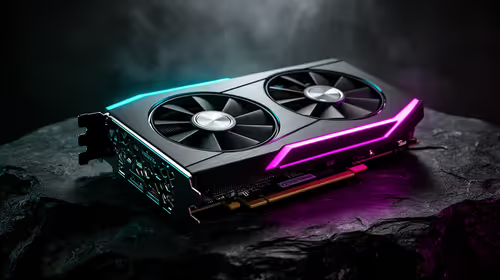
The fixed R38,999 row contains CPU, board, memory and cooler. The graphics row remains open and may be the largest performance decision for high-resolution gaming. Do not reduce it blindly after committing to the platform.
Storage must cover the operating system, applications, game library and active project data. Decide whether performance, capacity or both are limiting today. The Dark Hero's exact connections should be verified against the storage design.
Power comes after the complete component list. Select the PSU from the CPU, GPU and attached hardware requirements, not from the platform price. The case must physically support the Dark Hero, LQ360, graphics card, drives and airflow.
Add display and peripheral needs if they are part of the upgrade goal. A high-frame-rate platform cannot show its intended result on an unsuitable display.
⚖️ Test whether R38,999 creates balance
Give each bundled part a job. The 9950X3D should solve a frequent CPU constraint. Forty-eight gigabytes should address capacity demand or credible mixed-work headroom. The Dark Hero should satisfy connection and expansion requirements. The LQ360 should fit the chosen case and support sustained operation.
If one part remains unused, compare a lower-cost platform. Redirect the difference to the GPU or storage on paper and see which complete PC better meets the target. This downgrade test is more informative than arguing about enthusiast labels.
Run an upgrade test too. Ask what a more expensive choice would change. If no required outcome improves, preserve the ceiling.
Evetech's AMD upgrade kit selection provides coordinated alternatives for this full-system exercise.
📊 Control spending after assembly
Establish a stable baseline before buying another part. Confirm full memory recognition, LQ360 operation, temperatures and representative performance. A configuration or installation problem can look like insufficient hardware.
The KLEVV DDR5-7200 target should pass suitable stability checks. If it does not, return to a reliable setting before assessing the need for further spending.
Record the first real bottleneck. If the GPU limits 4K play, a platform change is unlikely to be the first answer. If storage fills or project data becomes constrained, address that specific row.
Review exact boards through Evetech's AMD motherboard range. Premium platform capability is useful when it supports the build, not when it expands the shopping list indefinitely.
Set a post-build review date. Compare actual game performance, memory use, creation wait times and thermal behaviour against the goals. The evidence should guide the next upgrade rather than the fact that another premium component exists. Check current availability after the full cost table and stopping rule are in place.
Add three scenarios to the spending sheet. The first keeps the R38,999 platform and funds the intended graphics card. The second uses a lower-cost core and moves the difference to graphics. The third preserves the platform but delays a non-critical storage or cosmetic extra. Compare which scenario reaches the required experience without creating a new hard failure.
Include running workflow rather than only component prices. If the machine serves paid creation, recurring waiting time can carry financial value. If it is primarily for leisure, the buyer may place more emphasis on smooth target gameplay and a comfortable ceiling. The same hardware can therefore have a different rational budget for two people.
Use a no-upgrade period after the build is stable. Run the system for several weeks, collect evidence and resist replacing parts based on one unfamiliar reading. Initial configuration, shader compilation or software setup can create temporary behaviour that settles without hardware changes.
When the review date arrives, identify the constrained outcome first. A missed frame target, full storage drive, memory pressure and unwanted fan noise call for different responses. Spend only after the specific cause is tested. This keeps enthusiast ownership focused on solving problems rather than extending the specification indefinitely.
Document the final stopping rule in the budget: the build is complete when it passes the named games and work, remains stable, and fits the total ceiling. That sentence provides permission to stop shopping even when a faster component is available.
Track the reason for every rejected component. Too expensive, wrong case fit, insufficient connection support and no measurable workload benefit are different reasons. The notes prevent the same unsuitable option from returning because of a small sale or new colour.
Reserve a modest contingency inside the ceiling for parts that become necessary during detailed planning. Do not spend that reserve on optional styling before the power, cooling and storage rows are confirmed. Any unused amount remains a saving rather than a requirement to upgrade something else.
When comparing South African prices, refresh the complete basket together. A changed GPU price can alter the best platform balance even when the R38,999 kit remains unchanged.
Keep the target display beside that basket, since resolution and refresh expectations shape how the graphics and processor budgets should be divided.
Frequently Asked Questions
What does R38,999 include?
It includes the 9950X3D, an ASUS Dark Hero motherboard, KLEVV 48GB DDR5-7200 and DeepCool LQ360.
Which major costs remain?
Graphics, storage, power supply, case and any required display or peripheral changes remain outside the kit.
Why plan the GPU beside the kit?
The GPU can set performance at high resolutions, so underfunding it may hide the platform's strengths.
Does a high-end CPU remove budget balance?
No. Every remaining component must still meet the same complete-system target.
How can 48GB influence later spending?
It can provide capacity headroom for growing mixed workloads, but only when the user approaches a smaller pool.
What does the LQ360 remove from the list?
It fills the CPU-cooler role, subject to compatible case support and correct installation.
How can spending be controlled?
Use a hard ceiling, compare complete alternatives and buy again only when a measured bottleneck breaks a required outcome.
Ready to build an enthusiast budget that stops at the right place?
Compare Evetech AMD kits and protect the graphics, storage, power and case rows around the R38,999 platform.