Spending on a Sanwa fightstick makes sense only after the buyer knows which systems, games and ownership features the money must cover. For South Africans, a useful Sanwa fightstick budget begins with the R1,799 GameSir C2, then asks what any extra rand would change in regular play.
Quick Answer
R1,799 is a practical South African baseline for a Sanwa Denshi fightstick through the GameSir C2, which also supports PS4 and Xbox One and includes a direction toggle, Key Lock and customisable artwork. Spend more only for an exact platform, component or fit requirement the C2 does not meet.
💰 Build the budget from required use
List the systems first. The C2 names PS4 and Xbox One, so a buyer who regularly uses those consoles can count both. A computer or another device remains outside the positive calculation until its exact connection and game path is established.
Add the actual titles beneath each host. System recognition and game handling are separate layers. A platform match that does not serve the fighting games on the schedule should not carry full value.
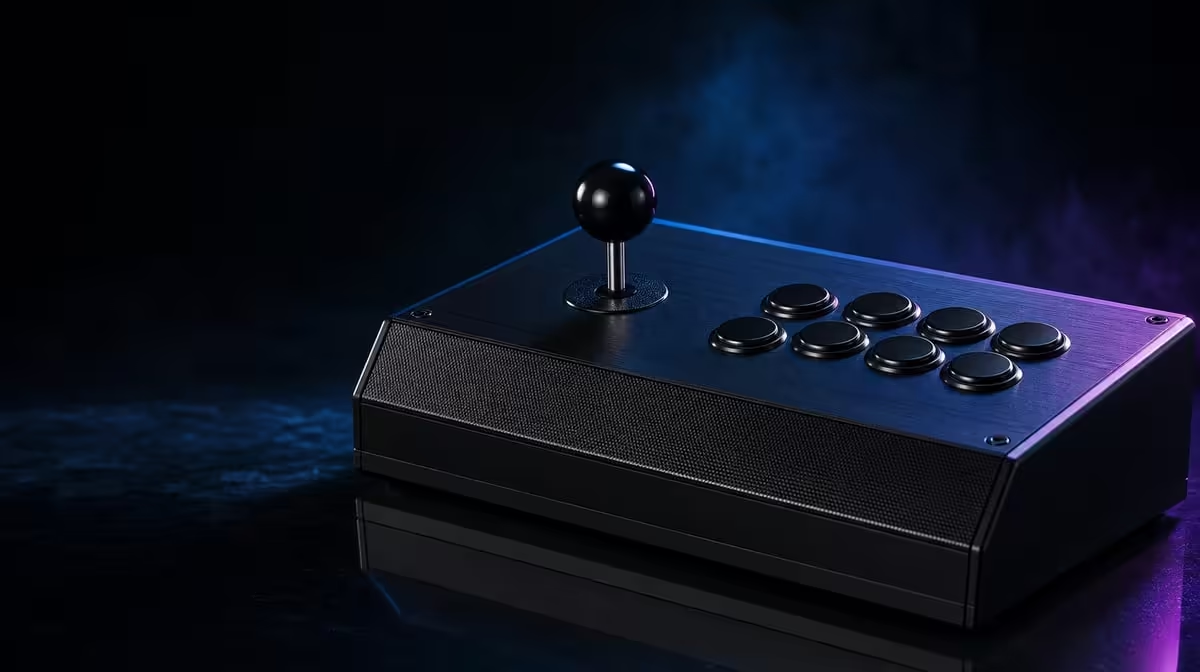
Then describe the preferred control style. The C2 uses a lever and separate arcade buttons. Someone still more accurate on a standard pad may need a practice plan before treating an arcade purchase as necessary.
Use Evetech's gaming controller category to compare complete devices by platform and layout. The budget should narrow viable choices, not persuade the buyer to accept an incompatible one.
Include where the controller will be used. A dedicated desk, shared lounge and tournament table place different demands on enclosure stability and transport. The spending plan should cover the most frequent setting first.
Set a practice period before approving upgrades. Several weeks on the standard layout reveal whether the purchase solves the original need and whether a limitation is persistent enough to deserve more rand.
🕹️ Give Sanwa hardware measured weight
The C2's Sanwa Denshi hardware creates an identified component baseline. Test every button for a single visible response, trace cardinals and diagonals, and assess hand comfort after a full session. The name helps comparison but does not replace use.
Do not invent force, travel, exact model or gate details. If replacement work matters, identify the installed components, connectors and mounting before giving upgrade potential a financial score.
Layout can matter as much as parts. Check outer-button reach, lever-arm comfort and enclosure stability on the surface likely to be used. A strong component package loses value if posture makes it tiring.
Compare observed accuracy across several days. Ten-attempt drills for directions, button pairs and real commands create evidence that survives the excitement of a first trial.
Record comfort late in the session, not only clean inputs. A player may perform well while building wrist or shoulder tension that makes the layout difficult to sustain. Useful hardware supports both accuracy and repeatable posture.
Keep maintenance expectations realistic. Gentle external cleaning and dry storage protect the complete controller. Internal serviceability should receive value only when exact access and part information are understood.
🔒 Price configuration and match features
The direction switch selects the format a compatible setup receives from the lever. It adds value when different games need distinct states and the player documents them. A switch changed randomly becomes friction rather than flexibility.
Key Lock can protect selected functions during a match. Test its boundary after ordinary controls pass, then practise a quick pre-round check. Active arcade buttons still need a disciplined neutral hand position.
The customisable faceplate adds visual ownership. Obtain an exact template, use a paper proof and follow proper removal guidance. Artwork value is personal and should remain separate from claims about performance.
For transport, desk and organisation needs, explore Evetech's gaming accessories selection. Add only items that solve a defined problem to the complete budget.
Price those needs separately. A case, surface solution or artwork project should not be hidden inside the fightstick score, because another controller might require the same surrounding spend.
Rehearse switch handling before competition. A feature can look valuable on paper yet create delay if the player cannot identify its states quickly. Familiar controls earn more than impressive but unused options.
📊 Decide what a higher price must deliver
The C2 sits R201 below R2,000. That gap gives the buyer a useful reference. Any fightstick above it should identify the extra platform, precise component, enclosure fit or service route that earns the difference.
Keep a two-column premium ledger: benefit and weekly use. Remove vague status, speculative future devices and features that never enter the routine. A small comfort improvement used every night may deserve money; a dramatic option used once may not.
Evetech's accessories best sellers offers another way to check current availability around the station. Popularity can inform browsing, but it should not replace exact compatibility or personal ergonomics.
Review the spend after several weeks. If the C2's confirmed platforms, Sanwa layout and match controls remain useful, R1,799 has become a credible ownership benchmark. If a specific limitation appears, the next budget can address it with evidence.
Track the cost of changing course. Replacement parts require fit research and time, while choosing another complete layout may simplify the outcome. Compare those routes using the exact problem rather than assuming modification is cheaper.
The final budget should be explainable in one sentence: which hosts it serves, which control feel the player prefers and which match feature enters the routine. Anything else belongs in a later decision.
Keep an unresolved-cost column for items that cannot yet be priced honestly. An exact replacement part, artwork print or transport solution should stay blank until fit and need are clear. This prevents an estimate from quietly becoming part of the approved spend.
Test the standard C2 in the busiest expected environment. A controller that feels excellent in a quiet room may be harder to configure on a shared screen or event table. Setup confidence deserves rand value because it affects every session.
Review maintenance effort after ordinary use. Count how easily dust is removed, switches are restored and the cable is stored without strain. Ownership that remains simple can justify choosing the known R1,799 package over a more complex premium option.
If another fightstick is compared later, reuse the same budget sheet rather than adding new criteria that flatter the newcomer. Consistent scoring keeps platform support, hand fit, service questions and match controls at the same weight.
Frequently Asked Questions
Is R1,799 a useful Sanwa fightstick benchmark?
Yes. It is the C2 reference price and includes named Sanwa Denshi controls within a complete controller.
Why identify the exact arcade components?
Brand family alone does not prove model, mounting, connector or gate details. Exact identification matters for service and replacements.
How should platform coverage affect spend?
Give value only to systems and games the fightstick can serve. PS4 and Xbox One are the two consoles stated for the C2.
What match feature adds value?
The Key Lock can protect selected functions when its boundary is understood and rehearsed. It does not prevent every active-button mistake.
When is a more expensive stick justified?
Pay more when a confirmed difference solves a regular platform, comfort, component or maintenance need.
How far below R2,000 is the C2?
At R1,799, the C2 sits R201 below a R2,000 ceiling.
Ready to put a realistic rand figure beside arcade priorities?
Compare Evetech's gaming controllers against the R1,799 C2 baseline and approve extra spend only for a named, repeated need.