Multi-console support is not universal support with a shorter name. A multi-console fightstick serves more than one specifically named system, and its practical value depends on whether the games, mappings and direction states on those systems can be tested and repeated.
Quick Answer
The R1,799 GameSir C2 supports PS4 and Xbox One, letting players use one Sanwa Denshi arcade layout across those two consoles. PC, newer consoles and individual game paths require separate checks, while the directional toggle and Key Lock should be documented for each working setup.
🎮 Host support is the first layer
Write the console names in separate columns. PS4 and Xbox One begin in the confirmed column. Any other host remains in a check column until exact evidence connects that platform, controller and intended title.
On each named console, establish recognition in the system interface. Test one direction and one button before opening a game. This proves the host layer without adding the title's mapping or direction expectations.
Then validate the game. Press every action, move through cardinals and diagonals, and save any custom assignment with a title-specific label. A console that sees the controller does not guarantee identical behaviour in every piece of software.
Evetech's gaming controller collection is a useful comparison point for named systems and physical formats. Reject platform mismatches before assigning value to extra features.
Reboot or reconnect only as a planned step. If a system recognises the C2 after one sequence, record it and repeat later. Reproducibility matters more than a success nobody can explain.
Include game version or profile name when it affects the setup. Two people on the same console can still load different mappings, so host alone may not identify the working state.
🕹️ One layout reduces physical switching
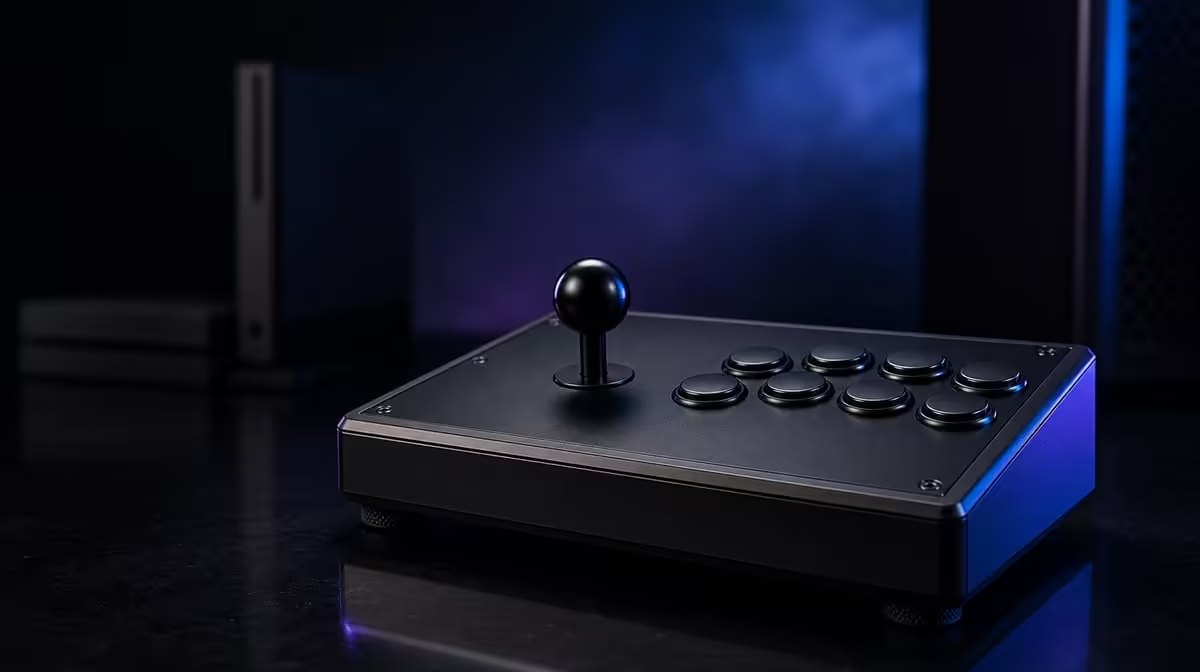
The C2's Sanwa Denshi controls provide the same lever-and-button surface on both confirmed consoles. Players can preserve hand spacing, neutral position and core movement drills even when games use different on-screen prompts.
That continuity can make practice more efficient, but it does not remove the need to test maps. Store game-specific assignments beside the direction state so moving consoles does not become a fresh search every time.
Evaluate comfort on the surfaces used with each system. A fightstick on a desk may behave differently from the same unit balanced on a lounge lap. Stable placement and relaxed cable routing keep the physical comparison fair.
The customisable faceplate can help identify a shared controller, though it does not extend support. Use correct artwork guidance and keep visual value separate from the compatibility score.
Shared use also needs a reset habit. The next player should not inherit an unknown toggle, lock or custom mapping. Restore the labelled baseline or leave a clear note describing what changed.
Practise the same core movement on both consoles. This reveals whether the familiar hardware is providing continuity even as the software prompts differ. It also gives each setup a common diagnostic reference.
🧭 Configuration belongs in the matrix
The direction control sets the format used for the joystick's signals. Record its working position for each game and run an eight-direction check after moving between systems. A suitable state for one title may not be the right baseline for another.
Key Lock protects selected functions. Check its state if a button appears unresponsive, and practise the protected boundary before competition. It cannot repair a map or host-recognition problem.
When a test fails, change one layer. Keep console, game and map steady while moving the direction mode; keep mode steady while checking the map. Controlled comparisons produce notes that remain useful later.
Evetech's gaming accessory range may organise a shared desk or transport kit. No surrounding product should be credited with creating controller protocol support.
Keep the device matrix close to the C2. A phone note is enough if it lists console, game, direction position, lock state and map. Clear records turn flexibility into something usable by more than one person.
When a function appears dead, compare the same screen with Key Lock changed appropriately. When directions fail, preserve the map and adjust only the direction setting. This symptom-led split prevents unnecessary resets.
💰 Calculate value from real use
At R1,799, the C2 can be strong value for someone who plays regularly on both PS4 and Xbox One. Divide attention by actual weekly sessions, not by every device someone hopes to own.
Keep PC and other platforms out of the positive calculation until their exact paths are established. Unknown does not have to become a negative claim; it simply carries no value yet.
Consult Evetech's accessories best sellers page when reviewing current availability for the wider station. Let the platform matrix determine whether additional purchases are even relevant.
Review the matrix after new games arrive. Add the result, mode and map only after testing. A living record preserves the advantage of one familiar arcade surface across supported systems.
Calculate setup time as part of value. A controller that serves both named consoles but requires a long search before each session may be less useful than its platform count suggests. Documentation should reduce that friction.
At the same time, do not punish normal game differences. A different map is manageable when it is labelled and repeatable. The goal is not identical software behaviour; it is predictable ownership of one physical layout.
That predictability is the practical meaning of multi-console value.
Maintain it with a brief check before every serious session.
Create one column for physical setup beside each console. Note whether the C2 rests on a desk or lap, how the cable reaches the host and whether the screen position changes posture. The same compatible controller can feel less consistent when the room arrangement moves the hands.
Test handover between two users as well as two systems. The second player should be able to read the matrix, restore the correct mode and map, then complete the proof sequence without relying on spoken history.
Store unresolved hosts below the confirmed matrix rather than mixing them with working combinations. Record what was attempted, which layer succeeded and what remains unknown. Partial evidence stays useful without inflating the platform count.
Review the R1,799 purchase after a month of real console changes. Count sessions served, average setup time and the number of times a saved state prevented confusion. Those measurements show whether multi-console support improved ownership rather than merely expanding a feature list.
If both consoles remain easy to use, preserve the process. A stable connection routine, named game profiles and familiar Sanwa layout are the outcome; constant experimentation is not required once the matrix works.
Frequently Asked Questions
What does multi-console mean for the C2?
It means the fightstick explicitly serves PS4 and Xbox One. It does not mean every console or computer.
Can individual games still differ?
Yes. Game mapping and direction interpretation sit beyond host recognition and should be tested separately.
How should buyers check PC support?
Check the exact computer, connection and game as one complete path before purchase.
Does the Sanwa layout affect compatibility?
It defines the physical control surface, not the platform protocol. Hardware feel and host support are different considerations.
How should switching consoles be tested?
Establish menu recognition, load the labelled game state, confirm toggle and lock positions, then test directions plus actions.
What is the C2 multi-console price?
The South African reference price is R1,799. Count only the confirmed systems used in the household.
Ready to build a platform matrix that stays honest?
Explore Evetech's gaming controllers, list the consoles you own and give the C2 credit only for combinations you can reproduce.