Quick Answer
No new Evetech laptop with a discrete GPU should be expected under R5,200. The practical SA answer is that entry laptops start around R8,000, while gaming laptops with GTX or RTX-class graphics usually sit higher, often in broad R10,000-R18,000 bands. NSFAS buyers should prioritise a reliable 8GB or 16GB RAM laptop with a 512GB SSD before chasing gaming specs.
What The Budget Can Realistically Cover
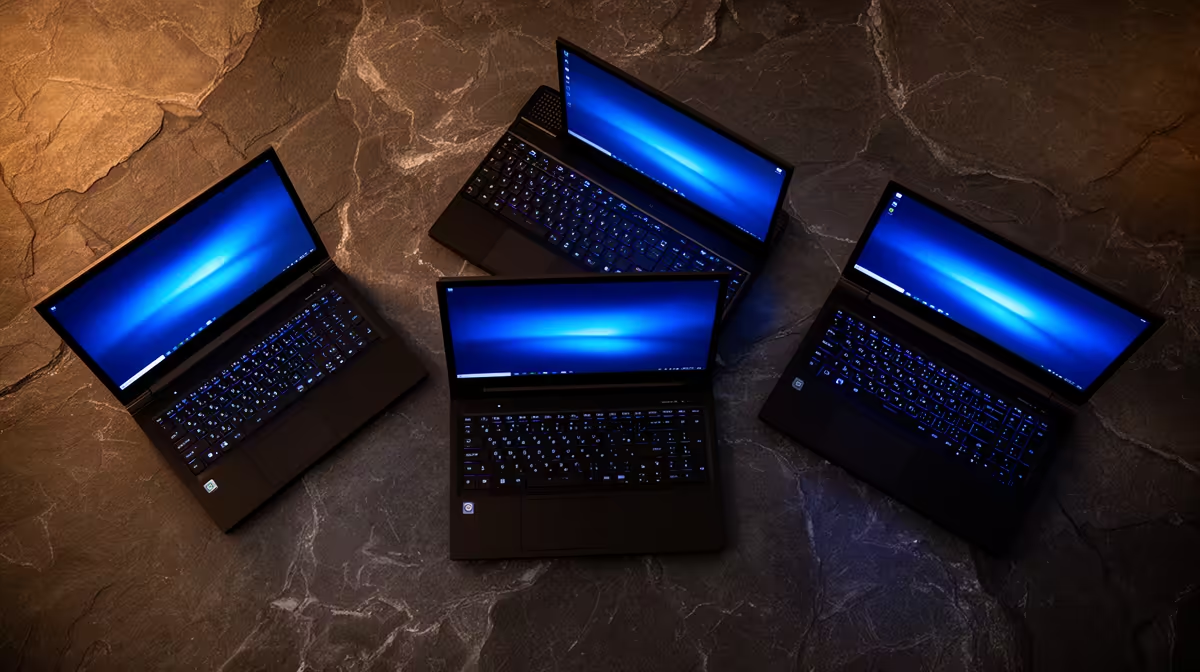
The R5,200 figure is useful for planning, but it is below the normal price of a new gaming laptop. A basic study laptop can handle Word, browser tabs, Teams, Moodle, and PDF work, but a discrete GPU model is a different category. For Wits, UCT, UJ, TUT, and college coursework, battery life, keyboard comfort, and warranty support matter more than fps.
Specs To Prioritise First
Choose at least 8GB RAM, a 512GB SSD where possible, and a modern Intel Core i3/i5 or AMD Ryzen 3/5 class CPU. If the laptop will be used for coding, design modules, or light content work, 16GB RAM is the better target. A 15.6-inch screen is practical for studying at home, while a lighter 14-inch model is easier on campus.
When A GPU Laptop Makes Sense
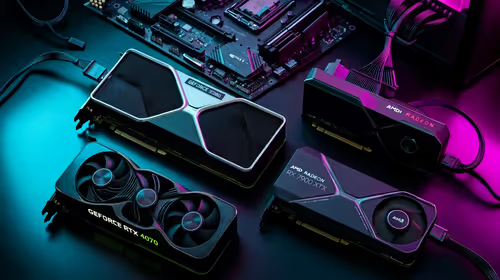
A discrete GPU helps with gaming, 3D work, GPU-accelerated editing, and some engineering workloads. It is not required for normal assignments, spreadsheets, browsing, or online classes. If gaming is part of the plan, compare GTX 1650, RTX 3050, and RTX 4050 class laptops and expect the budget to move beyond the allowance.
FAQ
Are there NSFAS-approved gaming laptops under R5,200?
Not as a safe new-laptop expectation. Under R5,200, focus on study reliability and only consider a GPU laptop if the confirmed stocked price actually fits.
What laptop spec is enough for university work?
An 8GB RAM laptop with a 512GB SSD is a sensible floor. For programming, design, or heavy browser use, 16GB RAM is worth prioritising.
Should students buy a desktop instead?
A desktop can offer better performance per rand, but it is not portable for campus. Students who need lectures, labs, and residence use should choose the laptop first.
Practical Check
Check RAM, SSD size, weight, and warranty before GPU branding; those four details decide whether the laptop works well for daily campus use.