Quick Answer
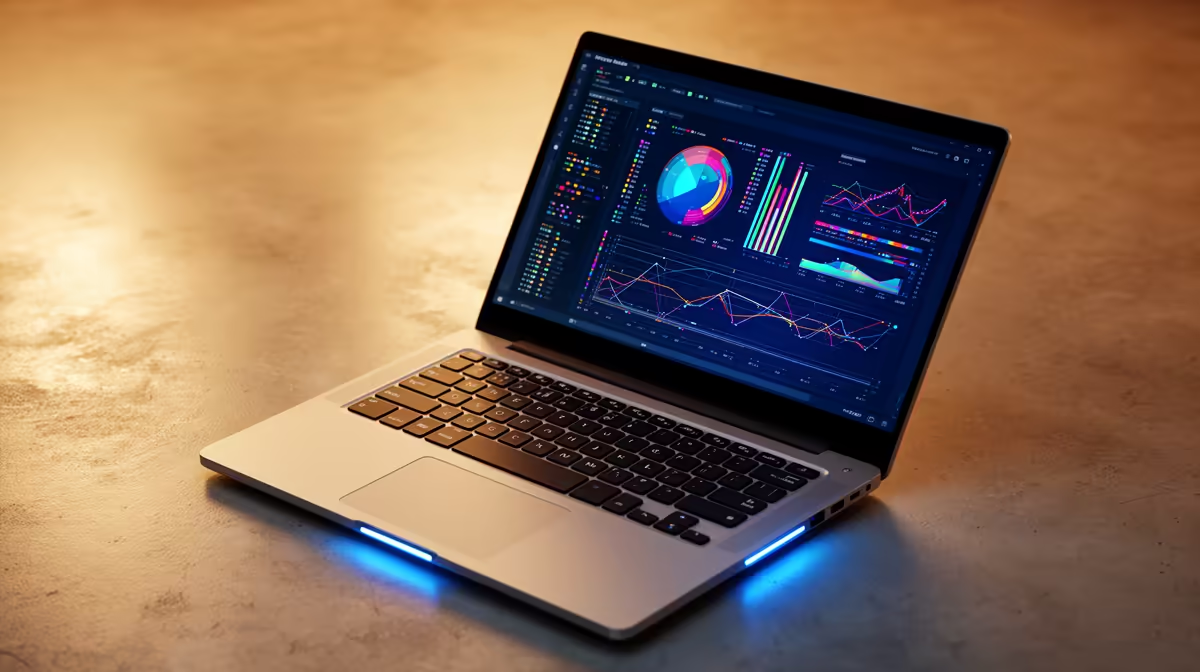
R10,000 can work for data science if you prioritise RAM, SSD size and screen quality before extras. A Core i5 or Ryzen 5 laptop with 16GB RAM and a 512GB SSD is the safer SA target, with practical options often around R8,000-R15,000.
What To Check First
For data science, the laptop must handle Python notebooks, R, SQL and browser research. Use 8GB RAM only as a floor; 16GB RAM and a 512GB SSD avoid slowdowns when Chrome, Teams and course software run together. A 60 Hz screen is fine for study use, while design and video courses benefit more from colour quality than refresh rate.
SA Buyer Context
Use Lenovo IdeaPad Slim 3, ASUS Vivobook 15, Acer Aspire 5, MSI Thin 15 and ASUS TUF Gaming A15 as model classes to compare at Evetech. For animation, architecture, film or game design, RTX 3050 class graphics is a more realistic minimum than integrated graphics. Check the exact listing before treating any price as final.
Common Mistakes To Avoid
Do not spend the allowance on accessories first. A bag, mouse and external drive can add R400-R900, but RAM, SSD and warranty decide whether the laptop lasts through semester work. If the budget is under R8,000, plan a top-up instead of choosing a 4GB or 128GB machine.
FAQ
Can R10,000 buy a new laptop for data science?
It can for documents, coding, browsing and lectures. For 3D, video or CAD-heavy work, it is a starting point rather than the full safe budget.
Is 8GB RAM enough for this course?
8GB is acceptable for light study use, but 16GB is the better target. It matters most with design tools, spreadsheets, many tabs or virtual labs.
Should data science students choose a gaming laptop?
Choose one only when the course benefits from a dedicated GPU. Otherwise, a lighter Core i5 or Ryzen 5 notebook with 16GB RAM is usually better for daily campus work.
Practical check
Compare RAM, SSD size and warranty on two Evetech laptop options, then match the choice to your course software list.