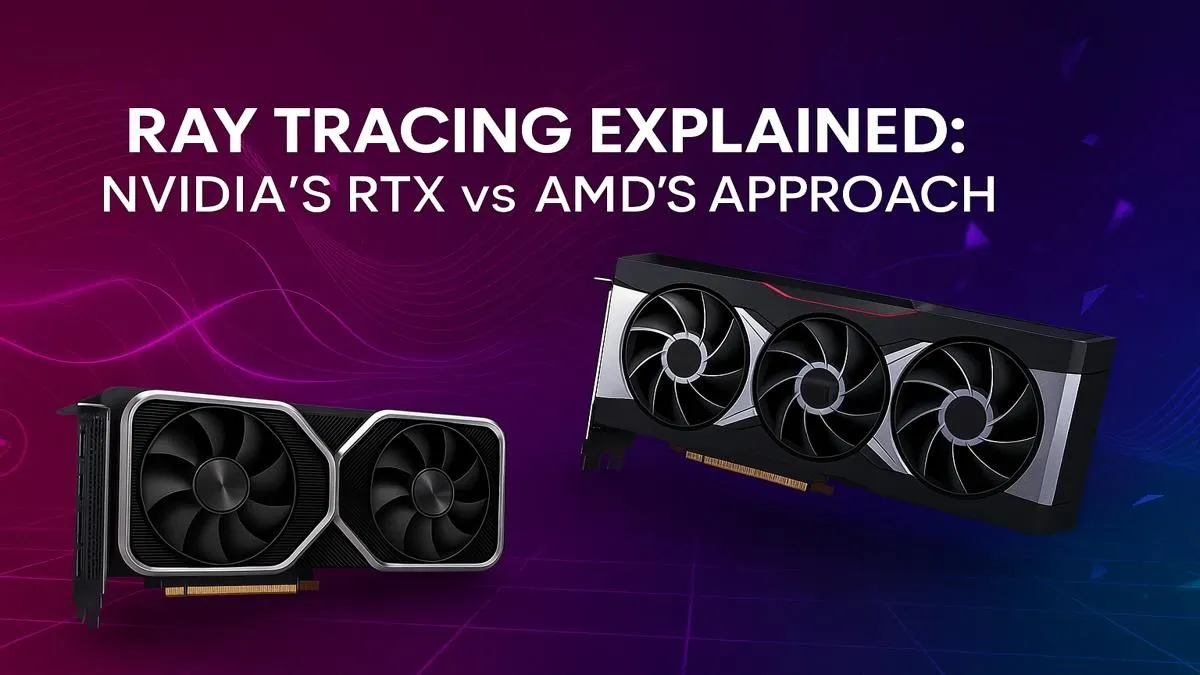
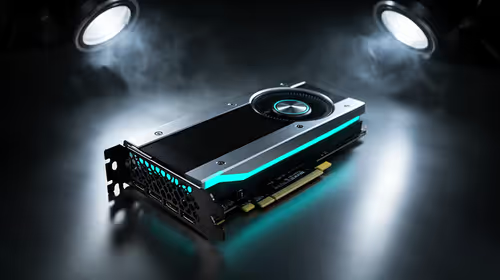
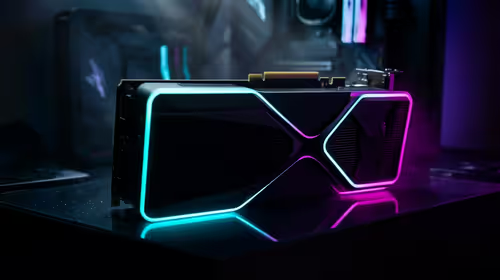
Stunning, lifelike reflections in Cyberpunk 2077's Night City. The way light filters through a forest canopy in Alan Wake 2. That's the magic of ray tracing. But when it comes to the big showdown—NVIDIA vs AMD ray tracing—which GPU gives you the best performance for your hard-earned Rands? Let's dive in and find out which team, Green or Red, truly owns the future of gaming graphics in South Africa. ⚡
What is Ray Tracing, Really?
Before we declare a winner, what even is ray tracing? Think of it as a super-advanced way for a game to simulate light. Instead of using clever programming tricks to fake how light bounces, reflects, and creates shadows, ray tracing simulates the actual path of individual light rays. The result? Incredibly realistic lighting, shadows, and reflections that make virtual worlds feel more tangible and immersive than ever before. For gamers, this means a massive leap in visual fidelity.
NVIDIA's Approach: The RTX Powerhouse
When it comes to the NVIDIA vs AMD ray tracing debate, NVIDIA had a massive head start. They introduced dedicated hardware, called RT Cores, with their first RTX 20-series cards. These cores are specifically designed to handle the intense calculations ray tracing requires, taking the load off the main GPU processors.
This specialisation means that, generation after generation, NVIDIA's GeForce RTX cards have often led the pack in raw ray tracing performance. Paired with their AI-powered DLSS (Deep Learning Super Sampling) technology, which boosts frame rates intelligently, NVIDIA offers a potent combination for gamers who want to turn all the shiny graphics settings up to max.
AMD's Answer: The RDNA Revolution 🚀
Team Red wasn't going to sit on the sidelines. AMD's answer came with their RDNA 2 architecture, introducing "Ray Accelerators" into their GPUs. While they entered the ray tracing game a bit later, they've been making huge strides with every new release. The competition in the ray tracing space is now fiercer than ever.
The AMD Radeon RX series pairs its hardware with FSR (FidelityFX Super Resolution), an open-source upscaling technology that works similarly to DLSS to improve performance. This makes AMD a fantastic contender, especially for gamers looking for incredible performance-per-Rand and a powerful all-round gaming GPU.
Quick Ray Tracing Tip 🔧
Don't just crank every ray tracing setting to 'Ultra'! Often, dropping shadows or reflections from 'Ultra' to 'High' gives you a massive FPS boost with almost no visible difference. Experiment with individual settings in your favourite games to find that sweet spot between breathtaking visuals and smooth, playable frame rates.
The Performance Showdown: Who Wins in 2024?
So, who takes the crown? Honestly, it depends on your budget and priorities.
- For the Ultimate RT Experience: If you want the absolute best ray tracing performance, especially at high resolutions, NVIDIA's high-end cards (like the RTX 4080 or 4090) generally pull ahead. Their mature hardware and the magic of DLSS 3 Frame Generation create an incredibly smooth and visually stunning experience.
- For the Smart All-Rounder: AMD offers incredible value. Their cards deliver excellent traditional gaming performance and have become seriously competitive in ray tracing. An AMD GPU often provides a more balanced profile, giving you amazing power for all types of games without necessarily focusing only on ray tracing prowess.
Ultimately, the battle between AMD vs NVIDIA ray tracing is great for us gamers. It pushes both companies to innovate, which means better tech and more competitive pricing for everyone. Before making a final decision, it's always wise to check out the best graphics card deals available to see what fits your build and your wallet.
Ready to Light Up Your Games?
The NVIDIA vs AMD ray tracing battle is closer than ever, but the ultimate winner is you. Whether you bleed Team Green or Team Red, we've got the perfect GPU to bring next-gen lighting to your rig. Explore our massive range of graphics card specials and find the perfect match for your world.